Best AI Rewriter For Marketing Content (2026)
What content managers and growth marketers should compare before choosing a ai rewriter solution for marketing content.


This playbook helps content managers and growth marketers compare the best ai rewriter options for marketing content. It breaks down where grammarly, wordtune stand out, when alternatives such as jasper, copy-ai make more sense, and which setup fits B2B companies and B2C brands and solo operators and small businesses.
TL;DR
If you are rewriting marketing content by hand in 2026, you are spending hours on work that a good AI rewriter can handle in seconds. The best AI rewriter for marketing content is Grammarly for teams that need inline editing with tone and brand controls, Wordtune for writers who want natural-sounding sentence-level rewrites, and ChatGPT for marketers who need flexible, prompt-driven rewriting across formats. This guide breaks down the top five tools, compares them on the dimensions that matter for marketing workflows, and helps you pick the right fit based on your team size, budget, and content operations. Below is the full comparison.
Table of Contents
Best AI Rewriters for Marketing Content (Quick Comparison)
| Tool | Best For | Starting Price | Free Tier | Key Strength |
|---|---|---|---|---|
| Grammarly | Brand-consistent editing at scale | $12/mo (annual) | Yes (basic) | Inline rewriting with tone and brand voice controls |
| Wordtune | Natural sentence-level rewrites | $6.99/mo | Yes (10 rewrites/day) | Tone adjustment with casual/formal presets |
| QuillBot | Budget-friendly paraphrasing | $8.33/mo (annual) | Yes (125 words) | Eight paraphrasing modes with synonym control |
| ChatGPT | Flexible, prompt-driven rewriting | $0–$20/mo | Yes (free tier) | Unlimited rewriting styles via custom prompts |
| Hemingway Editor | Clarity and readability editing | $10/mo (Plus) | Yes (web editor) | Readability scoring with AI sentence rewrites |
Best AI Rewriters for Marketing Content (Quick Comparison)
1. Grammarly
What It Does
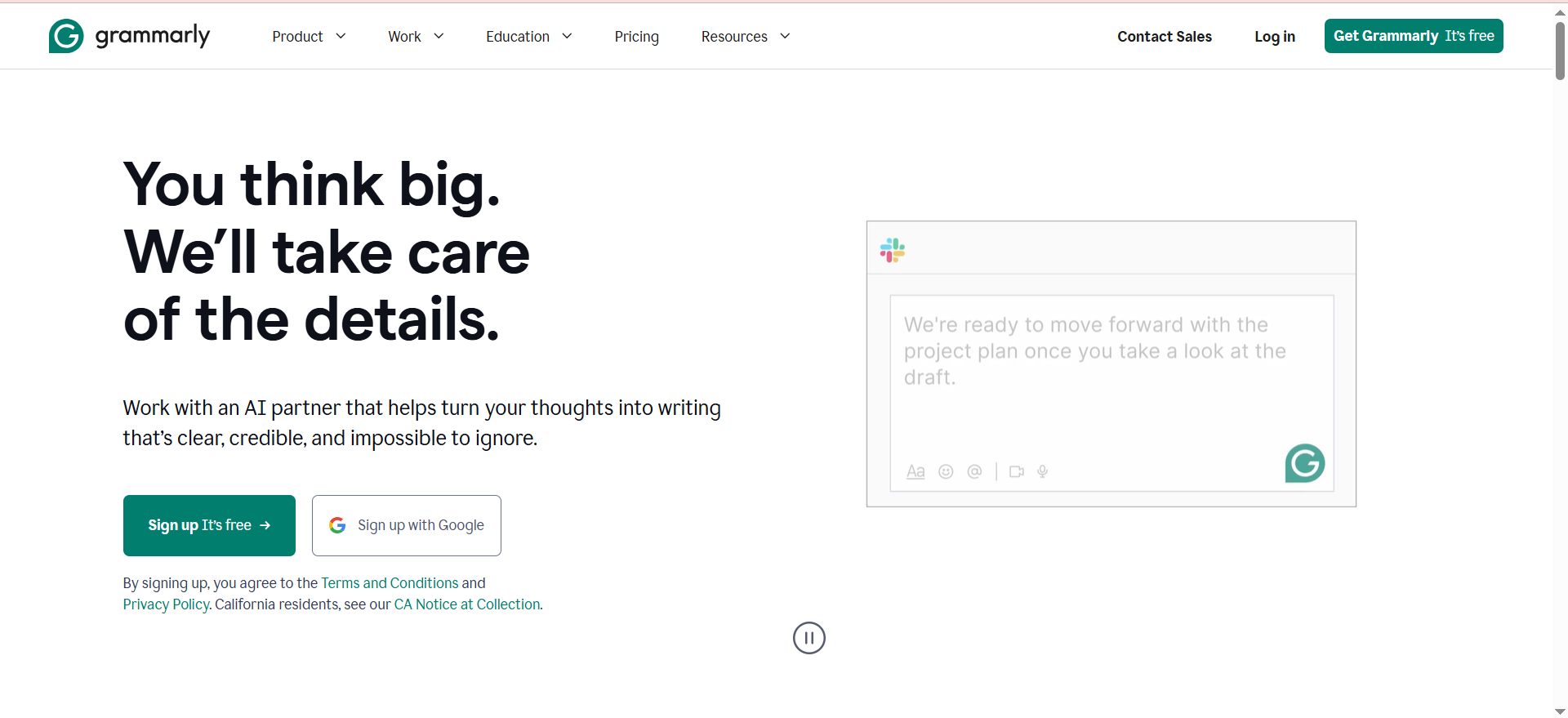
Grammarly is an AI-powered writing assistant that checks grammar, spelling, punctuation, and style in real time. Its AI rewriter generates full-sentence rewrites, adjusting tone, length, and formality so your marketing copy lands the way you intend. It also includes a plagiarism checker and brand voice profiles for teams.
Why Teams Use It
Marketing teams choose Grammarly because it works where they already write. The browser extension, desktop app, and integrations with Google Docs, Microsoft Word, Slack, and email clients mean writers never have to copy-paste into a separate tool. The brand voice feature lets teams set tone guidelines once and enforce them across every piece of content.
What It Is Good For
Grammarly excels at polishing existing drafts. If you have a blog post, email sequence, or landing page that needs tighter sentences, more consistent tone, or fewer grammatical errors, Grammarly handles that workflow efficiently. The 2,000 monthly AI prompts in the Pro plan give marketers enough capacity for daily rewriting tasks without hitting limits.
When It Is a Good Fit
Grammarly fits content teams that produce high volumes of short-to-medium-form content across multiple channels. It is especially strong for B2B SaaS companies, agencies, and ecommerce brands that need brand consistency across writers. If your team already uses Google Workspace or Microsoft 365, Grammarly integrates without friction.
When It Is Not a Good Fit
Grammarly is not the right pick if you need long-form content generation from scratch or if your workflow requires heavy prompt engineering. The AI rewriter works at the sentence and paragraph level, so teams that need full-article rewrites or creative brainstorming will find it limiting. The Pro plan at $30/month (monthly billing) can also add up for larger teams without the annual commitment.
How to Use It
Install the Grammarly browser extension or desktop app. Set up your brand voice profile under the team settings. When rewriting marketing content, highlight any sentence and click the rewrite suggestion. Use the tone detector to verify the output matches your target audience. For batch work, paste drafts into the Grammarly editor and work through suggestions section by section.
Key Capabilities
Full-sentence AI rewrites, tone adjustment (formal, confident, friendly, and more), brand voice profiles, grammar and spelling correction, plagiarism detection, readability scoring, browser extension and desktop app, integrations with Google Docs, Microsoft Word, Slack, and email clients, 2,000 monthly AI prompts on Pro.
Pricing
Grammarly Pro costs $12/month on the annual plan or $30/month on the monthly plan. The quarterly option is $20/month. Enterprise pricing is custom and requires contacting sales for organizations with 150+ users.
Free Tier?
Yes. The free tier includes basic grammar and spelling checks, limited tone suggestions, and access to the web editor. AI rewriting and advanced features require the Pro plan.
Downsides and Limitations
The 2,000 monthly AI prompt limit can be restrictive for high-volume content teams. Sentence-level rewrites do not support full-document restructuring. Brand voice profiles require manual setup and tuning. The premium pricing gap between monthly and annual billing is significant.
2. Wordtune
What It Does
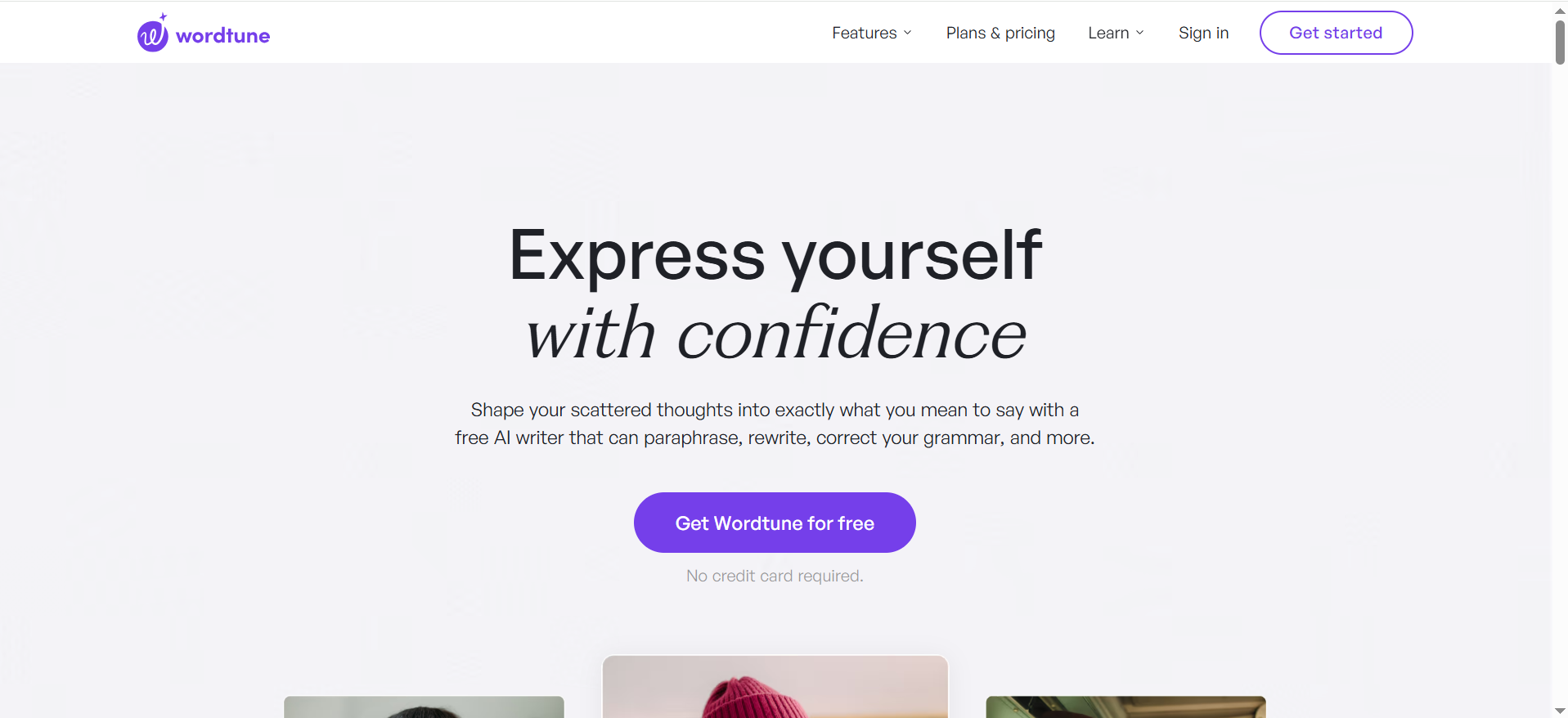
Wordtune is an AI writing tool built by AI21 Labs that rewrites sentences to sound more natural, clear, and engaging. It offers contextual rewrite suggestions based on tone (casual or formal) and length (shorten or expand), along with a built-in editor, summarizer, and content enhancement features called Spices.
Why Teams Use It
Marketing writers use Wordtune because its rewrites sound human. Unlike tools that swap synonyms mechanically, Wordtune restructures sentences to preserve meaning while improving rhythm and readability. The tone controls let marketers shift between casual social copy and formal B2B messaging without rewriting from scratch.
What It Is Good For
Wordtune is strongest for sentence-level polishing of marketing copy, especially email campaigns, social media posts, and ad copy where every word matters. The Spices feature adds AI-generated examples, statistics, counterarguments, and analogies to thin content, which is useful for fleshing out blog drafts or whitepapers.
When It Is a Good Fit
Wordtune fits solo marketers, freelancers, and small content teams that need quick rewrites without a learning curve. It is especially useful for non-native English speakers writing marketing content, since the fluency corrections go beyond grammar to improve sentence flow. The low price point makes it accessible for startups and SMBs.
When It Is Not a Good Fit
Wordtune lacks the deep integration ecosystem of Grammarly. It does not offer brand voice profiles, so teams with strict style guidelines will need to enforce consistency manually. The Unlimited plan at $9.99/month is affordable, but the Advanced plan's 30-rewrite daily limit can be too low for content-heavy workflows.
How to Use It
Install the Wordtune browser extension for Chrome. Highlight any sentence on a webpage, email, or document and click the Wordtune icon to see rewrite options. Choose from casual, formal, shorten, or expand modes. Use the Wordtune Editor for longer drafts where you want to work through an entire piece section by section.
Key Capabilities
Contextual sentence rewrites, tone adjustment (casual and formal), length control (shorten and expand), Wordtune Spices (examples, statistics, counterarguments), Wordtune Read document summarizer, grammar and spelling correction, browser extension for Chrome, integration with Google Docs and Microsoft Word.
Pricing
The Advanced plan costs $6.99/month and includes 30 rewrites and AI suggestions per day plus 15 AI summarizations. The Unlimited plan costs $9.99/month and removes all limits on rewrites and summarizations.
Free Tier?
Yes. The free plan includes 10 rewrites per day with basic rewriting features. No credit card required.
Downsides and Limitations
No brand voice profiles or team governance features. The free and Advanced plans have strict daily rewrite limits. Integration options are narrower than Grammarly. The tool focuses on sentence-level rewrites and does not support full-page content generation or restructuring.
3. QuillBot
What It Does
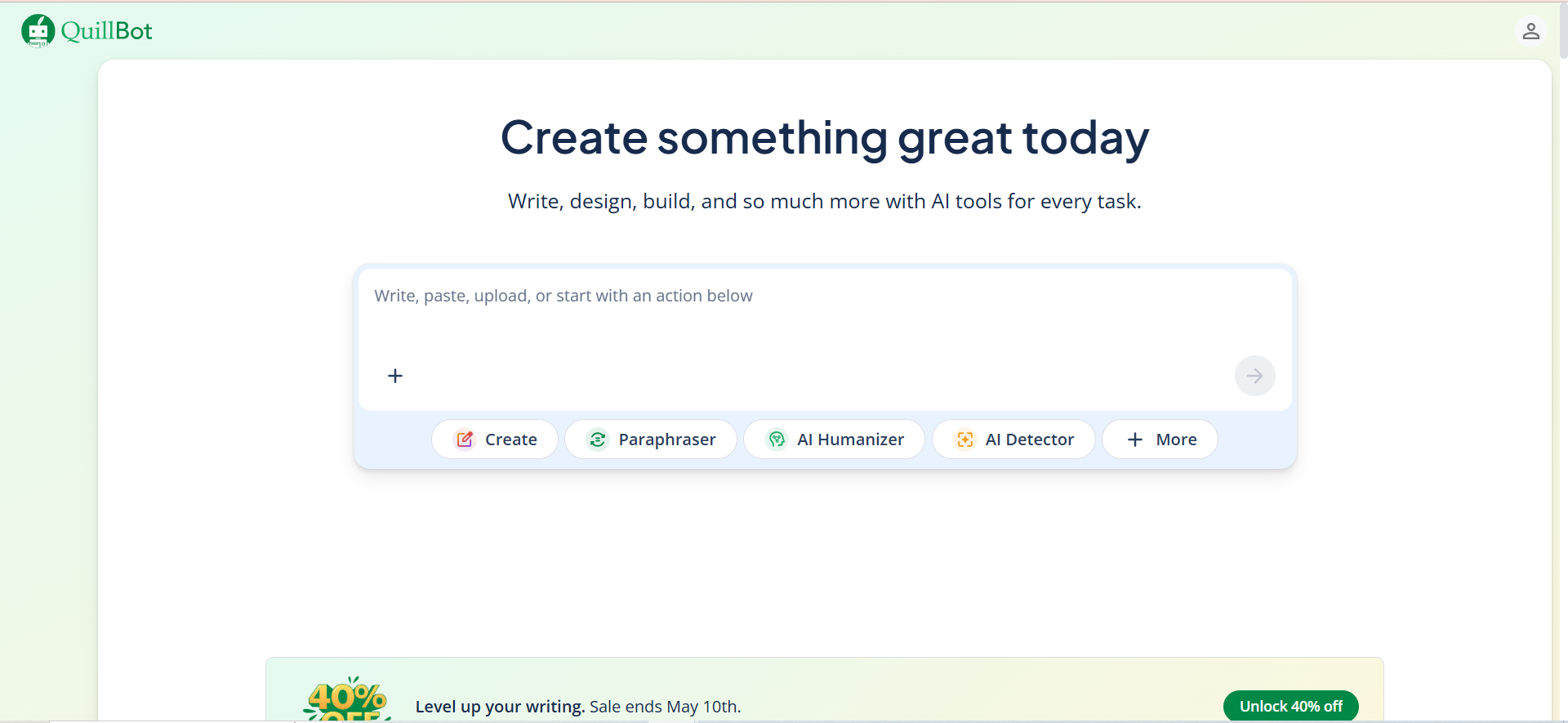
QuillBot is an AI paraphrasing and rewriting tool that packs eight tools into one dashboard: Paraphraser, Grammar Checker, AI Detector, Plagiarism Checker, AI Humanizer, AI Chat, Translator, and Summarizer. It restructures sentences, swaps words with synonyms, and adapts content to different writing modes.
Why Teams Use It
Marketing teams on tight budgets choose QuillBot because it offers the broadest feature set at the lowest price point. The paraphraser alone supports multiple modes (Standard, Fluency, Formal, Simple, Creative, Expand, Shorten, and Custom), giving writers granular control over how aggressively the AI rewrites their content.
What It Is Good For
QuillBot is best for repurposing existing content across channels. Take a blog post and rewrite it for an email newsletter, a social media caption, and a product description without starting from scratch each time. The AI Humanizer helps teams that need to ensure AI-assisted content reads naturally and passes AI detection checks.
When It Is a Good Fit
QuillBot fits solo freelancers, small marketing teams, and agencies that need a low-cost all-in-one writing toolkit. It is a strong choice for ecommerce brands that produce high volumes of product descriptions and need consistent paraphrasing across hundreds of SKUs. The translator supports 25+ languages, making it useful for teams with multilingual content needs.
When It Is Not a Good Fit
QuillBot's Premium plan caps output at 25,000 words per month, which teams publishing multiple long-form articles can hit with two or three in-depth blog posts. The paraphraser can over-optimize for synonym swaps, sometimes producing awkward phrasing that requires manual review. It lacks the real-time collaboration features and brand voice controls that larger teams need.
How to Use It
Go to QuillBot and paste your marketing copy into the paraphraser. Select a mode (Fluency for light touch, Creative for heavier rewriting, or Formal for B2B content). Adjust the synonym slider to control how much the tool changes your original wording. Use the Grammar Checker and Plagiarism Checker on the final output before publishing.
Key Capabilities
Eight paraphrasing modes with synonym slider control, grammar checker, plagiarism checker (100+ languages), AI detector, AI humanizer, translator (25+ languages), summarizer, browser extension, integration with Google Docs and Microsoft Word.
Pricing
QuillBot Premium costs $19.95/month on the monthly plan, $13.31/month on the semi-annual plan, or $99.95/year ($8.33/month on annual billing). The Premium plan includes all seven paraphrasing modes, unlimited words, grammar checking, plagiarism detection, and the summarizer.
Free Tier?
Yes. The free tier allows paraphrasing up to 125 words at a time with access to Standard and Fluency modes. Grammar checking is unlimited on the free plan.
Downsides and Limitations
Synonym-heavy rewrites sometimes sound unnatural and need manual editing. No brand voice profiles or team management features. The free tier's 125-word limit makes it impractical for anything beyond quick sentence-level rewrites.
4. ChatGPT
What It Does
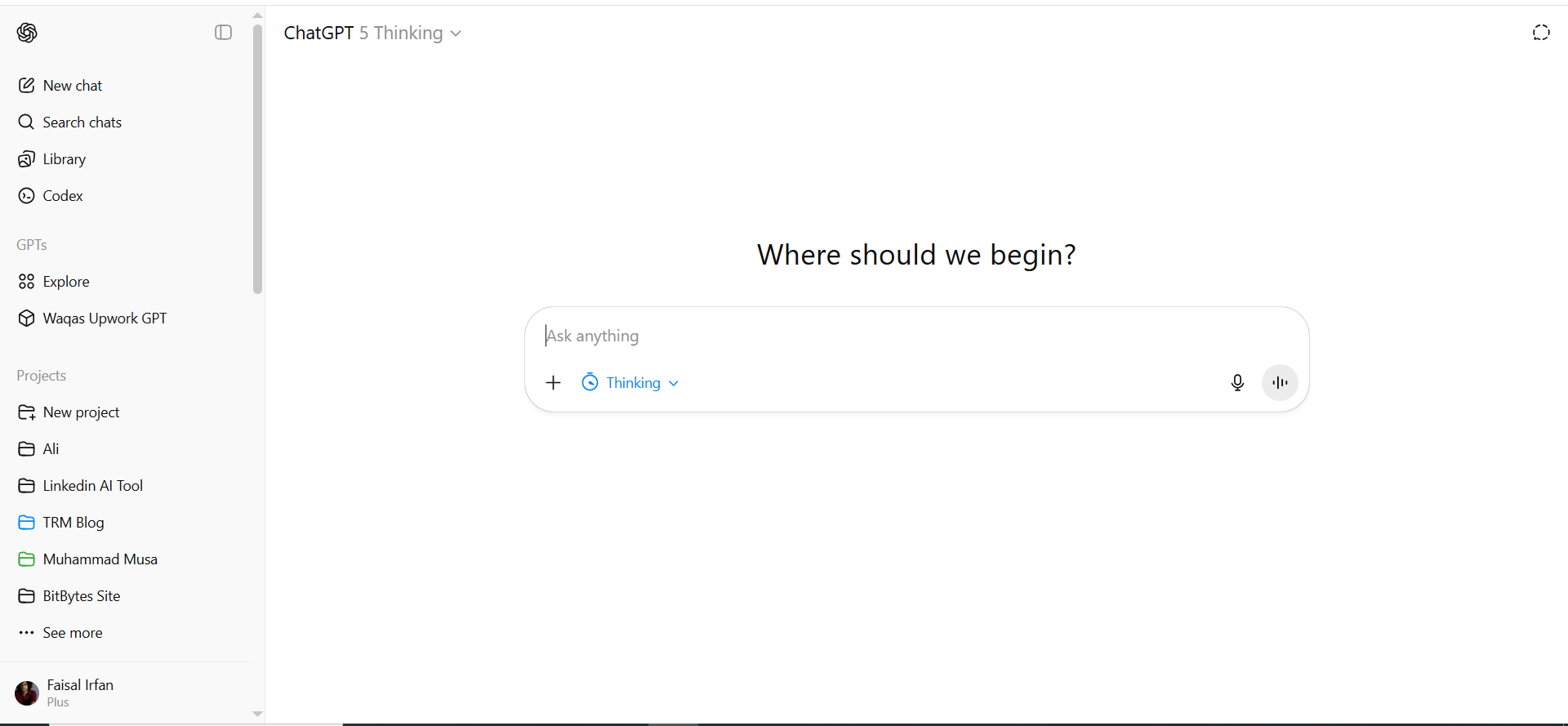
ChatGPT is OpenAI's conversational AI that can rewrite marketing content in any style, tone, or format through natural language prompts. Unlike purpose-built rewriting tools, ChatGPT handles everything from sentence-level edits to full-document restructuring, and it can follow detailed creative briefs, style guides, and brand voice instructions within a single conversation.
Why Teams Use It
Marketing teams use ChatGPT because it is the most flexible option on this list. A single prompt can rewrite a blog intro for SEO, convert it into an email subject line, and generate three social media variations, all in one conversation. The Canvas feature in ChatGPT Plus enables collaborative editing where the marketer and AI iterate on a document together in a shared workspace.
What It Is Good For
ChatGPT is strongest for teams that need to rewrite across multiple formats and tones in a single session. It handles long-form content restructuring, headline testing, CTA variations, and even full-page rewrites with specific angle shifts. Custom GPTs and pre-built assistants (like SEO Writer or Email Marketing Expert) allow teams to save reusable rewriting workflows.
When It Is a Good Fit
ChatGPT fits marketing teams of any size that have at least one person comfortable with prompt engineering. It is especially strong for growth marketers running experiments (A/B test copy, landing page variations, ad creative iterations) and for content managers who need to repurpose a single piece across five or more channels.
When It Is Not a Good Fit
ChatGPT requires prompt skill to get consistent, high-quality rewrites. Without clear instructions, the output can be generic, verbose, or off-brand. It does not integrate inline with writing tools like Grammarly does, so there is always a copy-paste step. There is no built-in plagiarism checker or readability scorer, meaning you need a separate tool for QA.
How to Use It
Open ChatGPT and paste your marketing content. Write a prompt that specifies the target audience, desired tone, length constraints, and any brand guidelines. For example: "Rewrite this blog paragraph for a B2B SaaS audience. Make it more concise, use active voice, and keep the tone confident but approachable." Use the Canvas feature to iterate on longer drafts collaboratively.
Key Capabilities
Prompt-driven rewriting in any style or format, full-document restructuring, Canvas collaborative editing (Plus plan), Custom GPTs for saved workflows, multi-format output (email, social, ads, blog, landing pages), 320-page context window on Plus for long documents, web browsing for fact-checking, image generation for visual content.
Pricing
The Free tier provides GPT-5.3 access with limited usage and includes ads in the US. The Go plan costs $8/month with higher limits and no ads. The Plus plan costs $20/month and includes GPT-5 and GPT-5 Thinking, Canvas, Custom GPTs, and higher usage limits. The Pro plan starts at $100/month for 5x Plus limits, or $200/month for 20x Plus limits and priority performance.
Free Tier?
Yes. The free tier includes GPT-5.3 access with limited messages and usage, plus ads in the US. Advanced features like Canvas, Custom GPTs, Deep Research, and higher rate limits require Plus or above.
Downsides and Limitations
Output quality depends heavily on prompt quality. No inline integration with writing tools or browsers. No built-in plagiarism checker, AI detector, or readability scorer. Conversations do not persist brand voice settings across sessions without Custom GPTs. The Plus plan at $20/month is more expensive than dedicated rewriting tools for teams that only need sentence-level rewrites.
5. Hemingway Editor
What It Does
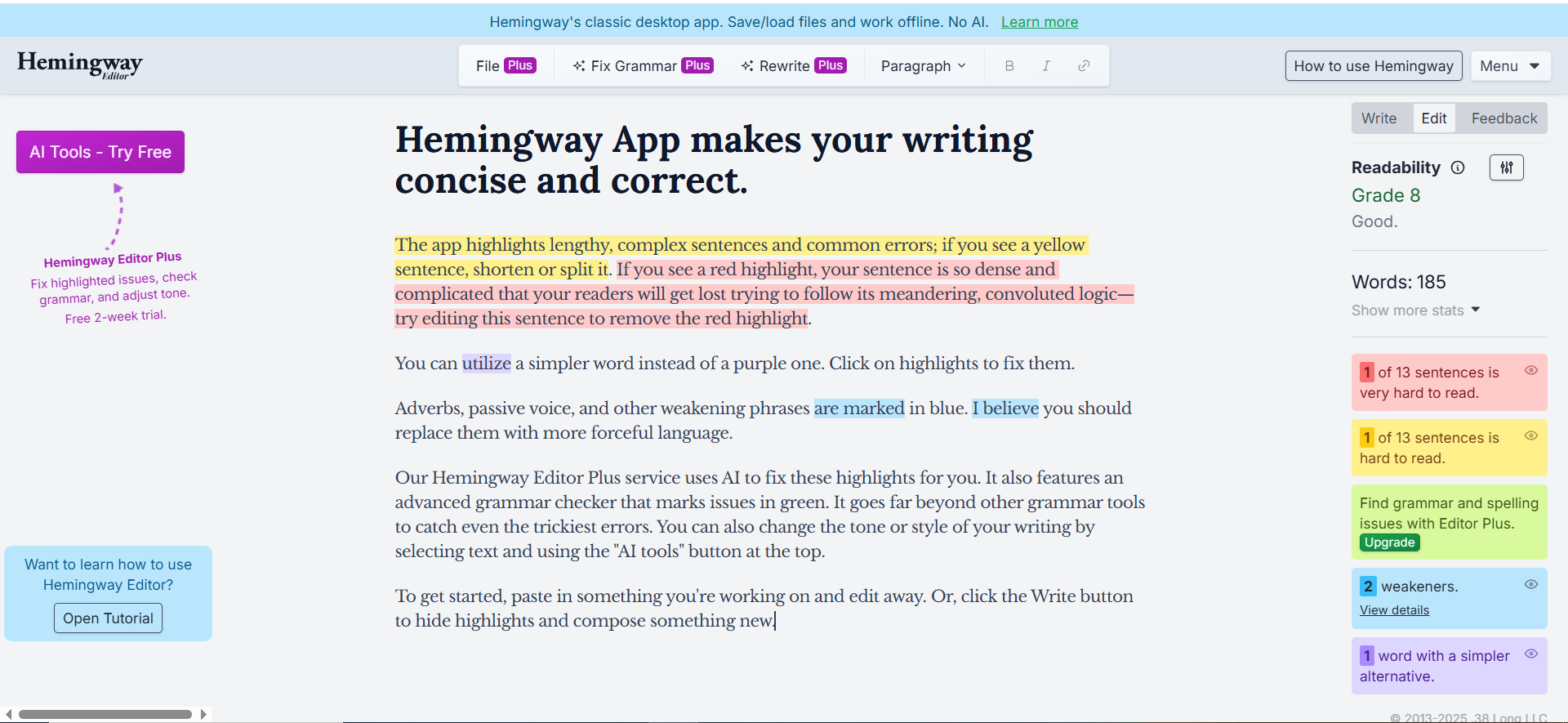
Hemingway Editor is a readability-focused writing tool that highlights complex sentences, passive voice, adverb overuse, and hard-to-read passages. The Plus version adds AI-powered sentence rewrites that simplify wordy or convoluted prose into clear, direct language. It scores content on a grade-level readability scale.
Why Teams Use It
Content managers use Hemingway because it forces clarity. Marketing content that scores at a Grade 6-8 reading level consistently outperforms dense, jargon-heavy copy. Hemingway's color-coded highlighting makes problem areas instantly visible, and the AI rewriter fixes them with one click rather than requiring manual editing.
What It Is Good For
Hemingway is best for the final editing pass on marketing content. After you have written or rewritten a draft with another tool, run it through Hemingway to catch passive voice, unnecessary adverbs, and overly complex sentences that hurt readability. The tool is especially useful for landing pages, email copy, and ad text where clarity directly impacts conversion rates.
When It Is a Good Fit
Hemingway fits any marketing team that prioritizes readability and clarity over creative flair. It is a strong pairing with ChatGPT or Grammarly as a second-pass editing tool. Solo content creators, bloggers, and startup marketers will find the free web editor sufficient for most use cases.
When It Is Not a Good Fit
Hemingway does not generate content or handle creative rewriting. It will not rewrite a formal whitepaper into a casual blog post or adjust tone for different audiences. The AI rewrites focus narrowly on simplification and clarity, so teams that need stylistic flexibility should pair it with a more versatile tool. The desktop app is a one-time purchase but lacks cloud sync.
How to Use It
Go to hemingwayapp.com and paste your marketing content into the free web editor. Review the color-coded highlights: yellow for hard-to-read sentences, red for very hard-to-read, purple for simpler word alternatives, blue for adverbs, and green for passive voice. Click on highlighted sentences to see AI rewrite suggestions (Plus plan). Aim for a readability score of Grade 6-8 for most marketing content.
Key Capabilities
Readability scoring on grade-level scale, color-coded sentence complexity highlighting, passive voice detection, adverb flagging, AI sentence rewrites (Plus plan), eight writing styles for rewrites, export to PDF, Word, HTML, and Markdown, desktop app with offline editing.
Pricing
Hemingway Editor Plus Individual 5K costs $10/month or $8.33/month on annual billing ($100/year) and includes 5,000 AI sentence rewrites per month. The Individual 10K plan costs $15/month or $12.50/month on annual billing and includes 10,000 AI sentence rewrites. The Team 10K plan costs $12.50/user/month on annual billing with all features plus team management.
Free Tier?
Yes. The free web editor includes full readability analysis, sentence highlighting, and grade-level scoring. AI-powered rewrites require the Plus subscription. A 14-day free trial of Plus is available with up to 200 sentence corrections.
Downsides and Limitations
No content generation or creative rewriting capabilities. Limited to simplification and clarity improvements. No browser extension or inline integration with Google Docs or Word. No brand voice, team collaboration, or governance features. The AI rewrite limit on lower-tier Plus plans may not cover high-volume editing workflows.
What Is an AI Rewriter for Marketing Content?
An AI rewriter for marketing content is a tool that uses natural language processing to rephrase, restructure, or improve existing marketing copy while preserving the original meaning. Unlike AI content generators that create text from scratch, rewriters take your draft, email, ad copy, or blog post and transform it to improve clarity, adjust tone, fix grammar, or adapt the content for a different audience or channel. The core job is to make your existing words work harder without requiring a full rewrite from scratch.
For marketing teams, this translates to faster turnaround on content production. A landing page draft that would take 45 minutes to manually edit and polish can be cleaned up in five minutes with the right rewriting tool. The real value shows up when teams are repurposing a single piece of content across email, social, blog, and ad formats, because the rewriter handles the tonal and structural shifts that would otherwise require a separate writing pass for each channel.
How Do AI Rewriters Improve Marketing Copy?
AI rewriters improve marketing copy in four main ways. First, they tighten sentences by removing filler words, passive voice, and unnecessary qualifiers that dilute your message. Second, they adjust tone to match your target audience, shifting between formal B2B language and conversational B2C copy without losing the core message. Third, they catch grammatical errors and awkward phrasing that human editors miss on fast turnarounds. Fourth, they generate alternative versions of headlines, CTAs, and subject lines for A/B testing, giving marketers more options to test without additional creative effort.
The practical impact depends on where you use them. For email marketing, rewriters can improve open rates by generating sharper subject lines and preview text. For blog content, they help hit readability targets that correlate with better SEO performance and longer time-on-page. For ad copy, they produce variations faster than manual iteration, which is critical when testing across platforms with different character limits and audience expectations.
Can AI Rewriters Maintain Brand Voice?
Some can, most cannot, and the distinction matters for marketing teams. Grammarly is the only tool on this list with dedicated brand voice profiles that let you define tone, terminology, and style rules once and enforce them across all content. ChatGPT can follow brand voice instructions within a conversation if you provide a detailed prompt or use a Custom GPT, but it does not persist those settings automatically. Wordtune, QuillBot, and Hemingway Editor do not offer brand voice features at all.
For teams with strict brand guidelines, this is a critical evaluation criterion. A rewriter that produces clean, grammatically correct copy in the wrong voice creates more work, not less, because someone still has to manually review and adjust every output. The workaround is to pair a flexible rewriter like ChatGPT with a brand-checking tool like Grammarly, using ChatGPT for the creative rewriting and Grammarly for the brand voice enforcement on the final draft.
Are AI Rewriters Worth It for Small Marketing Teams?
For small marketing teams and solo marketers, AI rewriters deliver some of the highest ROI of any content tool. A single marketer producing blog posts, email campaigns, social media copy, and ad creative can realistically save 8-12 hours per week by using a rewriter for first-pass editing and multi-channel repurposing. At the price points covered in this guide ($0 to $30/month), the math works even if the tool only saves one hour per week.
The key is matching the tool to the team's actual workflow. A solo freelancer producing five blog posts per month gets more value from QuillBot at $4.17/month than from Grammarly Pro at $12/month, because the freelancer needs paraphrasing breadth more than brand governance. A two-person content team at a B2B SaaS startup benefits more from Grammarly's inline editing and brand voice controls because consistency across writers matters more than raw rewriting volume.
What Is the Difference Between an AI Rewriter and an AI Content Generator?
An AI rewriter transforms existing text while an AI content generator creates new text from a brief or prompt. In practice, the line is blurring. ChatGPT can do both, and Grammarly's AI prompts can generate new paragraphs as well as rewrite existing ones. But the core workflow difference matters for marketing teams.
Rewriters assume you have a draft that needs improvement. They work best in the editing and polishing phase of content production. Content generators assume you have a topic or brief and need a first draft. They work best in the ideation and drafting phase. Most marketing teams need both capabilities, which is why ChatGPT has become popular: it handles the full spectrum from blank page to final polish. Dedicated rewriters like Wordtune and QuillBot are more efficient for the editing step because their interfaces are optimized for that specific task.
How to Choose the Right AI Rewriter for Your Marketing Workflow
Start with the content type you rewrite most often. If it is email campaigns and ad copy where every sentence matters, Wordtune or Grammarly gives you the best sentence-level control. If it is blog posts and long-form content that needs restructuring, ChatGPT handles full-document rewrites that the other tools cannot match. If it is product descriptions and repetitive copy across SKUs, QuillBot's paraphrasing modes are purpose-built for that workflow.
Next, check integration requirements. Grammarly works inside Google Docs, Word, email clients, and browsers. Wordtune and QuillBot work via browser extensions. ChatGPT requires copy-paste or API integration. Hemingway Editor is a standalone tool. The less friction between your writing environment and the rewriter, the more likely your team will actually use it consistently.
Finally, test with real content before committing. Take one representative marketing asset (a blog post, an email sequence, or a set of ad variations) and run it through two or three of these tools. Compare the output quality, the time saved, and whether the rewritten content matches your brand voice without manual adjustment. The winner for your team is whichever tool produces usable output with the least post-editing.
Do AI Rewriters Produce Original Content?
AI rewriters produce content that is technically original in the sense that it is not copied from a specific source, but the degree of originality varies by tool and mode. QuillBot in Creative mode produces more heavily restructured output than QuillBot in Standard mode. ChatGPT generates entirely new phrasing based on its training data. Grammarly's rewrites stay closer to the original text and focus on improvement rather than transformation.
For marketing teams, the practical question is whether the output passes plagiarism checks and reads as genuinely different from the input. Both QuillBot and Grammarly include plagiarism checkers that can verify this. ChatGPT does not include one, so teams should run the output through a separate plagiarism tool before publishing. The AI Humanizer feature in QuillBot specifically targets making AI-rewritten content read more naturally, which matters for teams concerned about AI detection in their published content.
Frequently Asked Questions
Grammarly is the strongest pick for B2B SaaS marketing teams because of its brand voice profiles and inline integration with business writing tools. It enforces consistent tone across multiple writers, which is critical when producing content for a professional audience. ChatGPT is a strong alternative when the team needs more creative flexibility or full-document rewrites, but it requires more manual brand voice enforcement.
Yes, but with caveats. AI rewriters help improve readability scores, tighten sentences, and rephrase content to avoid duplicate-content issues when repurposing across pages. However, they do not handle keyword optimization, internal linking, or content structure decisions. Pair a rewriter with a dedicated SEO tool like Surfer SEO or Frase for the best results. Hemingway Editor is especially useful for hitting readability targets that correlate with higher search rankings.
Costs range from $0 to $30/month per user. Wordtune Advanced at $6.99/month (annual billing) is the most affordable paid option. QuillBot Premium at $8.33/month (annual billing) offers seven paraphrasing modes. Wordtune Unlimited at $9.99/month offers the best value for unlimited rewrites. Grammarly Pro at $12/month (annual billing) adds brand voice and team features. ChatGPT Plus at $20/month provides the broadest rewriting flexibility. Most teams can test all options using free tiers before committing.
AI rewriters are highly effective for email marketing. Wordtune excels at making subject lines and body copy sound more natural and engaging. Grammarly catches tone mismatches and grammatical errors that hurt deliverability and reader trust. ChatGPT can generate multiple subject line variations, preview text options, and CTA rewrites in a single prompt, making it the fastest option for teams that A/B test email copy regularly.
Combining tools often produces the best results. A common workflow is to use ChatGPT for the initial rewrite or restructuring, then run the output through Grammarly for brand voice and grammar checks, and finish with Hemingway Editor for a readability pass. This three-step approach covers creative flexibility, brand consistency, and clarity in a way that no single tool handles alone. The total cost for this stack is roughly $42/month (ChatGPT Plus + Grammarly Pro annual + Hemingway Plus), which is less than most enterprise content tools.
Free tiers are useful for testing and light-volume work, but they are not practical for professional marketing content production. QuillBot's 125-word free limit, Wordtune's 10 daily rewrites, and ChatGPT's rate limits all create bottlenecks that slow down content workflows. The free web version of Hemingway Editor is an exception because it provides full readability analysis without limits, but it lacks AI rewrites. For professional use, expect to pay at least $5-10/month per writer for a tool that removes friction.