Best AI Blog Writer (2026)
How B2B companies and B2C brands can shortlist the best ai blog writer tools for generate pipeline without wasting evaluation cycles.


This playbook helps content managers and growth marketers compare the best ai blog writer options for content production. It breaks down where chatgpt, claude stand out, when alternatives such as writer, grammarly make more sense, and which setup fits B2B companies and B2C brands and solo operators and small businesses.
The best AI blog writer depends on your workflow: ChatGPT excels at research-heavy posts and long-form coherence, Claude produces nuanced content with strong reasoning, Jasper is purpose-built for marketing teams needing brand consistency, Writesonic integrates SEO optimization and real-time data, and Copy AI works best for short-form marketing copy and workflow automation. Most tools cost $20–$70/month, all offer free trials, and the choice hinges on whether you prioritize depth (Claude/ChatGPT), templates and team collaboration (Jasper), SEO features (Writesonic), or automation (Copy AI). For solo operators and small teams, ChatGPT Plus at $20/month is the most versatile entry point; for marketing teams at B2B/B2C companies, Jasper and Writesonic justify their higher price tags with built-in workflows and consistency tools.
Table of Contents
Best AI Blog Writers (Quick Comparison)
| Tool | Best For | Starting Price | Free Tier |
|---|---|---|---|
| ChatGPT | Research + long-form depth | $20/mo (Plus) | Yes (limited daily, ads) |
| Claude | Nuanced writing & reasoning | $20/mo (Pro) | Yes (limited daily) |
| Jasper | Marketing teams & brand voice | $39/mo (Creator annual) | No (7-day trial) |
| Writesonic | SEO + real-time data | $39/mo (Lite annual) | Yes (10k words/mo) |
| Copy AI | Short-form copy & GTM workflows | $29/mo (Chat) | Yes (2k words/mo) |
Best AI Blog Writers (Quick Comparison)
1. ChatGPT
What It Does
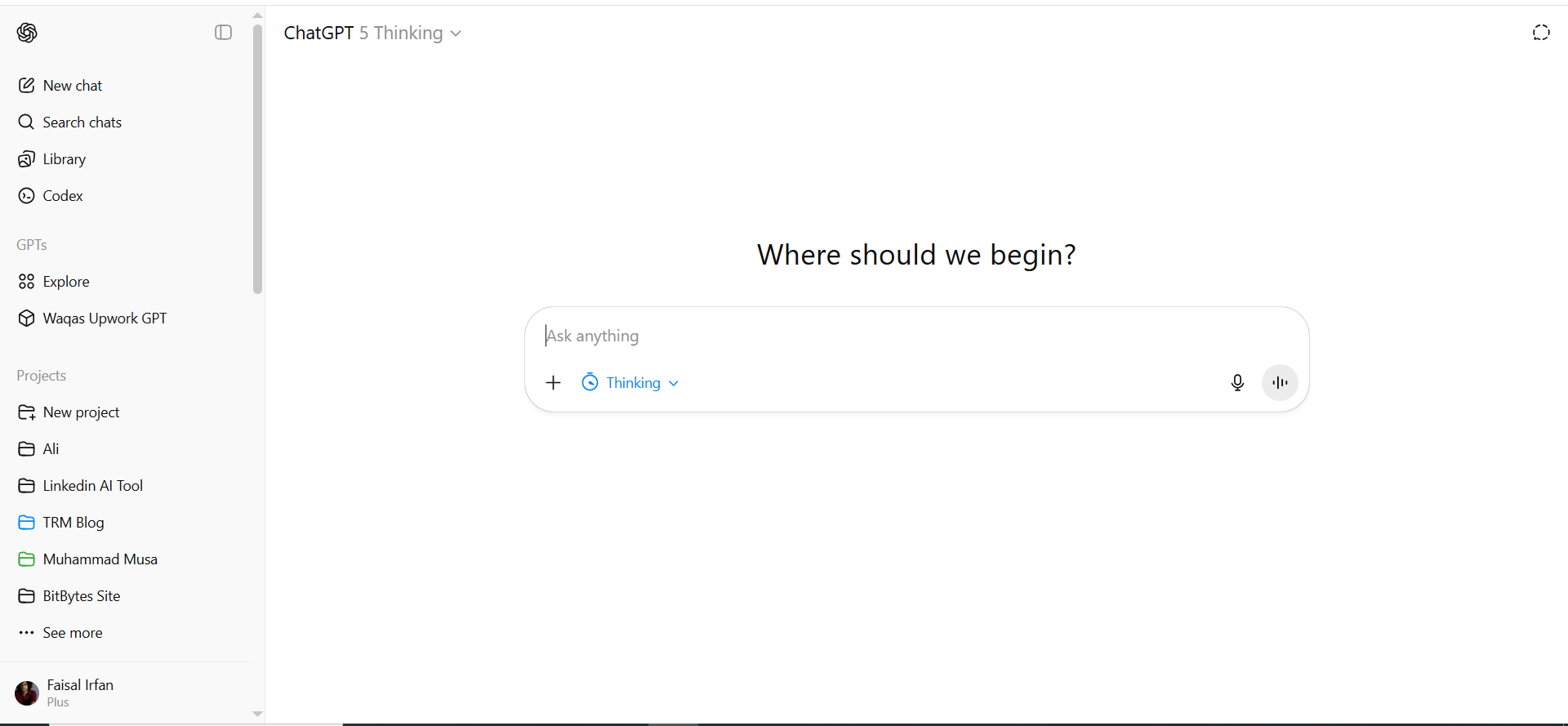
ChatGPT is OpenAI’s large language model available via web, mobile, and API. For blog writing, it functions as a research assistant, outlining tool, drafting engine, and editor rolled into one. You can upload documents, search the web in real time (on Plus/Pro and above), and use Canvas to compose and edit long-form pieces collaboratively. The latest GPT-5.4 on Pro and Business plans offers a 320-page context window, meaning you can paste entire competitor articles, brand guidelines, and research documents into a single conversation and ask the model to synthesize them into a blog post.
Why Teams Use It
ChatGPT’s combination of research capability, massive context window, and low barrier to entry makes it the default for content teams evaluating AI. Teams use it because it’s fast to onboard (sign up, start writing), cheap at the Plus tier ($20/month), and flexible enough to handle any content type. The web search feature means writers can pull in fresh data without leaving the app. The Canvas editor and Agent Mode on Pro plans let you iterate collaboratively without copy-pasting between documents.
What It’s Good For
ChatGPT excels at long-form research-heavy content: deep-dive blog posts, thought leadership pieces, and posts that require synthesis of multiple sources. The large context window is unmatched—you can paste an entire competitor’s article, your brand voice guide, 10 research papers, and your SEO outline all in one prompt, then ask GPT-5.4 to generate a comprehensive post that incorporates all of them. It's also excellent for ideation, outlining, and helping non-writers draft faster. Many content teams use it for the research and outline phase, then hand off to Claude or Jasper for the final polish.
When It’s a Good Fit
ChatGPT is a good fit if you’re a solo content creator, small team, or solopreneur working across multiple content types (blogs, emails, social, docs). It’s ideal if you value research flexibility and don’t need marketing-specific templates or brand voice training. If your team is distributed and wants a simple web interface with no setup, ChatGPT Plus is hard to beat at $20/month. It’s also the best choice if you’re just exploring AI-assisted writing and want to avoid a high-commitment purchase.
When It’s Not a Good Fit
ChatGPT isn’t ideal if you need native SEO optimization (you’ll need to audit and adjust manually). It’s not built for team workflows with approval stages or brand guidelines enforcement. If you’re writing dozens of posts monthly and need a tool that outputs consistent, on-brand content without heavy editing, you’ll spend more time tweaking than saving. Content that requires consistent voice across a large output volume often needs Jasper’s brand training instead. And if your team needs integration with your marketing stack (CRM, email, scheduling), ChatGPT alone won’t do it.
How to Use It
Start with a detailed system prompt that includes your blog’s style guide, tone, audience persona, and SEO requirements. Upload your best-performing blog post as a reference. Then prompt ChatGPT to generate an outline from your topic and keyword, iterate on the outline in Canvas, and generate the first draft. Use Canvas to edit, fact-check with web search, and refine. For final polish, copy to your favorite editor or pass to Writesonic for SEO audit.
Key Capabilities
- Web search (Plus/Pro and above): Pull real-time data, news, and fresh sources
- Canvas editor: Compose, edit, and iterate on long-form content side-by-side
- 320-page context window (GPT-5.4, Pro/Business): Paste entire competitive sets, guides, and research
- Deep Research mode (Plus, 10 runs/month): Automated research with AI agents that gather and summarize sources
- Document upload: Paste PDFs, Google Docs, brand guidelines, past posts
- Agent Mode: Create custom workflows with ChatGPT for research, drafting, and fact-checking
Pricing
- Free: Limited GPT-5.3 access, ad-supported (US only)
- Go: $8/month, more messages than Free, still includes ads
- Plus: $20/month, GPT-5.4, web search, Canvas, Deep Research (10 runs/mo)
- Pro: $100/month (5x Plus limits) or $200/month (20x Plus limits), GPT-5.4 Pro model, priority access
- Business: $25/user/month, team management, admin controls, usage analytics
- Enterprise: Custom pricing
Free Tier?
Yes. Free users get limited daily access to GPT-5.3 with ads in the US. No Canvas, no web search, no Deep Research. Upgrade to Plus to remove ads and unlock GPT-5.4.
Downsides / Limitations
- Generic output without detailed prompting: If you don’t engineer your prompts well, ChatGPT will produce generic, template-like content
- No native brand voice training: You must manually instruct it on tone each time or paste your style guide
- Editing overhead: Output often needs heavy editing for brand consistency, SEO, and fact-checking
- No team approval workflows: You can’t set up editorial stages or brand compliance checks
- No native SEO tools: You must use external tools to audit and optimize for keywords
2. Claude

What It Does
Claude is Anthropic’s conversational AI, available via web, mobile, API, and third-party integrations. For blog writing, Claude is strongest at producing coherent, nuanced long-form content with strong reasoning. The Sonnet model (free/Pro) can generate 12,000–18,000 words per session. You can upload documents, use web search (on higher tiers), and organize writing projects with the Projects feature to maintain style and context across multiple articles.
Why Teams Use It
Content teams choose Claude because of its exceptional reasoning and long-form coherence. It produces fewer generic phrases than some competitors and excels at handling nuanced, complicated topics. Claude is also strong at following detailed style instructions—if you provide a brand voice guide, Claude incorporates it consistently across a piece without needing constant reminders. The free tier is generous (daily usage limits, not word counts), making it ideal for small teams testing the waters.
What It’s Good For
Claude is excellent for in-depth, opinion-driven content, technical blog posts, and thought leadership pieces. It handles complex reasoning better than most alternatives—if your blog post requires synthesizing multiple viewpoints or explaining difficult concepts clearly, Claude often wins. It’s also strong at maintaining a specific voice or perspective across a long piece. Many content teams use Claude as their “final draft” tool: they outline in ChatGPT, draft in Claude, then polish in a brand-voice tool like Jasper.
When It’s a Good Fit
Claude is a good fit if your blog targets sophisticated audiences (developers, researchers, executives) who value depth and nuance. It’s ideal if you’re a solopreneur or small team and want a tool that requires less prompt engineering to produce on-brand content. If your blog posts average 2,000+ words, Claude’s superior long-form coherence justifies the cost. It’s also a good fit if you want to avoid heavy editing—Claude’s output typically needs less tweaking than ChatGPT for consistency and tone.
When It’s Not a Good Fit
Claude isn’t ideal if you need native SEO optimization or keyword research integration. It has no built-in templates, so you’ll need to build your own workflows or use it alongside a template-driven tool. It’s not a fit if your team needs visual dashboards, analytics, or tight integrations with marketing platforms (HubSpot, Mailchimp, etc.). And if you’re writing high-volume, short-form marketing copy (ads, landing pages, email subject lines), Copy AI or Jasper will be faster.
How to Use It
Start by creating a Project in Claude and uploading your brand voice guide, style sheet, and 2–3 example blog posts. Prompt Claude to “learn” this voice. Then, for each new post, provide a detailed brief: topic, audience, keywords, outline, and word count. Claude will draft the full piece. Use the Projects feature to maintain consistency across posts. Fact-check and run the final draft through a tool like Writesonic for SEO optimization before publishing.
Key Capabilities
- 12,000–18,000 word generation per session (Sonnet)
- Web search (Pro and Max plans)
- Document and PDF upload: Paste research, competitor posts, style guides
- Projects: Maintain context and voice across multiple articles
- Extended Thinking (Max plan, $100–200/mo): Deeper reasoning for complex topics
- Conversational refinement: Iterate in natural language without re-prompting
Pricing
- Free: Limited daily usage, Sonnet model
- Pro: $20/month, unlimited Sonnet, web search, Projects, document upload
- Max: $100–200/month (depending on region), all Pro features plus Extended Thinking, larger context window
- Team: $25–30/user/month, team management, usage analytics
Free Tier?
Yes. Free users get limited daily usage (typically 5–10 messages/day) with Sonnet. Upgrade to Pro for unlimited daily usage and web search.
Downsides / Limitations
- No native SEO optimization: You must audit and refactor for keywords manually or use an external tool
- No built-in templates: You need to create and maintain your own writing templates
- No brand voice enforcement: While Claude follows style instructions well, it doesn’t “lock in” voice the way Jasper does
- Limited free tier: Daily message limits (not word count) can frustrate high-volume users
- No team approval workflows: There’s no built-in editorial process for larger teams
3. Jasper
What It Does
Jasper is a marketing-focused AI content platform purpose-built for teams. It includes Canvas (long-form editor), 50+ templates (blogs, ads, emails, social), Brand Voice training (learns your style from 3+ samples), unlimited words on all paid plans, and integrations with Zapier, HubSpot, and WordPress. It runs on top of GPT and Claude but wraps them in marketing workflows and consistency checks.
Why Teams Use It
Marketing teams and agencies use Jasper because it’s designed for content production at scale. Brand Voice training means every post sounds like your company without constant manual tweaking. The template library and prebuilt workflows accelerate output. Jasper also enforces consistency across writers—if your team has 5 people writing blogs, Brand Voice ensures they all sound like the brand. The tool integrates with WordPress and email platforms, so you can publish and distribute without leaving Jasper.
What It’s Good For
Jasper is best for marketing-focused blog content: product announcements, case studies, how-tos, and demand-generation posts. Teams running high-volume blogs (15+ posts/month) benefit from the template library and brand consistency. It’s also strong for teams with multiple writers—Brand Voice training ensures consistency across the team. If your blog supports lead generation or sales, Jasper’s workflows help you move content from draft to CRM-ready without manual handoffs.
When It’s a Good Fit
Jasper is a good fit if you’re a content team or agency at a B2B or B2C company writing 10+ blog posts monthly. It’s ideal if consistency across writers matters and your brand has a distinctive voice. If you integrate with HubSpot, WordPress, or email tools, Jasper’s prebuilt integrations save setup time. It’s also a fit if you want to offload the “templating” and “workflow” decisions to the tool—Jasper handles a lot of the structure, so you focus on quality.
When It’s Not a Good Fit
Jasper isn’t ideal for solopreneurs or small teams with tight budgets (starting at $39/month for Creator plan, or $69/month month-to-month for Pro). It’s not a fit if you write highly nuanced, opinion-driven content where a template structure feels restrictive. If your blog requires heavy research and synthesis of multiple sources, Claude or ChatGPT may serve you better. And if you need deep SEO integration (keyword research, real-time SERP data), Writesonic is a better match.
How to Use It
- Set up Brand Voice by uploading 3–5 past blog posts or brand guidelines. Jasper learns your style.
- Choose a blog template (e.g., “Ultimate Guide,” “How-To,” “Case Study”) or create a custom workflow.
- Enter your topic, target keywords, and outline.
- Jasper generates a draft following your Brand Voice and the template structure.
- Edit in Canvas, then publish directly to WordPress or export.
Key Capabilities
- Brand Voice training: Learn from 3+ samples, enforce consistency across all output
- 50+ marketing templates: Blog, email, ad, social, landing page templates
- Unlimited words on all paid plans
- Canvas editor: Long-form composition and real-time collaboration
- Integrations: Zapier, HubSpot, WordPress, Google Analytics
- 30+ languages: Write and translate in-tool
- Team collaboration: Assign writers, review workflows, approval stages
Pricing
- No free plan. 7-day trial on Pro.
- Creator: $39/month (billed annual), unlimited words, Brand Voice, templates
- Pro: $69/month (month-to-month) or $59/month (annual), all Creator features plus integrations and team workflows
- Business: Custom pricing ($250+/month), dedicated support, SSO, custom integrations
Free Tier?
No. Jasper offers a 7-day trial on the Pro plan but no free tier. The Creator plan at $39/month is the entry point.
Downsides / Limitations
- No free plan: Budget-conscious solopreneurs may balk at the entry cost
- Template-driven structure: Some writers find the templates formulaic; output can feel “samey” across posts
- Output quality varies: Jasper relies on underlying LLMs (GPT, Claude), so quality depends on your prompts and Brand Voice setup
- No real-time SEO data: Unlike Writesonic, Jasper doesn’t pull SERP data or keyword difficulty
- Learning curve for Brand Voice: Training Brand Voice well requires effort; weak training = inconsistent output
4. Writesonic
What It Does
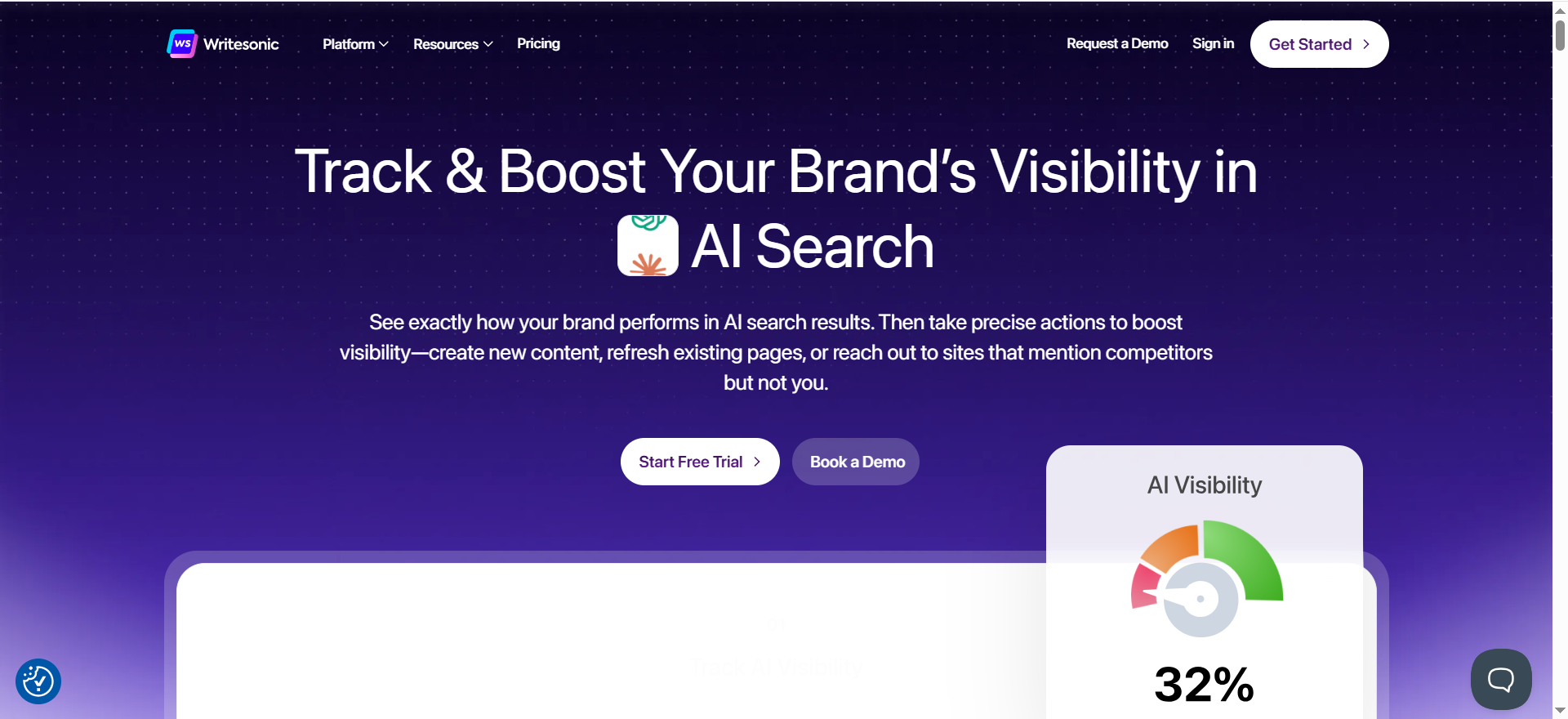
Writesonic is an AI writing platform focused on SEO and content production. Its AI Article Writer can generate articles up to 5,000 words, pull real-time web data to keep facts current, analyze competitors, track AI visibility (where your content ranks on ChatGPT, Gemini, Perplexity), and includes 100+ content templates. It integrates with WordPress and Google Search Console for seamless publishing and keyword tracking.
Why Teams Use It
Content teams and agencies use Writesonic because it bundles AI writing, SEO, and visibility tracking in one tool. Instead of drafting in ChatGPT and then auditing in a separate SEO tool, Writesonic handles both in a single workflow. The real-time data integration means your posts include current stats, research, and trends without manual fact-checking. The AI Visibility tracker is unique—it shows where your AI-generated content ranks in ChatGPT search and other AI search engines, something traditional SEO tools miss.
What It’s Good For
Writesonic is best for content teams producing high-volume, SEO-focused blog content. It excels at how-tos, listicles, comparisons, and product-focused posts where ranking on Google matters. The real-time data integration makes it strong for news-adjacent blogs and evergreen content that needs current examples. If your blog supports lead generation and sales, the WordPress integration and keyword tracking help you move from publication to analytics without friction.
When It’s a Good Fit
Writesonic is a good fit if you’re a content team or agency where SEO performance is a KPI. It’s ideal if you write 10+ posts monthly and want keyword optimization built into the drafting process. If you use WordPress and Google Search Console, the integrations save time. It’s also a fit if you care about ranking in AI search engines (ChatGPT Search, Gemini, Perplexity)—the AI Visibility tracker is a differentiator.
When It’s Not a Good Fit
Writesonic isn’t ideal for long-form, research-heavy content where depth matters more than keywords. The Article Writer caps at 5,000 words, so if your average post is 8,000+ words, you’ll need to paste and stitch multiple outputs. It’s not a fit if you prioritize unique voice or brand consistency—Writesonic doesn’t have Brand Voice training like Jasper. And if your blog audience is highly technical or academic, Claude or ChatGPT may produce more nuanced content.
How to Use It
- Enter your blog topic and target keywords.
- Writesonic analyzes competitor content and suggests angle/outline.
- Use the AI Article Writer to generate the draft (up to 5,000 words), pulling real-time data.
- Review for accuracy and tone in the editor.
- Check the AI Visibility tracker to see where the post will rank in ChatGPT Search.
- Publish directly to WordPress or export.
Key Capabilities
- AI Article Writer 6.0: Generate up to 5,000-word articles
- Real-time web data: Pull current stats, research, and trends into articles
- Competitor analysis: Analyze top-ranking posts and generate outlines
- 100+ templates: Blog, email, ad, landing page, social templates
- AI Visibility tracking: See where your content ranks on ChatGPT, Gemini, Perplexity
- WordPress integration: Publish directly from Writesonic
- Google Search Console sync: Track keyword performance
Pricing
- Free trial: 10,000 words/month (limited features)
- Lite: $39/month (billed annual), 15 articles/month, real-time data, competitor analysis
- Starter: $79/month, 15 articles/month, all Lite features, Google integrations
- Basic: $199/month, expanded article output, team collaboration
- Growth: $399/month, 50 articles/month, audits, sentiment analysis, multi-region support
- Enterprise: Custom pricing
Free Tier?
Yes. Free trial includes 10,000 words/month with limited features. To unlock real-time data, competitor analysis, and AI Visibility tracking, upgrade to paid.
Downsides / Limitations
- Article Writer capped at 5,000 words: Long-form research posts require multiple outputs and manual stitching
- Output quality varies on complex topics: Writesonic’s strength is SEO-focused content, not nuanced analysis
- Pricing escalates quickly: Moving from Lite ($39) to Growth ($399) is a big jump
- AI Visibility tracker is new: Less historical data than traditional SEO tools
- Relies on underlying LLMs: Quality depends on your outline and keyword input; weak briefs = weak output
5. Copy AI
What It Does
Copy AI is a GTM (go-to-market) platform that started as a short-form copywriting tool and evolved into a workflow automation platform. For blog writing, Copy AI includes a Chat interface for content, Brand Voice / Content Agents (learns from 3 writing samples), and prebuilt workflows for lead-gen campaigns. It handles everything from drafting to email sequences to landing page copy in one tool.
Why Teams Use It
Teams use Copy AI for marketing copy and GTM workflows, not necessarily as a primary blog writer. It’s strong for teams that need copy, email, and landing page text all speaking in one voice. The Brand Voice training is fast (3 samples) and the platform lets you create “Agents” that handle entire workflows—idea to email sequence to landing page—without manual handoffs. If your team works across multiple content types (blog snippets, email, ads), Copy AI’s unified approach saves time.
What It’s Good For
Copy AI excels at short-form marketing copy: email subject lines, ad copy, social media posts, landing page headlines, and promotional blog snippets. It’s also strong for teams building full GTM campaigns where copy consistency across email, landing page, and ads matters. If your blog is a lead-gen tool and you want blog snippets, CTAs, and email follow-ups all using the same voice, Copy AI’s workflow automation is helpful.
When It’s a Good Fit
Copy AI is a good fit if you’re a growth team or small agency writing short-form marketing copy across multiple channels. It’s ideal if you need brand consistency across email, ads, and landing pages—the Content Agents enforce this. It’s also a fit if you want to automate workflows: topic to draft to email to landing page all in one tool. However, it’s not a great fit for long-form blog content—that’s not Copy AI’s focus.
When It’s Not a Good Fit
Copy AI isn’t ideal as a primary blog writer. Quality drops noticeably on content longer than 500 words; the tool was designed for short-form copy, and long-form isn’t its strength. It’s not a fit if you need depth, research, or nuance. The free tier is limited (2,000 words/month), so even for small teams, paid plans are necessary. And if your blog is your primary content engine (not lead-gen support), ChatGPT, Claude, or Jasper will serve you better.
How to Use It
- Create a Content Agent by uploading 3 samples of your brand copy (email, ad, blog snippet).
- Use the Chat interface to prompt for blog ideas, outlines, or short-form snippets.
- Build GTM workflows: topic to draft to email to landing page, all in one go.
- Use the Agent to ensure consistency across all outputs.
- Export to your CMS or email platform.
Key Capabilities
- Chat interface: Conversational content generation
- Brand Voice / Content Agents: Learn from 3 samples, enforce voice across campaigns
- GTM workflows: Build topic-to-email-to-landing-page pipelines
- Short-form templates: Email, ad, social, landing page copy
- Integrations: Zapier, email platforms, CMS
- Team collaboration: Share Agents and workflows with your team
Pricing
- Free: 2,000 words/month
- Chat: $29/month ($24/month annual), 5 seats, unlimited chat words
- Pro: $49/month ($36/month annual), unlimited words, brand voices
- Agents: $249/month, 10 seats, 10,000 workflow credits/month
- Enterprise: Custom pricing
Free Tier?
Yes. Free plan includes 2,000 words/month. The Chat plan ($29/month) adds unlimited chat words and 5 seats. Upgrade to Pro ($49/month) for unlimited words and brand voice features.
Downsides / Limitations
- Not built for long-form blog content: Quality drops noticeably on posts over 500 words
- Pivoted away from blogging: Copy AI now focuses on GTM and workflow automation, not blog writing
- Limited free tier: 2,000 words/month is tight even for testing
- Output can feel formulaic: Especially on longer content, the tool’s short-form roots show
- No SEO features: Unlike Writesonic, Copy AI has no keyword research or SEO auditing
What Is the Best AI for Writing Blog Posts?
The best AI for blog writing depends on your priorities. For depth and research, ChatGPT with its large context window and web search wins. For reasoning and nuance, Claude produces the most thoughtful content. For marketing teams prioritizing consistency, Jasper’s Brand Voice training is unbeatable. For SEO-focused content, Writesonic integrates keyword research and real-time data. For short-form copy within a larger GTM workflow, Copy AI is efficient. Most content teams use a hybrid: ChatGPT for ideation and research, Claude for drafting long-form, and Jasper or Writesonic for final polish and consistency.
Can AI Write a Full Blog Post?
Yes. All five tools can generate full blog posts in a single session. ChatGPT (Plus/$20/mo) can generate long pieces and refine them in Canvas. Claude (Pro/$20/mo) can write 12,000–18,000 words per session. Jasper (Creator/$39/mo) and Writesonic (Lite/$39/mo) are designed for full post generation with templates and SEO built in. Copy AI handles short posts well but struggles with long-form. The output is usually 80% of the way to publication—expect editing for accuracy, brand voice, and SEO optimization, but the heavy lifting (research, structuring, drafting) is AI-handled.
Is ChatGPT Good for Blog Writing?
Yes. ChatGPT is one of the most popular AI tools for blog writing, especially at the Plus tier ($20/month). Its large context window, web search, and Canvas editor make it strong for research-heavy posts and complex topics. The main downside is that ChatGPT’s output is generic without detailed prompting, and it doesn’t enforce brand voice the way Jasper does. Most content teams use ChatGPT for brainstorming and drafting, then refine in a tool like Jasper or Claude. For solopreneurs, ChatGPT Plus is an excellent starting point.
Which AI Tool Writes the Most Human-Like Blog Content?
Claude generally produces the most human-like, nuanced content because Anthropic trained it to be conversational and coherent over long stretches. Its reasoning is stronger, and it’s less likely to repeat common phrases or feel formulaic. ChatGPT with careful prompting is close. Jasper can feel more “AI-written” because it’s template-driven, but its Brand Voice training helps personalize output. The key to human-like content isn’t just the tool—it’s detailed prompting, style guidelines, and editing.
How Much Does an AI Blog Writer Cost?
Costs range from free (limited daily usage) to $400+/month at scale. ChatGPT Plus is $20/month. Claude Pro is $20/month. Jasper starts at $39/month (billed annual) or $69/month (monthly). Writesonic starts at $39/month (Lite annual). Copy AI starts at $29/month (Chat plan). For a solo operator, budget $20–50/month. For a content team writing 10+ posts monthly, expect $100–400/month depending on the tool and usage. Most tools offer free trials or free tiers, so you can test before committing.
Can AI Blog Writers Help with SEO?
Most AI blog writers don’t have native SEO features. ChatGPT and Claude require manual optimization—use external tools like Ahrefs or SEMrush to audit keywords and readability. Jasper has no SEO features built in but produces marketing-focused content that ranks well if properly briefed. Writesonic is the only major tool with native SEO integration: it analyzes competitors, suggests keywords, integrates with Google Search Console, and tracks AI Visibility. If SEO is a priority, either use Writesonic or combine ChatGPT/Claude with an external SEO tool.
Is Jasper Better Than ChatGPT for Blogs?
It depends. Jasper is better for marketing teams needing brand consistency across multiple writers and high-volume output. The template library and Brand Voice training enforce a consistent voice without manual tweaking. ChatGPT is better for solopreneurs and depth-focused writing where flexibility and research matter. ChatGPT’s context window is much larger, web search is more flexible, and it handles nuanced topics better. For a team writing 20+ posts monthly with strict brand guidelines, Jasper’s $39–69/month ROI is clear. For an individual writing 1–4 posts monthly, ChatGPT Plus at $20/month is more cost-effective.
What Is the Best Free AI Blog Writer?
ChatGPT’s free tier offers limited daily access to GPT-5.3 in the US with ads, no web search, no Canvas. Claude’s free tier offers similar daily limits with the Sonnet model. Writesonic’s free trial gives 10,000 words/month with limited features. Copy AI’s free tier provides 2,000 words/month. For a true free option with no time limits, none fully qualify—all free tiers have restrictions. Best free option overall: Claude, because the daily message limits are more forgiving than ChatGPT’s, and Sonnet is strong for long-form. If you need more than a trial, upgrade to Pro ($20/month) on either ChatGPT or Claude.
How Do AI Blog Writers Handle Brand Voice?
Jasper is the only tool that trains on your voice: upload 3+ past posts, and Brand Voice learns and enforces your style across all output. ChatGPT and Claude handle brand voice through detailed system prompts and style guides that you paste each session. Writesonic has no native brand voice training; consistency depends on your briefs. Copy AI has Content Agents (similar to Jasper’s Brand Voice) that learn from 3 samples. For teams where voice matters, Jasper and Copy AI reduce manual editing. For solopreneurs, a well-built system prompt in Claude or ChatGPT can work, but it requires discipline.
Should Content Teams Use AI for Blog Production?
Yes, with caveats. AI is exceptionally good at research, outlining, drafting, and generating variations—it can cut content production time by 40–60%. However, AI output still requires editing for accuracy, brand consistency, and tone. It works best in a hybrid workflow: AI handles ideation and drafting, humans handle fact-checking, voice refinement, and quality gates. For demand-gen blogs where volume matters more than literary depth, AI is a huge time-saver. For thought-leadership or expert-driven blogs, AI is a drafting tool, not a replacement for human expertise.
Can I Use AI Blog Writers for SEO Content?
Yes, and several tools are built for this. Writesonic is the strongest: it integrates keyword research, competitor analysis, and SEO auditing. ChatGPT works if you manually brief it on target keywords and use external tools to audit. Claude can write SEO-optimized content if you prompt it with keyword density targets and search intent. Jasper doesn’t have native SEO features but produces marketing content that ranks well. Copy AI is weak for SEO. Best practice: brief your AI tool on target keywords, primary intent, and related topics, then use a tool like Surfer SEO or Frase to audit and refine before publishing.
Which AI Blog Writer Integrates Best with WordPress?
Jasper and Writesonic both offer native WordPress integration: publish directly from the tool without copy-pasting. ChatGPT and Claude have no native WordPress integration; you’ll export/copy-paste manually. Copy AI integrates via Zapier, which can trigger WordPress posts but requires more setup. If WordPress integration is important, Jasper and Writesonic save time. If you don’t mind manual copy-paste, any tool works—the bottleneck is usually drafting, not publishing.
How Do I Choose Between ChatGPT, Claude, and Jasper?
Use this decision tree: Solo operator, small budget, research-heavy posts? ChatGPT Plus ($20/mo). Solo operator, emphasis on nuance and reasoning? Claude Pro ($20/mo). Marketing team (3+ writers), 10+ posts/month, strict brand voice? Jasper ($39–69/mo). Content team, SEO performance is critical? Writesonic ($39–199/mo). Small team, short-form copy across email/ads/blog? Copy AI ($49/mo). Many teams start with ChatGPT or Claude, then add Jasper when team size and output volume justify the cost.
What’s the Learning Curve for AI Blog Writers?
ChatGPT and Claude have a low learning curve—start typing and iterate. You can be productive in an hour. Jasper has a medium learning curve: Brand Voice setup takes 30 minutes, navigating templates and workflows takes another hour. By hour 2, you’re productive. Writesonic is also medium: the article writer is straightforward, but understanding keyword integration and AI Visibility tracking takes time. Copy AI is low: the chat interface is intuitive, but building effective Agents and GTM workflows takes experimentation. No tool requires days of training.
Can AI Blog Writers Generate Content in Multiple Languages?
Jasper explicitly supports 30+ languages and can switch languages mid-project. ChatGPT and Claude handle multiple languages well in text. Writesonic supports multiple languages but is optimized for English. Copy AI doesn’t emphasize language support. If multilingual content is core to your strategy, Jasper is the strongest option. For occasional translation, ChatGPT and Claude are fine—prompt them to write in the target language.
Are AI Blog Writers Better Than Human Writers?
No. AI is faster, cheaper, and more tireless, but human writers bring domain expertise, judgment, original research, and perspective. The best content combines both: AI for drafting and research support, humans for fact-checking, voice, and judgment. For high-stakes, expert-driven content, humans are essential. For high-volume, demand-gen content, AI dramatically accelerates output. Most high-performing content teams use AI as an amplifier, not a replacement.
Final Recommendation
For 2026, the AI blog writer landscape is mature and competitive. Start here based on your role: solo content creator or small team under $50/month, go with ChatGPT Plus ($20/month) as the most versatile entry point. B2B company prioritizing depth and reasoning, combine Claude Pro ($20/month) for drafting with Writesonic ($39/month annual) for SEO audit. Content team at a B2C or SaaS company (3+ writers, 10+ posts/month), invest in Jasper ($39–69/month) for Brand Voice and template consistency. Ecommerce or lead-gen business where every post must rank, use Writesonic ($39–399/month depending on volume). Growth team building GTM campaigns (copy + email + landing pages), consider Copy AI ($29–249/month) for workflow automation, but pair with ChatGPT or Claude for long-form blog content. All five tools offer free trials. Spend 2 hours testing each before committing. The best tool is the one you'll actually use—and using an AI blog writer at all beats not using one.
FAQs
Both are $20/month. ChatGPT Plus offers GPT-5.4, web search, Canvas editor, and Deep Research. Claude Pro offers the Sonnet model, web search, Projects, and document analysis. ChatGPT is more versatile for research; Claude is better for long-form depth. Both are excellent entry points. Try each free tier and pick based on the output style you prefer.
Technically yes, but it’s risky. Free tiers have usage limits, may have unfavorable terms of service, and the outputs lack consistency. For commercial use, upgrade to a paid plan. The investment ($20–70/month) quickly pays for itself in time savings.
This is evolving. Currently, no universal rule exists. Best practice: if your AI tool uses real-time web data or pulls from specific sources (like Writesonic pulling from Google), cite those sources as you would any research. If AI generates original text, no citation is needed, but transparency is wise.
This happens. Always fact-check AI output, especially claims, statistics, and expert opinions. If your AI tool cites sources (Writesonic does), verify them. If it doesn’t (ChatGPT, Claude), use tools like Google to verify. For sensitive topics, human review is essential.
Generally yes, but each platform (LinkedIn, Medium, your blog) may require slightly different formatting, tone, or length. AI tools can help adapt posts for different platforms. Use Jasper’s templates or Copy AI’s workflow automation to repurpose content efficiently.