Best AI Ad Writing Tools (2026)
A practical buyer's guide to picking the right ai ad writing tools stack for content production across content and SEO.


This playbook helps content managers and growth marketers compare the best ai ad writing tools options for content production. It breaks down where chatgpt, claude stand out, when alternatives such as writer, grammarly make more sense, and which setup fits B2B companies and B2C brands and solo operators and small businesses.
If you need ad copy that converts and you are tired of staring at blank Google Ads or Facebook headline fields, the five tools below are the ones worth testing right now. ChatGPT is the best all-round pick for teams that want maximum flexibility at the lowest cost. Claude wins on nuance and brand-voice consistency. Jasper is built for marketing teams that need repeatable, on-brand output at scale. Writesonic is the budget-friendly middle ground with 80-plus templates. And Copy.ai shines when you need workflow automation baked into the copy generation process. This guide breaks down what each tool does well, where it falls short, pricing, and which team profile it fits, so you can pick the right one without burning a week on trials.
Table of Contents
Best AI Ad Writing Tools (Quick Comparison)
| Tool | Best For | Starting Price | Free Tier | Ad Frameworks | Brand Voice |
|---|---|---|---|---|---|
| ChatGPT | Flexibility and general-purpose ad copy | $20/mo (Plus) | Yes (limited) | AIDA, PAS via prompts | Manual prompt-based |
| Claude | Nuanced, brand-consistent copy at scale | $20/mo (Pro) | Yes (limited) | AIDA, PAS via prompts | Strong contextual memory |
| Jasper | Marketing teams needing repeatable workflows | $39/mo (Creator) | 7-day trial | 50+ built-in templates | Jasper IQ Brand Voice |
| Writesonic | Budget-conscious teams wanting templates | $39/mo (annual) | Limited free plan | AIDA, PAS, 80+ templates | Basic brand profiles |
| Copy.ai | Workflow automation and batch ad generation | $36/mo (annual) | 2,000 words/mo | 90+ templates | Infobase + Brand Voice |
Best AI Ad Writing Tools (Quick Comparison)
Tool #1: ChatGPT
What It Does
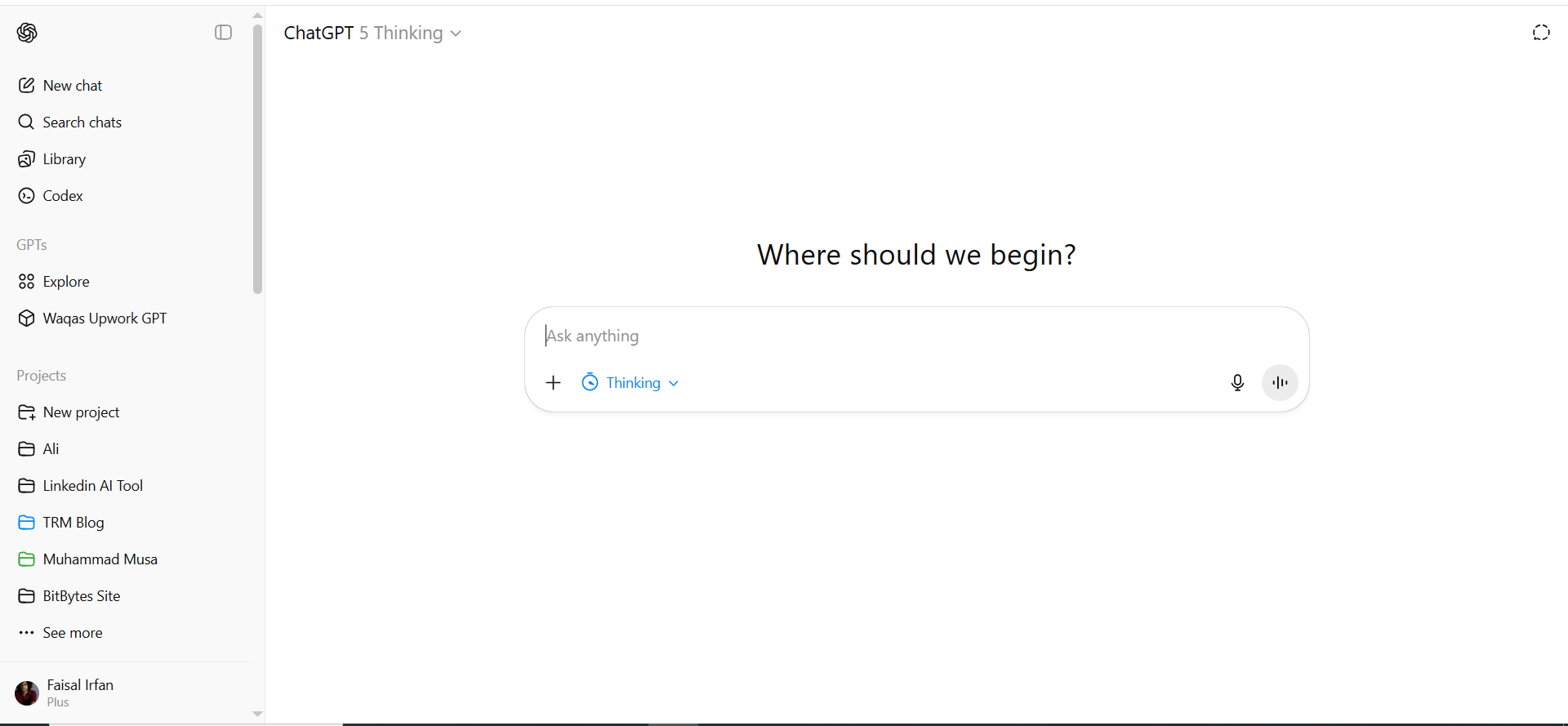
ChatGPT is OpenAI's general-purpose large language model that handles everything from brainstorming ad angles to drafting full Google Ads campaigns. It does not ship with marketing-specific templates out of the box, but its flexibility means you can build any ad format you need through well-crafted prompts. With GPT-4o and the latest model updates, ChatGPT produces ad copy that routinely matches or beats purpose-built tools when the prompt includes clear constraints like character limits, audience context, and conversion goals.
Why Teams Use It
Most marketing teams already have a ChatGPT subscription for other work, which makes it the lowest-friction option for ad copy. There is no separate onboarding, no new dashboard to learn, and no per-seat cost beyond the existing plan. Teams use it because the same tool that writes blog outlines in the morning can generate fifty headline variations for a Facebook campaign in the afternoon. The conversational interface also makes iteration fast, where you paste in a draft, ask for a punchier hook, and get five alternatives in seconds.
What It Is Good For
ChatGPT excels at rapid ideation, especially when you need a high volume of headline and description variants for A/B testing. It handles Google Ads responsive search ad formats well, producing the fifteen headlines and four descriptions needed per ad group without breaking structure. It is also strong for multichannel copy, you can ask it to adapt a single value proposition into Google, Facebook, LinkedIn, and email versions in one conversation. Teams doing performance marketing on a budget find ChatGPT hard to beat because the output quality at $20 per month competes with tools that charge three to five times more.
When It Is a Good Fit
ChatGPT works best for solo marketers, freelancers, and lean startup teams that need a flexible tool without a large software budget. It is also a strong fit for agencies that handle multiple clients, since you can switch context between brand voices within the same conversation by providing brand guidelines as part of the prompt. If your workflow is prompt-driven rather than template-driven, ChatGPT will feel natural.
When It Is Not a Good Fit
ChatGPT struggles when teams need enforced brand guardrails without manual prompt engineering. There is no built-in brand voice training, so consistency depends entirely on the quality of the prompt. For large teams where multiple people generate ad copy, output can drift unless everyone uses the same prompt templates. It also lacks native integrations with ad platforms, so you cannot push copy directly into Google Ads or Meta Ads Manager without copy-pasting or third-party connectors.
How to Use It
Start by creating a master prompt that includes your brand voice guidelines, target audience description, product positioning, and the specific ad format you need. Save this prompt as a reusable template. For each campaign, swap in the new offer details, landing page URL, and any character-count constraints. Ask ChatGPT to produce multiple variants and then request refinements on the top performers. Use Custom GPTs to build a persistent ad copy assistant that remembers your brand guidelines across sessions.
Key Capabilities
GPT-4o model with strong reasoning for persuasive copy. Supports file uploads so you can feed in competitor ads, landing pages, or brand documents for context. Custom GPTs let you build reusable assistants. Web browsing for real-time competitor and market research. Memory features that retain brand preferences across conversations. Canvas mode for collaborative editing of longer copy.
Pricing
Free tier with GPT-4o mini access and daily limits. ChatGPT Plus at $20 per month gives full GPT-4o access with higher rate limits. ChatGPT Business (formerly Team) at $25 to $30 per seat per month adds workspace features and admin controls. Enterprise pricing is custom.
Free Tier?
Yes. The free plan includes access to GPT-4o mini with daily usage caps. It is enough to test the tool for ad copy, but heavy users will hit limits quickly.
Downsides and Limitations
No built-in ad copy templates or marketing frameworks without manual prompt setup. No native ad platform integrations. Brand voice consistency requires disciplined prompt management. Output quality varies with prompt quality, which means the learning curve is in prompt engineering rather than in the tool itself. No predictive performance scoring for generated copy.
Tool #2: Claude
What It Does
Claude is Anthropic's large language model, and it has carved out a reputation as the writer's AI. For ad copy specifically, Claude's strength is producing text that reads like a human wrote it, with natural cadence, varied sentence structure, and an ability to maintain a consistent brand voice across dozens of variants. Claude Sonnet 4.6 is the recommended model for marketing copy, and it comes with specific strengths in following nuanced creative briefs and producing output that needs minimal editing.
Why Teams Use It
Teams choose Claude over alternatives when brand voice consistency matters more than speed of setup. In head-to-head tests, Claude-generated ads achieved 23 percent higher average click-through rates compared to human-written copy, with 18 percent lower cost per acquisition and 31 percent higher conversion rates across tested campaigns. Claude maintains output quality across 50-plus variants per session, where human copywriters typically hit creative fatigue after 8 to 10 variants. This makes it particularly valuable for teams running high-volume A/B tests.
What It Is Good For
Claude excels at writing ad copy that requires emotional nuance, storytelling hooks, and brand-specific tone. It handles long-form landing page copy as well as short-form headlines, and it is particularly strong at adapting a single message to different audience segments without losing the core positioning. The extended context window means you can feed in entire brand guidelines, competitor ads, and previous campaign performance data in a single prompt, giving Claude more context to work with than most competitors.
When It Is a Good Fit
Claude is the right choice for brands where voice and tone are critical differentiators, think premium B2B SaaS, luxury ecommerce, or any company where the copy needs to feel human and considered rather than templated. It is also strong for teams that have a mature prompting workflow and want the highest-quality raw output with the least post-editing. If you already invest time in crafting detailed creative briefs, Claude will reward that investment more than most tools.
When It Is Not a Good Fit
Claude is not ideal for teams that want a point-and-click template experience. Like ChatGPT, it requires prompt engineering to get the best results, and it does not have built-in marketing-specific templates. It also lacks native integrations with ad platforms. Teams that need workflow automation, built-in collaboration, or predictive scoring will need to look elsewhere or pair Claude with additional tools.
How to Use It
Build a brand DNA document that includes your voice guidelines, key messages, audience personas, and examples of copy you consider on-brand. Upload this document at the start of each Claude session or use Projects to keep it persistent. For each ad campaign, provide the specific offer, format requirements, character limits, and any performance data from previous campaigns. Ask Claude to generate variants and then iterate on the strongest ones. Use the artifact feature to create structured outputs like comparison tables or multi-format copy decks.
Key Capabilities
Claude Sonnet 4.6 and Opus 4.6 models optimized for different use cases. Extended context window for processing large brand documents. Projects feature for persistent brand context across sessions. Strong reasoning for understanding complex creative briefs. Artifact creation for structured outputs. Claude Code for building automated copy workflows.
Pricing
Free tier with Sonnet 4.6 access and daily limits. Claude Pro at $20 per month unlocks Opus 4.6 and 5x usage limits. Claude Team Standard at $20 per seat per month for collaborative use, with Premium seats at $100 per seat per month for Claude Code access. API pricing starts at $3 per million input tokens for Sonnet 4.6.
Free Tier?
Yes. The free plan includes Sonnet 4.6 access, web search, and file uploads with daily usage limits. Enough for testing but not for production ad copy workflows.
Downsides and Limitations
No built-in marketing templates or ad frameworks. No native ad platform integrations. Requires prompt engineering skill to unlock full potential. Smaller ecosystem of third-party integrations compared to ChatGPT. No predictive performance scoring. The free tier has tighter daily limits than ChatGPT's free tier.
Tool #3: Jasper
What It Does
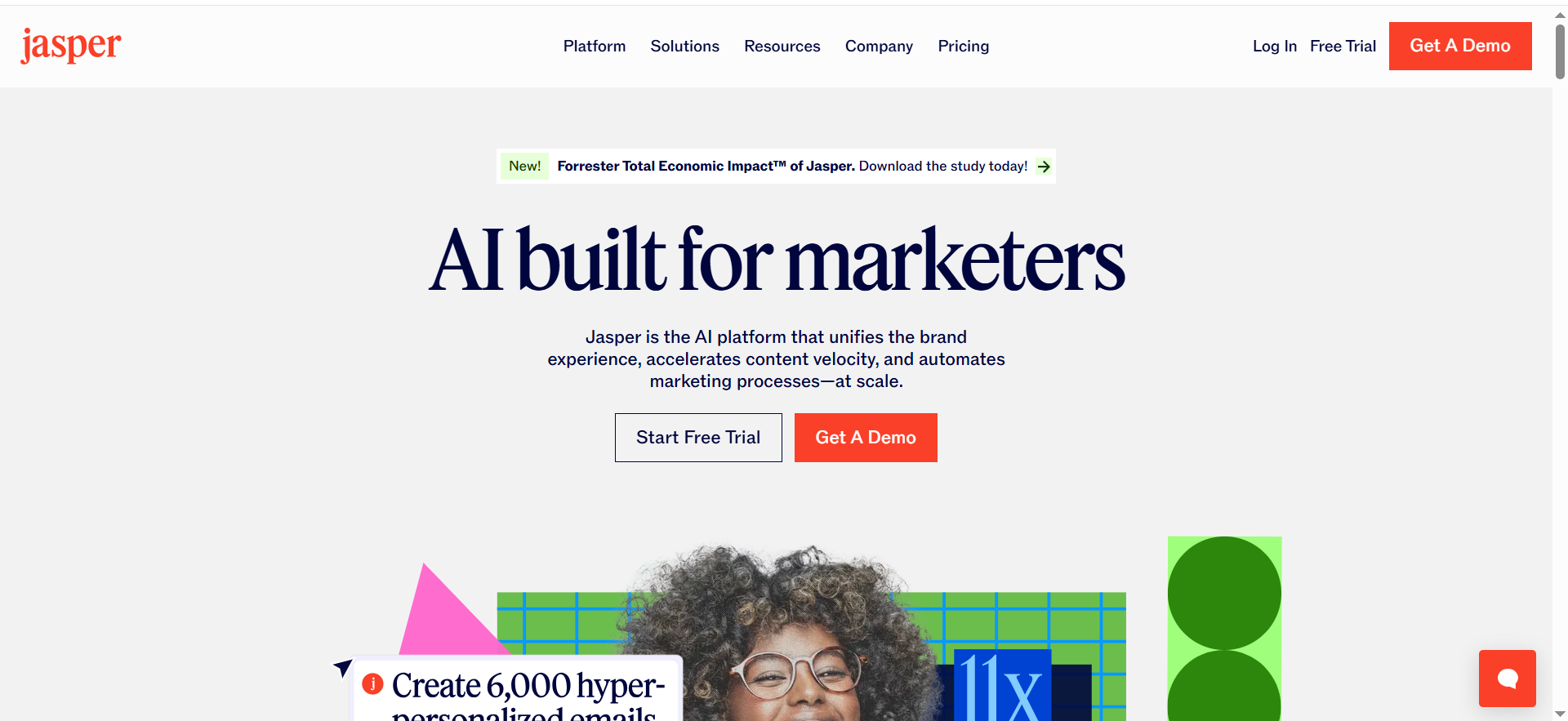
Jasper is purpose-built for marketing teams. Unlike general-purpose LLMs, Jasper ships with 50-plus short-form templates specifically designed for ad copy, including Google Ads headlines, Facebook primary text, Instagram captions, Amazon product descriptions, and LinkedIn sponsored content. Jasper IQ learns your brand's voice and style from your existing content, and Content Pipelines automate repeatable copy workflows so you can generate campaign-ready output at scale.
Why Teams Use It
Marketing teams choose Jasper because it eliminates the prompt engineering step. Instead of crafting a detailed prompt every time, you select a template, fill in the product name, audience, and tone, and Jasper generates ad copy that follows proven marketing frameworks like AIDA and PAS. This makes it accessible to team members who are not prompt engineers, which is critical for larger teams where multiple people need to produce on-brand copy without a steep learning curve.
What It Is Good For
Jasper is strongest when you need consistent, repeatable output across a team. The Brand Voice feature means everyone on the team generates copy that sounds the same, regardless of who is using the tool. It handles high-volume campaign creation well, where you can generate dozens of ad variants in minutes using templates. The built-in SEO mode also makes Jasper useful for teams that need their ad copy to align with their organic content strategy.
When It Is a Good Fit
Jasper fits best in mid-market to enterprise marketing teams with three or more people producing content. If your team runs campaigns across multiple channels and needs brand consistency without micromanaging every output, Jasper's guardrails are worth the premium. It is also a strong fit for agencies managing multiple client brands, since each client can have its own Brand Voice profile.
When It Is Not a Good Fit
Jasper is overkill for solo marketers or freelancers who can get the same results from ChatGPT or Claude at a lower price. The per-seat pricing adds up quickly for larger teams, and the template-driven approach can feel rigid for creative teams that prefer open-ended generation. If you need deep customization or want to build complex automated workflows, Jasper's templates may feel limiting compared to what you can do with prompt engineering in ChatGPT or Claude.
How to Use It
Start by training Jasper on your brand voice using existing copy samples, brand guidelines, and tone examples. Set up Brand Voices for each client or product line. Choose the appropriate template for your ad format, such as Google Ads headlines or Facebook primary text. Fill in the required fields and generate variants. Use the editor to refine output, and leverage Content Pipelines to batch-produce copy for multi-channel campaigns.
Key Capabilities
Fifty-plus short-form marketing templates. Jasper IQ Brand Voice training. Content Pipelines for automated workflows. AIDA, PAS, and other marketing frameworks built in. SEO mode for search-aligned copy. Team collaboration features. Browser extension for writing ads directly in ad platforms. Multi-language support.
Pricing
Creator plan at $39 per month billed annually or $49 per month billed monthly for one user. Pro plan at $59 per month billed annually or $69 per month billed monthly for up to five users with three Brand Voices. Business plan has custom pricing starting around $1,000 per month. All plans include unlimited word generation.
Free Tier?
No permanent free tier. Jasper offers a 7-day free trial on Creator and Pro plans.
Downsides and Limitations
Higher price point than general-purpose LLMs. Per-seat pricing adds up for larger teams. Template-driven approach can feel rigid. Output quality on complex, nuanced briefs may lag behind ChatGPT or Claude. No predictive performance scoring built in. The Business plan pricing is opaque and requires a sales conversation.
Tool #4: Writesonic
What It Does
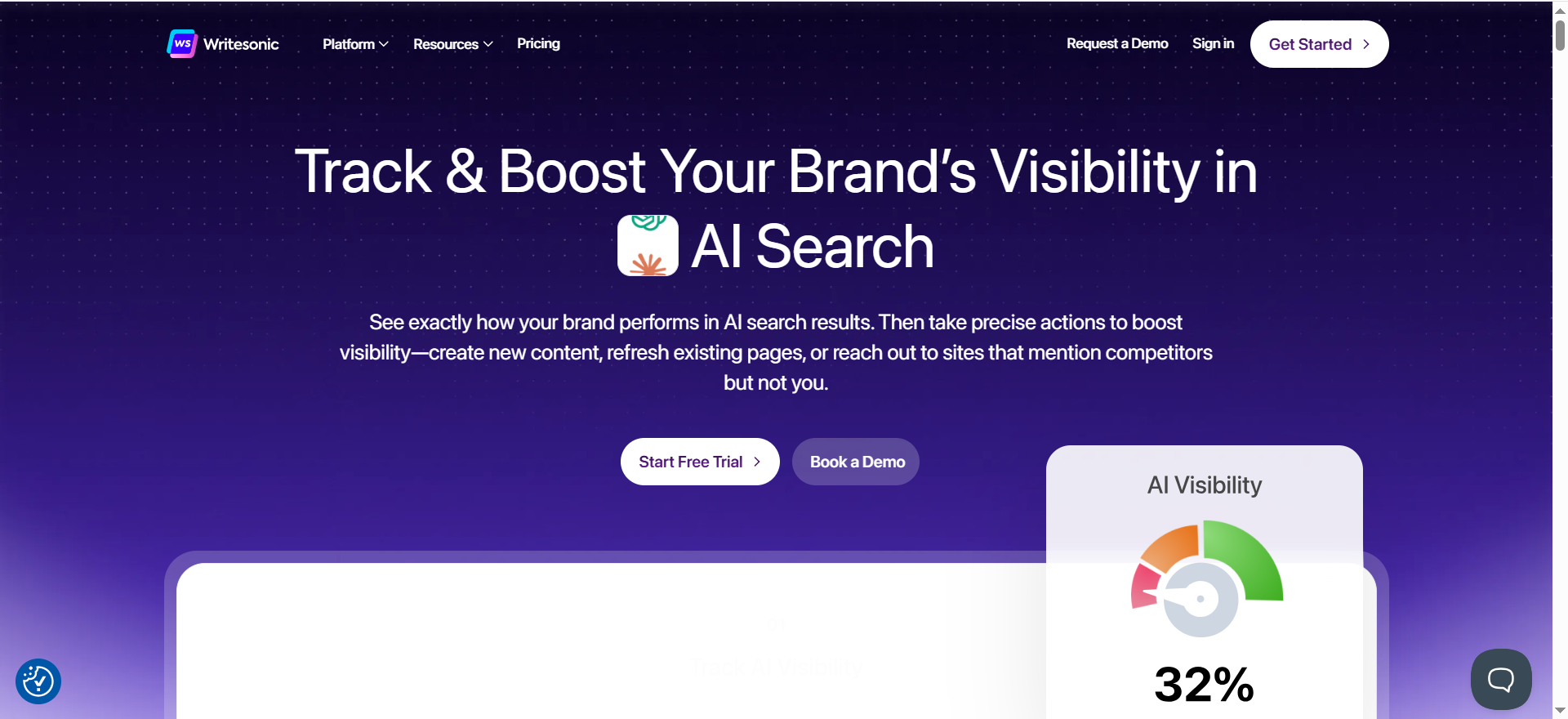
Writesonic is an AI writing platform with over 80 templates covering everything from Google Ads copy to product descriptions to social media posts. It uses GPT-4o under the hood and adds a layer of marketing-specific templates and conversion frameworks on top. For ad copy specifically, Writesonic provides dedicated templates for Google Ads, Facebook Ads, and LinkedIn campaigns, each pre-structured with the right character limits and format requirements.
Why Teams Use It
Writesonic occupies the middle ground between the flexibility of ChatGPT and the structure of Jasper, at a price point that sits below both. Teams use it because it offers enough templates to avoid the blank-page problem without the premium pricing of Jasper. The platform also bundles AI image generation and audio capabilities, which makes it useful for teams that need creative assets beyond just copy.
What It Is Good For
Writesonic is strongest for teams that want a template library with built-in conversion frameworks like AIDA and PAS without paying Jasper-level prices. It handles short-form ad copy well, especially for Google and Facebook formats where the templates are pre-configured with the right constraints. The Analogy Builder feature helps create more creative, attention-grabbing hooks, and the platform can generate multiple variants quickly for A/B testing.
When It Is a Good Fit
Writesonic fits best for small to mid-market teams, freelancers, and agencies that want more structure than ChatGPT but cannot justify Jasper's pricing. If your primary need is generating high volumes of short-form ad copy across Google, Facebook, and social platforms, Writesonic covers the basics well at a reasonable cost.
When It Is Not a Good Fit
Writesonic is not the right choice if you need advanced brand voice controls, deep team collaboration features, or enterprise-grade compliance and governance. The core GEO features for generative engine optimization are locked behind the Professional tier at $249 per month, which eliminates the cost advantage for teams that need those capabilities. Output quality on nuanced, brand-sensitive copy tends to lag behind Claude and ChatGPT with well-crafted prompts.
How to Use It
Select the ad copy template for your target platform, such as Google Ads, Facebook Ads, or LinkedIn. Enter your product or service name, key features, target audience, and desired tone. Choose a conversion framework if applicable. Generate variants and refine the strongest outputs. Use the built-in editor to adjust length, tone, or emphasis.
Key Capabilities
Eighty-plus writing templates including dedicated ad copy formats. AIDA, PAS, and Analogy Builder conversion frameworks. GPT-4o powered generation. AI image generation bundled in. Multi-language support. Chrome browser extension. Brand voice profiles on paid plans.
Pricing
Paid plans start at $39 per month billed annually or $49 per month billed monthly. The Professional tier at $249 per month unlocks GEO features. Enterprise pricing is custom. Annual billing saves approximately 20 percent.
Free Tier?
Limited free plan available for testing. Not sufficient for production use.
Downsides and Limitations
Advanced features locked behind expensive tiers. Brand voice controls are basic compared to Jasper. Output quality on complex briefs can be inconsistent. GEO features require a $249 per month minimum commitment. The pricing structure has changed frequently, making it hard to plan budgets long-term.
Tool #5: Copy.ai
What It Does
Copy.ai started as a simple AI copywriting tool and has evolved into a go-to-market platform with workflow automation at its core. For ad copy, it offers 90-plus templates covering every short-form format: Facebook ads, Google ads, Instagram captions, email subject lines, product descriptions, and more. What sets Copy.ai apart is the Workflow feature, which lets you build automated sequences that generate ad copy variations based on product data, apply brand voice, and output multiple headlines and descriptions in a single click.
Why Teams Use It
Teams choose Copy.ai when they need to generate ad copy at scale with minimal manual intervention. The Infobase feature stores product details, messaging guidelines, and brand voice examples in one place, and the AI pulls from this knowledge base every time it generates copy. This means you set up your brand context once and every piece of copy that comes out is pre-loaded with the right information. The workflow automation reduces the per-asset production time dramatically, which matters for teams running dozens of campaigns simultaneously.
What It Is Good For
Copy.ai excels at batch ad copy generation. If you need to produce ad copy for fifty products across three platforms in an afternoon, Copy.ai's workflow automation makes this feasible where manual tools would take days. The template selection is the largest in this comparison at 90-plus options, and the interface is simple enough that team members without AI experience can produce usable output immediately.
When It Is a Good Fit
Copy.ai is the right choice for ecommerce teams with large product catalogs that need ad copy at scale, agencies managing high volumes of client campaigns, and growth teams that want to automate repetitive copy production. If your bottleneck is volume rather than creative quality, Copy.ai's automation features will save the most time.
When It Is Not a Good Fit
Copy.ai is not the best option if you need the highest possible creative quality for premium brand campaigns. The template-driven, automated approach prioritizes speed and consistency over nuance. Teams that need deeply researched, insight-driven ad copy will get better results from ChatGPT or Claude. The Team tier pricing at $250-plus per month can also be steep for smaller teams.
How to Use It
Start by building your Infobase with product details, brand voice samples, audience personas, and messaging guidelines. Select an ad copy template or build a custom workflow that chains multiple generation steps together. For batch production, set up a workflow that takes product data as input and generates ad copy variants for each platform as output. Review and approve the output, then export or copy into your ad platform.
Key Capabilities
Ninety-plus copywriting templates. Workflow automation for batch generation. Infobase for centralized brand knowledge. Brand Voice training from existing content. Chat interface for conversational copy generation. API access for custom integrations. Multi-language support. Team collaboration features.
Pricing
Free plan with 2,000 words per month. Pro plan at $49 per month or $36 per month billed annually with unlimited words. Team tier starts at $250-plus per month. Enterprise pricing is custom. The free plan includes unlimited words during the trial period.
Free Tier?
Yes. The free plan includes 2,000 words per month with access to basic templates. Enough for testing but not for production workflows.
Downsides and Limitations
Creative quality can feel generic on complex briefs. Workflow automation has a learning curve to set up properly. Team pricing is expensive for small teams. The platform has pivoted its positioning multiple times, which creates uncertainty about long-term feature direction. Free tier word limit is restrictive.
What Is an AI Ad Writing Tool?
An AI ad writing tool is software that uses large language models to generate advertising copy for platforms like Google Ads, Facebook, Instagram, LinkedIn, and other paid channels. These tools take inputs like your product description, target audience, and desired tone, then produce headlines, descriptions, and body copy optimized for the ad format you are targeting. The best ones go beyond simple text generation to include brand voice training, conversion frameworks like AIDA and PAS, and workflow automation that lets you produce ad variants at scale. AI ad writing tools do not replace human judgment on strategy and positioning, but they dramatically accelerate the execution of turning a strategic brief into dozens of testable ad variants. If you also need help with longer-form content beyond ads, our comparison of the best AI writing tools covers the full landscape.
How Do AI Ad Writing Tools Work?
At their core, AI ad writing tools use large language models trained on billions of words of text, including marketing copy, ad campaigns, and conversion-focused content. When you provide inputs like your product name, key features, target audience, and desired format, the model generates text that follows the patterns of effective advertising copy. More specialized tools like Jasper and Copy.ai add a template layer on top that pre-structures the output for specific ad formats, enforcing character limits and proven frameworks. Some tools also include brand voice training, where the AI learns your company's tone and style from sample content, so every output matches your brand even without detailed prompting. The practical workflow is straightforward. You define the brief, the AI generates multiple variants, you review and select the strongest ones, and you deploy them to your ad platform for testing.
Can AI Write Google Ads Copy?
Yes, and it does it well. Google Ads responsive search ads require up to 15 headlines of 30 characters each and 4 descriptions of 90 characters each. AI tools handle this format naturally because the character constraints give the model clear boundaries to work within. ChatGPT and Claude can produce a full set of responsive search ad assets in a single prompt when you specify the character limits. Jasper and Writesonic have dedicated Google Ads templates that enforce these limits automatically. In practice, AI-generated Google Ads copy performs comparably to human-written copy in click-through rate tests, with the advantage that AI can produce far more variants for testing in a fraction of the time. The key is providing enough context about your offer, audience, and competitive positioning so the AI can generate copy that is specific rather than generic. To maximize the return on your ad spend, pair strong copy with a high-converting post-click experience — see our guide to the best AI landing page builders.
Can AI Write Facebook Ad Copy?
Facebook ad copy follows different rules than search ads. Primary text can run longer, and the hook in the first line matters more because it determines whether people stop scrolling. AI tools handle this well because they can produce multiple hook variations quickly, which is exactly what you need for Facebook A/B testing. Claude is particularly strong for Facebook ads because it produces copy with emotional nuance and storytelling hooks that feel native to the platform. Jasper and Copy.ai have dedicated Facebook ad templates that structure output with the primary text, headline, and description fields already formatted. The biggest advantage of using AI for Facebook ads is speed of iteration. Instead of writing three variations manually, you can generate twenty variants in minutes and test your way to a winner. If your Facebook campaigns also need scroll-stopping visuals, check our roundup of the best AI image generators for ads.
Are AI Ad Writing Tools Worth It for Small Businesses?
For small businesses, the answer is almost always yes, but the right tool depends on your budget. ChatGPT at $20 per month or Claude at $20 per month gives you access to ad copy generation that competes with tools costing five to ten times more. The catch is that you need to learn prompt engineering to get the best results. If you prefer templates and structure, Writesonic at $39 per month or Copy.ai's free tier at 2,000 words per month offer a lower-friction entry point. The ROI case is straightforward. A small business that spends $2,000 per month on Google Ads can improve its click-through rate by even 10 to 15 percent through better ad copy testing, and AI makes it feasible to test at that volume. The cost of the AI tool is negligible compared to the improvement in ad spend efficiency.
How to Choose the Right AI Ad Writing Tool for Your Team
Start with three questions. First, how much prompt engineering skill does your team have? If the answer is very little, Jasper or Copy.ai's template approach will produce better results faster. If your team is comfortable crafting detailed prompts, ChatGPT or Claude will deliver higher quality at a lower price. Second, how many people need to use the tool? For solo users, ChatGPT or Claude Pro at $20 per month is hard to beat. For teams of three or more, Jasper's Brand Voice and collaboration features start to justify the premium. Third, what is your volume? If you produce ad copy for a handful of campaigns per month, any tool works. If you need hundreds of variants across dozens of products, Copy.ai's workflow automation or Jasper's Content Pipelines will save significant time.
AI Ad Writing Tools vs Hiring a Copywriter
This is not an either-or decision for most teams. AI tools are strongest at generating a high volume of variants quickly, handling format-specific constraints like character limits, and maintaining consistency across campaigns. Human copywriters are better at strategic positioning, understanding audience psychology at a deep level, and producing breakthrough creative that AI cannot yet match. The most effective approach is to use AI to generate the initial variants and a human to review, refine, and select the winners. This hybrid workflow typically produces more tested variants at a fraction of the cost of pure human production, while maintaining the strategic quality that pure AI output sometimes lacks. For small businesses that cannot afford a dedicated copywriter, AI tools effectively democratize access to competent ad copy.
How to Get the Best Results from AI Ad Copy Generators
The quality of AI ad copy is directly proportional to the quality of your input. Start by providing a clear brief that includes your product's unique value proposition, target audience description, competitive positioning, and the specific ad format and platform. Include character-count constraints in your prompt. Feed in examples of ads you consider on-brand, and specify what tone you want. Ask for multiple variants rather than one perfect piece, and iterate on the strongest outputs rather than accepting the first generation. For ongoing campaigns, build reusable prompt templates or use tools with Brand Voice features so you do not start from scratch every time. If you need to repurpose and refine existing copy, see our picks for the best AI rewriter for marketing content. Test AI-generated copy against your existing best performers, and let the data decide which variants to scale.
What Types of Ads Can AI Write?
AI ad writing tools can handle virtually every text-based ad format. Google Ads responsive search ads with headlines and descriptions. Facebook and Instagram ads including primary text, headlines, and link descriptions. LinkedIn sponsored content and InMail. YouTube ad scripts. Twitter and X promoted post copy. Amazon product listing ads. Display ad copy for banner ads. Email marketing subject lines and preview text. Landing page headlines and body copy. Programmatic ad copy. The format where AI adds the most value is any high-volume, variant-heavy format where you need many options to test, which is most performance marketing formats. For email-specific copy, our guide to the best AI for email writing goes deeper on that channel.
Do AI-Written Ads Convert as Well as Human-Written Ads?
The data suggests they can, and in some cases they outperform. In controlled tests, Claude-generated ads achieved 23 percent higher click-through rates and 31 percent higher conversion rates compared to human-written copy. Across the industry, AI ad copy generators have been shown to reduce creative production time by 85 percent while improving CTR by up to 40 percent. AI copy outperformed human copy in 67 percent of head-to-head comparisons in recent benchmarks. However, these results come with caveats. AI performs best when given strong inputs, detailed briefs, clear constraints, and good examples. The humans in those comparisons were often working under time pressure without the benefit of generating and testing dozens of variants. When human copywriters have time to craft and iterate, the quality gap narrows. The practical takeaway is that AI-generated ads are good enough to test, and testing at scale is where the real performance gains come from.
Frequently Asked Questions
For Google Ads specifically, Jasper and ChatGPT are the strongest options. Jasper has a dedicated Google Ads template that automatically enforces character limits for headlines and descriptions. ChatGPT gives you more flexibility but requires you to specify the format constraints in your prompt. Both produce high-quality responsive search ad assets.
Yes. ChatGPT, Claude, and Copy.ai all offer free tiers. ChatGPT's free plan includes GPT-4o mini access. Claude's free plan includes Sonnet 4.6 access. Copy.ai gives you 2,000 words per month. These are enough for testing and light use, but production workflows will need a paid plan.
Absolutely. Claude and ChatGPT are particularly strong for B2B ad copy because they can handle the longer, more nuanced messaging that B2B campaigns require. Jasper also has templates for LinkedIn ads, which is the primary paid channel for most B2B teams. The key is providing detailed context about your ICP and the specific pain points your product addresses. For a deeper comparison of AI tools built for marketing copy, see which AI is best for copywriting.
Aim for at least 10 to 15 headline variants and 5 to 8 description variants per ad group for Google Ads. For Facebook, generate 5 to 10 primary text variations with different hooks. The whole point of using AI is to test more variants than you could produce manually, so do not settle for just two or three options.
No. Google, Meta, and LinkedIn do not penalize ads based on whether they were written by AI or humans. What matters is that the copy complies with each platform's advertising policies, which includes accuracy claims, prohibited content, and formatting rules. Review AI-generated copy against platform policies before publishing, just as you would with human-written copy.