Best Voice AI Agents For Telecom Providers (2026)
What marketing ops leaders and product managers should compare before choosing a voice ai agents solution for telecom providers.


This playbook helps marketing ops leaders and product managers compare the best voice ai agents options for telecom providers. It breaks down where vapi, retell-ai stand out, when alternatives such as zapier, make make more sense, and which setup fits B2B companies and B2C brands and small businesses and mid-market companies.
If you want the most control over telephony and workflow logic, pick Vapi. If you want the most balanced option for launching quickly with good platform features, pick Retell AI. If you care most about high-volume support automation and outage-style workflows, pick Bland. If natural voice quality and omnichannel flexibility matter most, pick ElevenLabs Conversational AI. If you run a larger telecom or enterprise contact center and want a more managed, enterprise-grade rollout, pick PolyAI.
Table of Contents
If you want the most control over telephony and workflow logic, pick Vapi. If you want the most balanced option for launching quickly with good platform features, pick Retell AI. If you care most about high-volume support automation and outage-style workflows, pick Bland. If natural voice quality and omnichannel flexibility matter most, pick ElevenLabs Conversational AI. If you run a larger telecom or enterprise contact center and want a more managed, enterprise-grade rollout, pick PolyAI.
📋 Get Listed / Advertise
We update this guide monthly. Want your tool featured? Contact: aigrowthhacksofficial@gmail.com.
Best Voice AI Agents for Telecom Providers
| Tool | Best for | Starting pricing | Best fit |
|---|---|---|---|
| Vapi | Deep telephony control | From $0.05/min | Engineering-led telecom teams |
| Retell AI | Fast pilots with balanced features | $0.07 to $0.31/min | Ops, product, and CX teams |
| Bland | High-volume automation | Free plan, then $299/mo and per-minute billing | Telecom support automation at scale |
| ElevenLabs Conversational AI | Natural voice quality | From $0.08/min and lower on annual Business plans | Branded customer experience teams |
| PolyAI | Enterprise voice CX | Custom per-minute pricing | Large telecom and contact center programs |
Best Voice AI Agents for Telecom Providers
Tool #1: Vapi
What it does
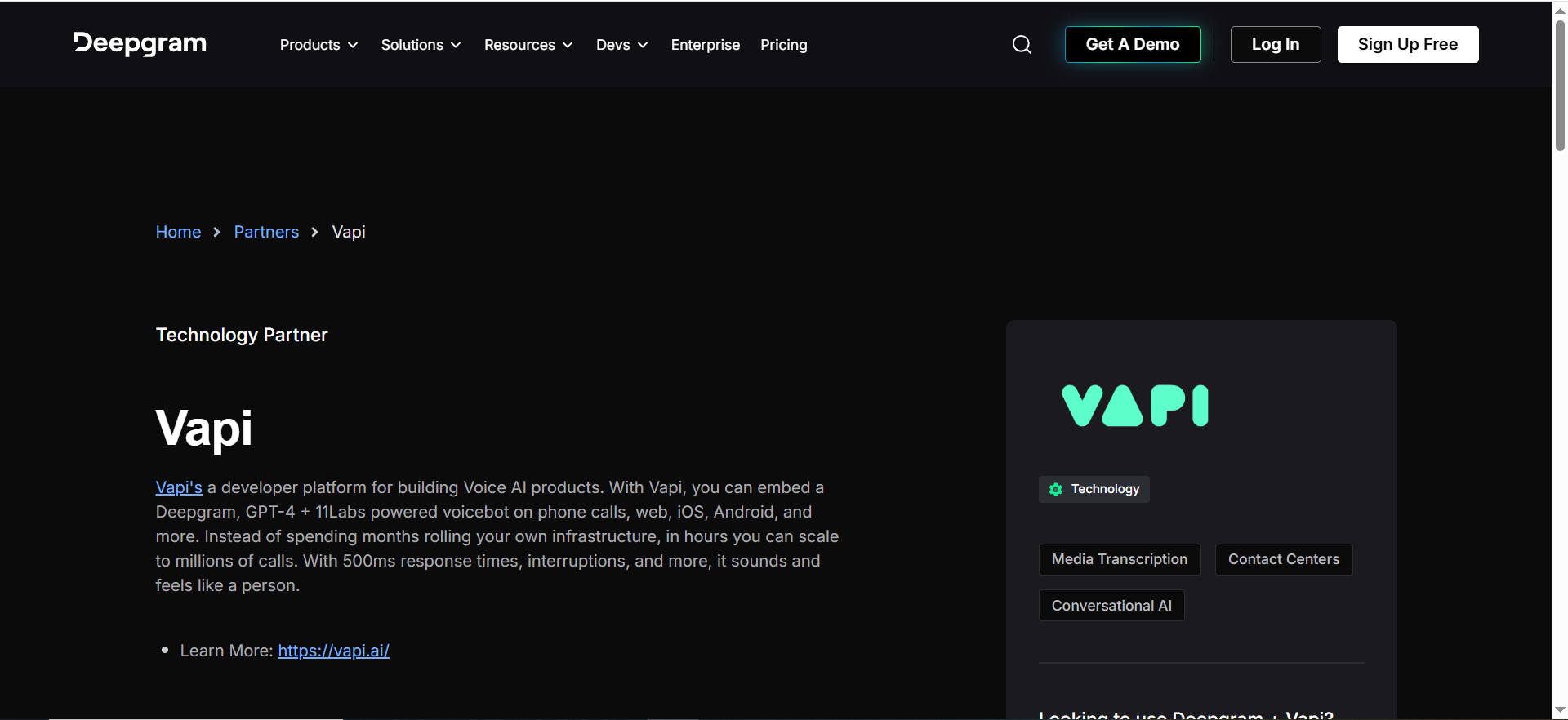
Vapi is a developer-focused voice AI platform for building phone agents with support for SIP, phone calls, live call control, dynamic transfers, and API-driven workflow logic. It is designed for teams that want direct control over the voice stack instead of a mostly managed experience.
Why teams use it
Telecom teams use Vapi when they already have telephony infrastructure and need flexibility. Its documentation covers SIP trunking, Twilio SIP integration, multilingual workflows, dynamic routing, and live call control, which makes it attractive for providers that want to build around their existing systems instead of replacing them.
What it’s good for
Vapi is especially strong for custom inbound support lines, IVR replacement, department routing, and engineering-led deployments that need programmable call logic. It also supports transfer functions and business-logic hooks through built-in tools and APIs.
When it’s a good fit
Choose Vapi when your team has technical resources and wants control over routing, call behavior, integrations, and telephony setup. It is a strong option for telecom companies that treat voice AI as part of product infrastructure rather than a standalone CX add-on.
When it’s not a good fit
It is less ideal if you want a heavily guided enterprise implementation or a mostly no-code rollout owned entirely by business teams. Vapi can do a lot, but it expects more setup ownership than a managed platform. This is an inference based on its API-first product structure and enterprise packaging.
How to use it
A practical telecom pilot would connect a SIP path or Twilio setup, launch one high-volume workflow such as outage triage or billing routing, define live transfer conditions, and monitor transfer success and containment before expanding.
Key capabilities
Key strengths include SIP trunking, Twilio SIP integration, dynamic transfers, multilingual workflow support, call control, built-in transfer and API request tools, and enterprise features like SSO, RBAC, SLA commitments, and SOC 2 Type II support.
Pricing
Vapi lists call pricing from $0.05 per minute, with separate model provider costs and volume-based scaling.
Free tier?
Vapi offers self-serve pricing and public access, while more advanced enterprise controls are packaged into enterprise plans.
Downsides / limitations
The main trade-off is complexity. Teams without engineering support may move faster elsewhere. Vapi also documents transfer troubleshooting scenarios, which is a reminder that real call handoff behavior needs careful testing in production environments.
Tool #2: Retell AI
What it does
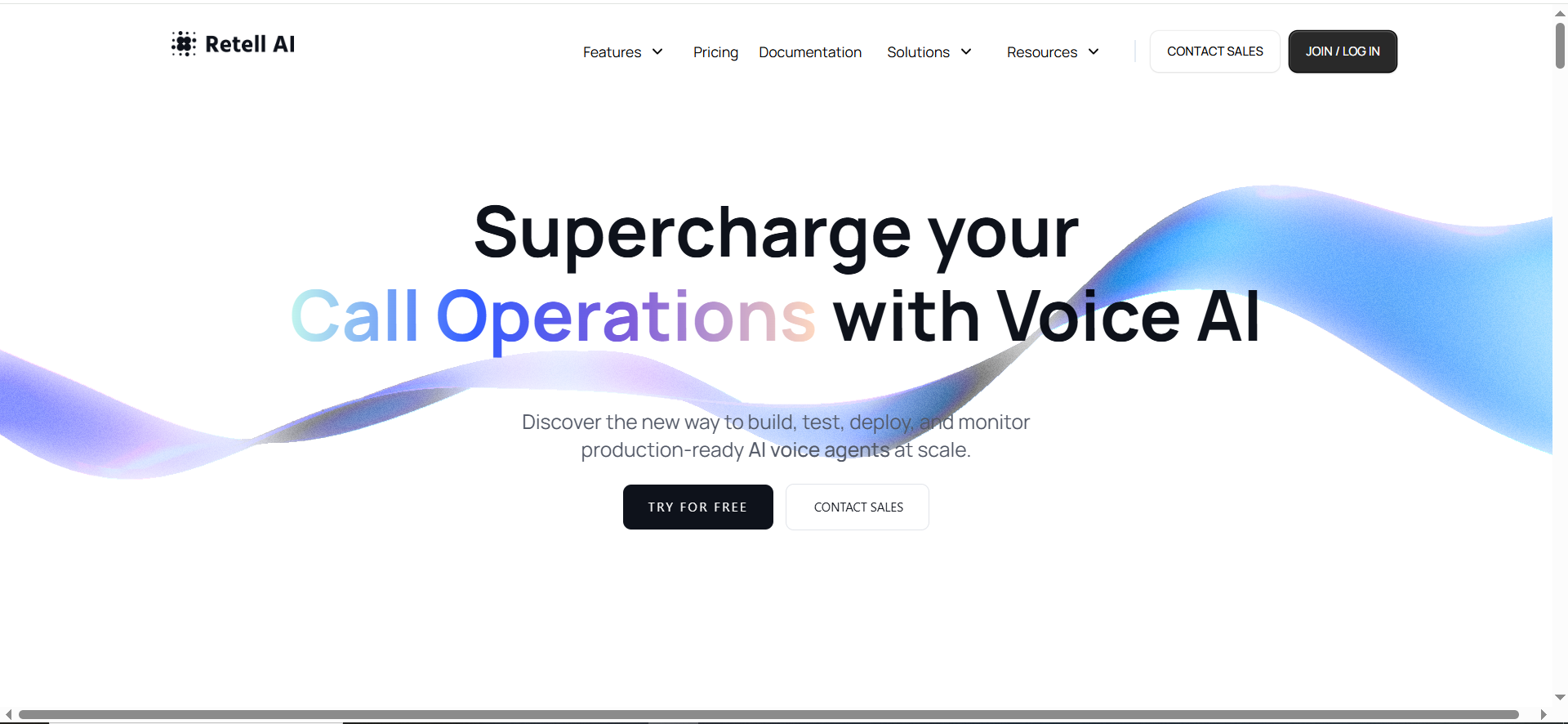
Retell AI is a voice AI platform built for inbound and outbound phone automation, with features aimed at fast deployment, agent configuration, analytics, testing, and production monitoring.
Why teams use it
Retell is one of the most balanced options in this category. It gives teams a way to launch quickly without giving up important platform features like analytics, simulation, language settings, concurrency controls, and enterprise options.
What it’s good for
It is a strong fit for support automation, AI reception, queue overflow, multilingual call handling, and teams that want to move from pilot to production with less custom telephony work than a lower-level stack may require.
When it’s a good fit
Retell works well for product, operations, and CX teams that want a practical launch path, transparent usage pricing, and enough control to build real workflows without overbuilding the infrastructure layer.
When it’s not a good fit
It may be less attractive if you want the deepest telephony control possible or a more managed enterprise services model. It sits in the middle: more structured than Vapi, less managed than PolyAI. That is a positioning inference from its product and pricing posture.
How to use it
Start with one telecom workflow, set the business goal, define the agent logic and language behavior, then test and iterate with transcripts, analytics, and simulation before scaling to more queues. Retell’s deployment guidance emphasizes aligning business goals with technical choices from the start.
Key capabilities
Important capabilities include language controls, multilingual support, pay-as-you-go pricing, included concurrency on self-serve plans, personal info redaction, built-in guardrails, and enterprise upgrades such as dedicated stable servers and custom compliance handling.
Pricing
Retell lists $0.07 to $0.31 per minute on its pricing page, with 20 concurrent calls included on pay-as-you-go and enterprise custom pricing for larger teams.
Free tier?
Retell offers free credits for testing rather than an open-ended free plan.
Downsides / limitations
Costs can rise depending on model choice, TTS, infrastructure, and telephony mix, so telecom buyers should model average handle time and escalation patterns carefully before committing at scale.
Tool #3: Bland
What it does
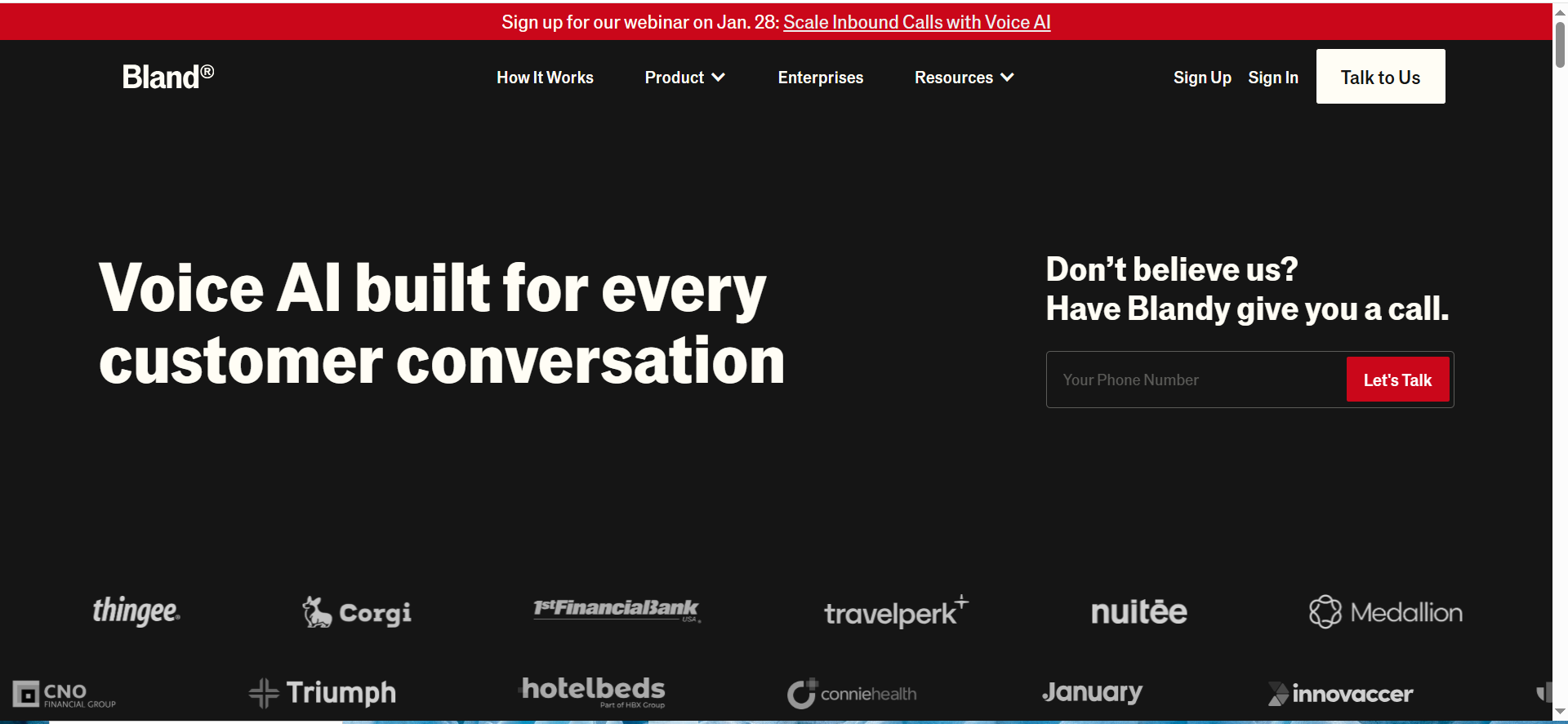
Bland is a platform for automating phone conversations at scale across inbound and outbound use cases, with strong emphasis on production reliability, enterprise deployment flexibility, and monitoring.
Why teams use it
Bland stands out because it explicitly positions itself for telecom and high-volume support environments. Its telecom page talks directly about removing call queues, resolving routine issues instantly, and keeping customers informed during outages.
What it’s good for
Bland is especially good for outage notifications, repetitive support tasks, call-volume spikes, and situations where live transfer to human teams must be part of the workflow.
When it’s a good fit
Choose Bland when your team wants aggressive automation, telecom-friendly positioning, and strong enterprise deployment options. It is also attractive when you need integration points with systems like Salesforce, NICE, Vonage, Twilio, Five9, and Amazon Connect.
When it’s not a good fit
It may be a weaker fit if your team wants the broadest self-serve documentation around telecom-specific design patterns or a more obviously services-led enterprise rollout. Bland is strong on execution, but some buyers may still want more structured enterprise buying support. That is a market-positioning inference.
How to use it
Start with a high-volume workflow, add transfer logic for edge cases, monitor outcomes and knowledge-base gaps, and refine the agent with regression testing before expanding to more complex queues.
Key capabilities
Bland highlights SIP support, live transfer, dedicated instances, VPC or on-prem deployment options, real-time guardrails, regression testing, knowledge-base-gap detection, and open REST API plus webhook support.
Pricing
Bland’s billing docs list a Free Start plan at $0.14/min, a Build plan at $299/month plus $0.12/min, and a Scale plan at $499/month plus $0.11/min, with separate transfer-time rates on Bland-provided numbers.
Free tier?
Yes. Bland has a free starter plan.
Downsides / limitations
Like any automation-heavy platform, it still requires thoughtful workflow design. If transfer conditions, escalation rules, and knowledge sources are weak, the experience can break down quickly.
Tool #4: ElevenLabs Conversational AI
What it does
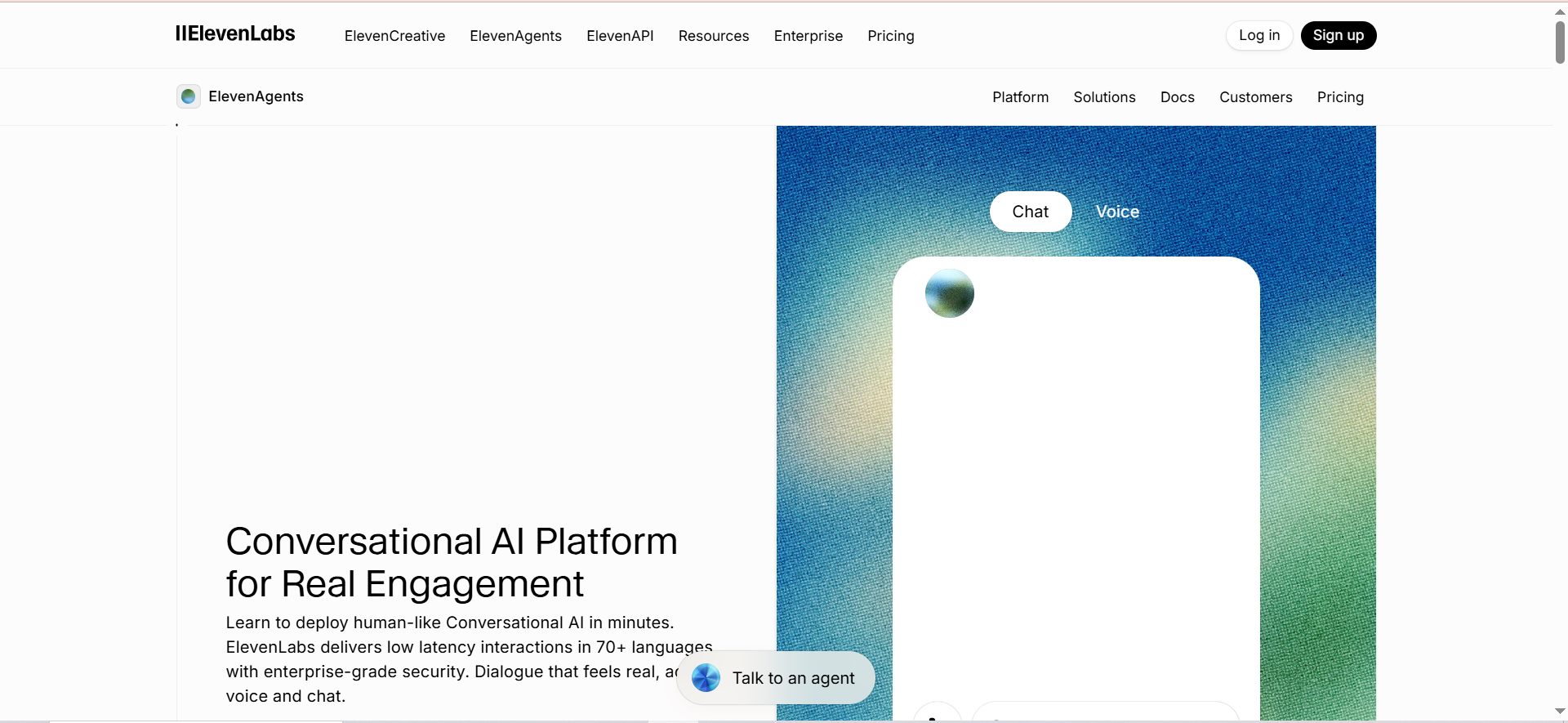
ElevenLabs Conversational AI is a voice and chat agent platform built around natural-sounding speech, low-latency interactions, and broad integration support across voice and digital channels.
Why teams use it
The main reason telecom teams look at ElevenLabs is call experience. If the brand cares about how the interaction sounds, or wants a more natural replacement for rigid IVR trees, ElevenLabs is one of the stronger options in this list.
What it’s good for
It is best for branded customer support lines, AI reception, multilingual experiences, and telecom teams that want strong voice quality plus broad systems connectivity.
When it’s a good fit
Pick ElevenLabs when caller experience, voice realism, multilingual support, and omnichannel continuity matter more than deeply custom developer-owned telephony logic.
When it’s not a good fit
It is less ideal if your main requirement is telecom-specific workflow depth, highly custom routing logic, or a heavily managed enterprise deployment model. That is a positioning inference based on its product emphasis.
How to use it
A smart telecom pilot is after-hours support, plan information, or multilingual front-door routing. Connect the agent to phone channels, knowledge sources, and human transfer rules, then test with real support intents before expanding.
Key capabilities
ElevenLabs supports voice and chat agents, SIP trunking, human transfer, integrations with Twilio and SIP-compatible PBX systems, and a wide partner list that includes Genesys, Vonage, Telnyx, and Plivo. It also highlights 70+ languages and enterprise-grade security.
Pricing
ElevenLabs says AI Agents can start from $0.08 per minute and lower on annual Business plans.
Free tier?
There are entry points to test the platform, but production telecom teams should confirm AI agent call pricing and concurrency under their actual plan.
Downsides / limitations
Pricing and telephony economics may require more validation during procurement, especially for larger phone operations. Buyers should test exact call routing and transfer flows, not just voice quality.
Tool #5: PolyAI

What it does
PolyAI is an enterprise voice AI platform built for customer service operations, with tooling for a custom knowledge base, visual flow building, real-time analytics, secure handoffs, and ongoing optimization.
Why teams use it
PolyAI is the most enterprise-oriented option in this list. It is designed for larger service organizations that care about caller experience, containment, analytics, uptime, and managed performance improvement over time.
What it’s good for
It is especially well suited for large contact-center programs, complex service journeys, authentication-heavy flows, and support environments where uptime and operational support matter as much as the model itself.
When it’s a good fit
Choose PolyAI when the use case is mission-critical, the call volume is large, and the organization wants a strategic customer service platform instead of a lightweight pilot tool.
When it’s not a good fit
It is probably not the best fit for small, scrappy pilots or buyers that want the fastest self-serve launch. PolyAI looks more like a formal enterprise software purchase with implementation depth. That is an inference from its pricing and positioning.
How to use it
A telecom team would usually start with one expensive, repetitive support queue such as billing, authentication, or outage-related routing, then use analytics and structured call data to improve containment and CX over time.
Key capabilities
PolyAI offers a visual flow builder, custom knowledge base, real-time analytics, secure human handoffs, per-minute pricing with support included, and a 99.9% SLA for uptime on phone lines. It also documents voice AI use cases such as account management, authentication, billing and payments, troubleshooting, and call routing.
Pricing
PolyAI uses custom per-minute pricing rather than a public self-serve menu.
Free tier?
No public free tier was visible in the materials reviewed.
Downsides / limitations
The main trade-off is speed and cost. PolyAI is best when the organization can support a more formal rollout and wants a platform with built-in support and optimization, not just a low-cost proof of concept.
What is the best voice AI agent for telecom providers?
For most telecom providers, the best starting point is Retell AI because it balances launch speed, usable platform features, multilingual options, pricing transparency, and enough operational structure for production evaluation. Vapi is the better pick when telecom infrastructure flexibility and developer control are the priority. PolyAI is the best fit for larger enterprise programs that want a more managed voice CX platform. For a direct comparison built around this exact use case, see best voice AI agents for telecom providers.
The bigger point is that “best” depends on the job to be done. A telecom operator trying to automate overflow and outage traffic may prefer Bland, while one trying to modernize a branded customer experience line may lean toward ElevenLabs. There is no universal winner across every telecom workflow. That is also why broader comparisons like best voice AI agent solutions for business phone systems can help clarify the shortlist.
Which voice AI platform is best for telecom customer support?
For broad telecom customer support, PolyAI and Retell AI stand out. PolyAI is built around customer-service operations, analytics, and enterprise support, while Retell offers a practical route for support automation without forcing the team into a heavyweight services model from day one. For teams comparing customer-support-first platforms more broadly, see best AI voice assistants for customer support automation.
If the support environment is extremely repetitive and high volume, Bland also deserves serious consideration because its telecom positioning is directly tied to queue removal, outage communication, and large-scale call handling. For a related angle on high-volume support efficiency, best voice AI agents for reducing average handle time is a useful companion guide.
Which telecom voice AI tool is best for call routing and live transfers?
Vapi is the strongest choice for programmable call routing because it documents dynamic call transfers, real-time destination selection, external data integration, and programmatic control.
For live handoff workflows, Bland and ElevenLabs are also strong. Bland has explicit live transfer setup, while ElevenLabs supports transfer to external numbers through both Twilio and SIP trunking.
Which voice AI agent is easiest to launch with existing SIP or PBX infrastructure?
ElevenLabs is the easiest answer for teams that specifically care about launching on existing SIP or PBX infrastructure because its SIP trunking docs clearly frame the feature around connecting PBX or SIP-enabled phone systems without changing the existing phone environment.
That said, Vapi is a close second and may be better for teams that also want more programmatic telephony control. Vapi supports SIP trunking and Twilio SIP integration, but its overall posture is more developer-oriented.
Which voice AI platform is best for multilingual telecom support?
ElevenLabs is the best pick when natural multilingual customer experience is the priority, since it highlights support for 70+ languages and real-time voice and chat interactions.
Retell AI and Vapi are also strong here. Retell lets teams set agent language behavior and multilingual configurations, while Vapi documents multilingual support workflows and language-routing setups.
Which voice AI tool is best for outage notifications and high-volume call spikes?
Bland is the strongest answer for this use case. Its telecom page directly positions the platform around handling millions of interactions, eliminating hold times, and keeping customers informed during outages.
For large service organizations that want a more managed option, PolyAI is also compelling because its call-center guidance emphasizes scaling through peaks in volume and reducing human call load with voice AI.
Which voice AI vendor is best for enterprise telecom compliance and uptime?
PolyAI is the clearest enterprise answer here because it publicly states that all plans include security support and a 99.9% SLA for uptime on phone lines.
Vapi is also strong on enterprise controls, listing SOC 2 Type II, SSO, RBAC, and SLA commitments in enterprise plans. For teams that need both compliance features and technical flexibility, it belongs in the shortlist.
Which voice AI platform is best for custom workflows and developer control?
Vapi is the best option for custom workflows and developer control. Its product structure is built around APIs, call control, dynamic routing, default tools, SIP integration, and assistant orchestration.
Bland is also strong for teams that want workflow depth, especially with regression testing, API access, and deployment flexibility, but Vapi still feels more natural for telecom teams that want to own the orchestration layer themselves.
Which voice AI tool is best for fast pilot launches?
Retell AI is the safest answer for fast pilots. Its public positioning emphasizes ease of deployment, practical build guidance, and transparent self-serve pricing.
ElevenLabs also markets fast deployment, but Retell’s combination of pricing clarity and deployment guidance makes it easier to recommend as the first pilot platform for many telecom teams.
Which voice AI platform is best for complex billing or troubleshooting calls?
For complex billing or troubleshooting calls, PolyAI is the strongest enterprise option because its call-center content explicitly maps voice AI to billing and payments, authentication, troubleshooting, and account-management scenarios.
For more custom engineering-led implementations, Vapi is also attractive because complex billing or troubleshooting often requires dynamic routing, API lookups, and custom logic.
How much do telecom voice AI agents cost?
Pricing varies widely. Vapi starts at $0.05/min, Retell AI lists $0.07 to $0.31/min, Bland ranges from $0.11 to $0.14/min depending on plan plus monthly tier fees, ElevenLabs starts from $0.08/min and lower on annual Business plans, and PolyAI uses custom per-minute pricing.
The real telecom cost is not just minute price. It is minute price plus handle time, transfer rate, containment, concurrency, and any infrastructure or enterprise support requirements. A cheap tool with weak containment can still be expensive in production.
Can voice AI agents integrate with Twilio, SIP trunks, and contact centers?
Yes. Vapi supports SIP trunking and Twilio SIP integration. ElevenLabs supports SIP trunking, Twilio, and SIP-compatible PBX systems. PolyAI has Twilio Flex and Programmable Voice integration. Bland lists integrations with Twilio, NICE, Five9, and Amazon Connect.
This is one of the most important telecom buying questions because integration maturity often matters more than demo quality. A tool may sound impressive, but if it cannot fit the existing telephony and contact-center stack cleanly, the rollout will slow down.
Can telecom voice AI agents hand off calls to human agents?
Yes, and they must. In telecom, handoff is not a nice extra. It is a core requirement. Vapi supports dynamic and warm transfer approaches, Bland has live transfer, and ElevenLabs supports transfer to human operators through Twilio and SIP trunking.
For enterprise programs, PolyAI also supports secure, compliant handoffs and contact-center integration paths.
Which voice AI agent is best for large enterprise telecom teams?
PolyAI is the best fit for large enterprise telecom teams because of its managed customer-service focus, analytics tooling, included support, and uptime commitments.
Vapi Enterprise is also worth considering for large teams that want compliance features plus stronger internal control over architecture. The decision often comes down to whether the company wants a managed CX platform or a flexible voice infrastructure layer.
Which voice AI platform is best for startups or mid-market telecom operators?
Retell AI is the best overall answer for startups and mid-market operators because it combines lower buying friction, clear pricing, and a practical build-and-deploy path.
ElevenLabs is also appealing for teams that want a polished customer experience without taking on deep telephony engineering too early. For technically strong startups, Vapi may still be the better fit if control is more important than simplicity.
How do telecom providers evaluate voice AI accuracy and containment?
Telecom teams should evaluate accuracy and containment against real calls, not demo scripts. The most important checks are ASR quality on noisy phone audio, accent handling, alphanumeric capture, routing accuracy, transfer success, fallback behavior, and whether the system resolves the call or just delays escalation. PolyAI’s call-center guidance specifically highlights capabilities like SLU, alphanumeric capture, and phoneme matching as important voice-channel requirements.
Containment should be measured alongside customer experience, not in isolation. A system that “contains” calls by frustrating people is not a success. Teams should compare platforms on the same test cases, using the same intents, escalation rules, and scoring rubric.
Can voice AI agents handle authentication, billing, and account management?
Yes. PolyAI explicitly describes voice AI use cases such as authentication, account management, billing and payments, and troubleshooting.
Whether a given platform handles those use cases well depends on integrations, workflow design, and handoff strategy. Complex authentication or account-change workflows usually need custom logic, API access, and exception handling, which is where platforms like Vapi and Retell can also work well.
What features matter most in a telecom voice AI stack?
The most important features are telephony integration, SIP or PBX compatibility, routing logic, human handoff, multilingual support, analytics, knowledge-base integration, compliance controls, and pricing transparency.
For telecom specifically, I would also add outage-scale reliability, support for billing and authentication flows, call-volume elasticity, and the ability to route by intent, department, geography, or account context. Those are the features that decide whether a pilot becomes a real production channel.
📋 Get Listed / Advertise
We update this guide monthly. Want your tool featured? Contact: aigrowthhacksofficial@gmail.com.
FAQs
For many teams, Retell AI is the safest first choice because it balances speed, features, and pricing clarity well. It is not the deepest or most enterprise-led option, but it is often the easiest to evaluate seriously.
Vapi is usually the better fit if your team already has telecom or platform engineers and wants to own the workflow layer. It gives more telephony and orchestration control than most alternatives here.
PolyAI is the strongest fit for enterprise-style procurement because it includes support, uptime commitments, and a more formal voice-CX platform posture.
ElevenLabs is the strongest fit when the natural quality of the conversation is a major buying factor. Its conversational AI platform is built around realistic voice interactions across many languages.
Bland is especially strong for high-volume repetitive support and outage-style workflows. Its telecom-specific positioning is more direct than most tools in this category.
Final verdict
For most telecom providers, Retell AI is the best balanced place to start. It gives you a realistic path from pilot to production without forcing you into either extreme: not too bare-metal, not too enterprise-heavy.
Pick Vapi when telephony control and custom workflow logic matter most. Pick Bland when your main problem is high-volume support automation and outage pressure. Pick ElevenLabs when natural voice quality and brand experience carry the most weight. Pick PolyAI when the business wants a more strategic, enterprise-grade customer-service platform with stronger formal support and uptime commitments.
The best next step is to test the top two or three options on one real telecom workflow, using the same calls, the same escalation rules, and the same success criteria. That will tell you far more than any feature checklist.
📋 Get Listed / Advertise
We update this guide monthly. Want your tool featured? Contact: aigrowthhacksofficial@gmail.com.