Best AI Agents Courses (2026)
A practical buyer's guide to picking the right ai agents courses stack for AI agents and workflow automation across content and email.


This playbook helps marketing ops leaders and product managers compare the best ai agents courses options for AI agents and workflow automation. It breaks down where n8n, zapier stand out, when alternatives such as workato, relay-app make more sense, and which setup fits B2B companies and B2C brands and small businesses and mid-market companies.
If you are evaluating AI agents courses in 2026, the short answer is that n8n offers the deepest hands-on builder training through Udemy and community resources, Make Academy provides the most structured free learning path with a clear foundation-to-advanced progression, and Voiceflow is the strongest option if your team needs to build conversational AI agents for customer support or sales. Relevance AI stands out for teams that want to deploy multi-agent workforces without writing code, and Zapier rounds out the list as the easiest on-ramp for teams already embedded in its ecosystem. This guide breaks down what each platform teaches, who it fits best, what it costs, and where the learning experience falls short so you can pick the right course for your team's goals around cost reduction, customer engagement, and revenue growth.
Table of Contents
Best AI Agents Courses (Quick Comparison)
| Platform | Best For | Course Format | Cost | Free Tier | Skill Level |
|---|---|---|---|---|---|
| n8n | Hands-on builders who want open-source flexibility and real deployment skills | Udemy courses, community tutorials, YouTube | $12–$85 per Udemy course | Free community edition + free Udemy courses available | Beginner to Advanced |
| Make | Structured learners who want a guided academy path from automation basics to AI agents | Make Academy (self-paced, official) | Free (Academy); platform from $9/mo | Yes — full Academy is free; platform has a free tier with 1,000 credits/mo | Beginner to Advanced |
| Voiceflow | Teams building conversational AI agents for support, sales, or phone | Official Voiceflow Learn courses, YouTube tutorials | Free (official courses); platform from $0–$60/mo | Yes — free courses and free platform tier with 2 agents | Beginner to Intermediate |
| Relevance AI | No-code teams deploying multi-agent AI workforces for sales, marketing, and ops | Relevance Academy, BuildClub course, YouTube tutorials | Free (official); BuildClub course varies | Yes — free tutorials and free platform tier with 200 actions/mo | Beginner to Intermediate |
| Zapier | Teams already using Zapier who want to add AI agent capabilities to existing workflows | Blog tutorials, documentation, Udemy courses | Free (docs); $12–$50 per Udemy course; platform from $19.99/mo | Yes — free docs; platform free tier with 100 tasks/mo | Beginner |
Best AI Agents Courses (Quick Comparison)
1. n8n
What It Does
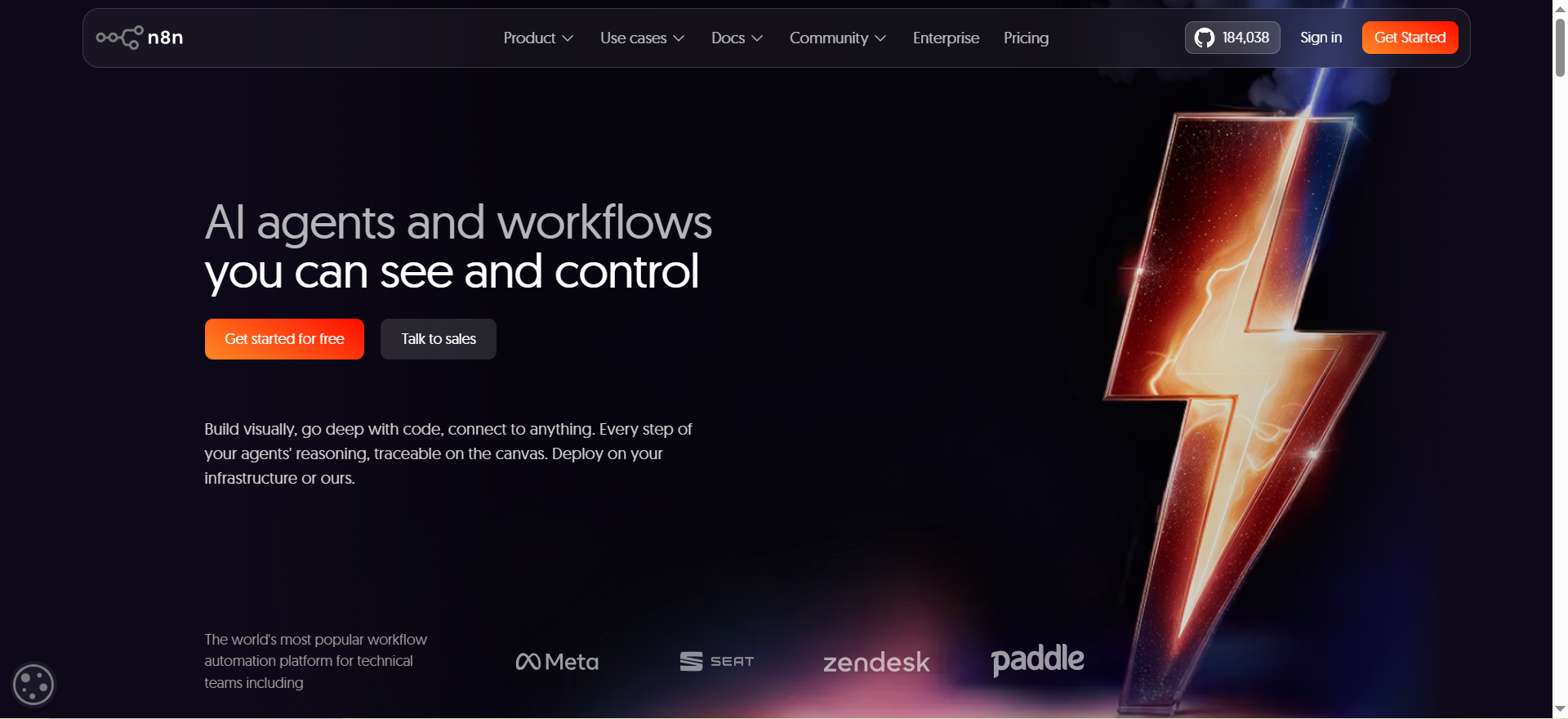
n8n is an open-source workflow automation platform that has become one of the most popular environments for building AI agents. The learning ecosystem around n8n includes dozens of Udemy courses, a thriving community forum, YouTube tutorials, and official documentation. Courses like "Master n8n AI Agents: Build & Sell AI Agents and Automations" and "The Complete AI Agents & AI Automation Course" teach you how to build AI agents from scratch using n8n's visual node-based builder, covering everything from basic webhook automations to advanced RAG implementations and multi-agent orchestration.
Why Teams Use It
Teams choose n8n courses because the platform is open-source and self-hostable, which means you can learn on a free local instance without worrying about execution limits or monthly costs. The visual builder makes complex agent architectures tangible rather than abstract, and the courses translate directly into production-ready skills because n8n is both the learning environment and the deployment platform. For marketing ops managers and product managers, this means the gap between "I took a course" and "I shipped an agent" is shorter than with any other option.
What It Is Good For
n8n courses excel at teaching practical, deployment-ready AI agent building. You learn to connect LLMs like GPT-4 and Claude to real business systems, build RAG pipelines with vector databases, create AI voice agents that handle phone calls, set up human-in-the-loop approval workflows, and orchestrate multi-agent systems where agents hand off tasks to each other. The courses also cover the commercial side — how to package and sell AI agent services to clients.
When It Is a Good Fit
n8n courses are the right choice when your team wants deep technical control over agent behavior, when you plan to self-host for data privacy or cost reasons, when you need to build agents that connect to custom APIs or internal databases, or when you want to learn skills that transfer to a consulting or agency model. They also fit teams that prefer learning by building rather than watching lectures, since most n8n courses are project-based.
When It Is Not a Good Fit
n8n courses are not ideal if your team has zero technical comfort with concepts like APIs, webhooks, or JSON. While the platform is visual, the courses assume a baseline willingness to troubleshoot node configurations and debug workflow logic. If your goal is to deploy a simple chatbot with no custom logic, Voiceflow courses will get you there faster. If you want a fully guided, certification-style learning path, Make Academy is more structured.
How To Use It
Start with a free Udemy course like "Build AI Agents with n8n: Free Hands-On Training" to confirm the platform fits your learning style. Then move to a comprehensive paid course like "Master n8n AI Agents" which covers nodes, APIs, webhooks, AI agent nodes, RAG, MCP servers, and voice agents in sequence. Install n8n locally using Docker or sign up for n8n Cloud's free starter tier. Each course module typically has you build a working agent — an email responder, a lead qualifier, a content generator — so you finish with a portfolio of deployable workflows.
Key Capabilities
n8n courses teach you to work with over 400 integrations, build AI agents using the dedicated AI Agent node, implement memory and context persistence with Supabase or Pinecone, create tool-calling agents that execute real actions, set up error handling and fallback logic, design human-in-the-loop approval steps, build voice AI agents with Retell or ElevenLabs integrations, and deploy agents to production with monitoring. The platform's April 2026 update removed all active workflow limits across every plan, so you only pay based on executions.
Pricing
Udemy courses range from $12 to $85, with frequent sales dropping prices to $12–$15. n8n Cloud pricing starts at €24/month (Starter) for 2,500 executions, €60/month (Pro) for 10,000 executions, and €800/month (Business) for 40,000 executions with SSO. Self-hosting is free forever with unlimited workflows and executions.
Free Tier
Yes. n8n's self-hosted community edition is completely free with no execution or workflow limits. Several free Udemy courses exist for n8n basics. The n8n community forum and YouTube channel provide extensive free learning material.
Downsides and Limitations
The Udemy course ecosystem is crowded and quality varies significantly — some courses are outdated or rehash the same beginner content. There is no official n8n certification program, so completed courses do not carry formal credentials. Self-hosting requires basic DevOps knowledge (Docker, server management) that courses often gloss over. Some advanced AI features require paid n8n Cloud plans or external API keys that add cost beyond the course fee.
2. Make
What It Does
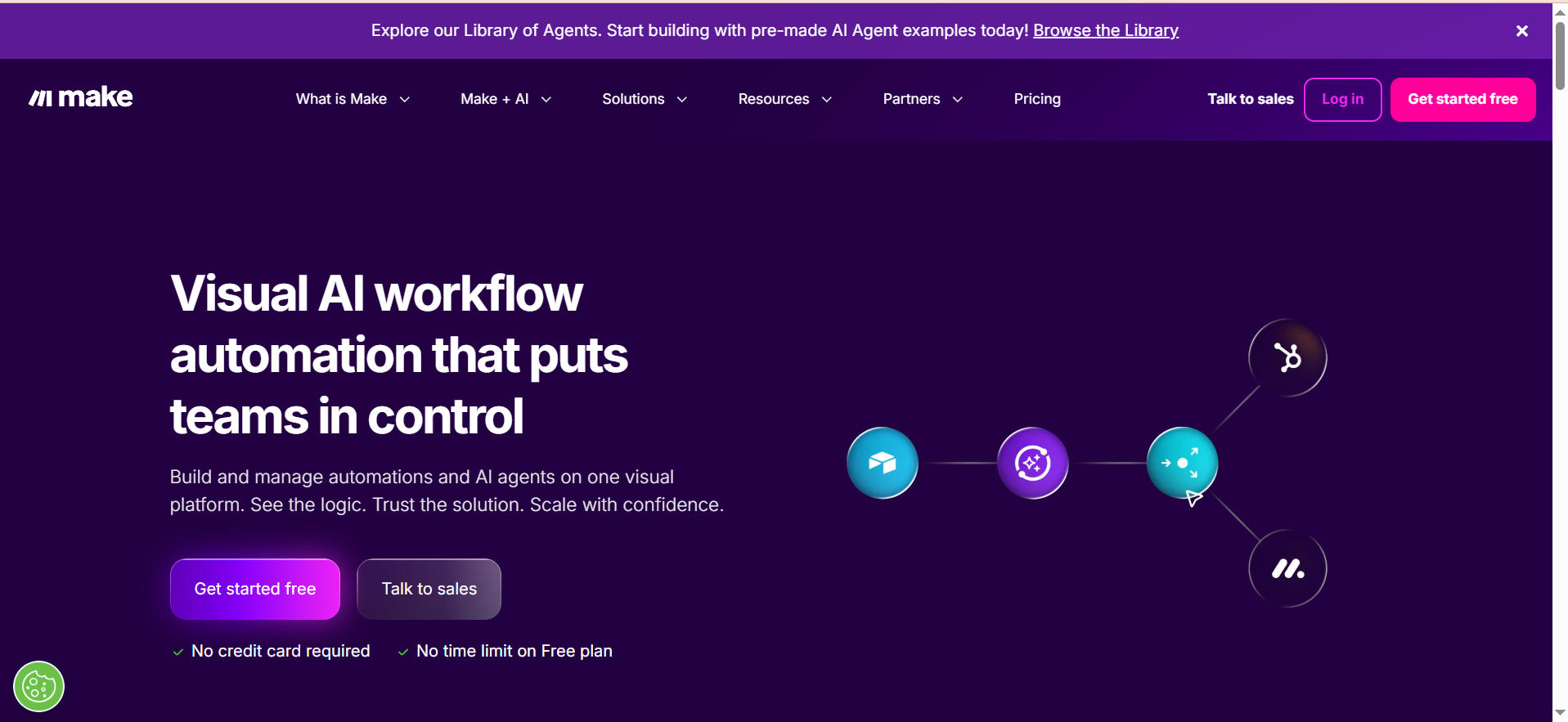
Make (formerly Integromat) offers Make Academy, a free, self-paced learning platform with a structured curriculum that progresses from automation fundamentals to AI agent architecture. The "Automation to AI Agents" learning path is composed of six courses and one assessment, covering everything from basic scenario building to deploying autonomous AI agents within Make's visual canvas. Make Academy is the most formally structured learning option in this list, with clear course sequencing, progress tracking, and knowledge assessments.
Why Teams Use It
Teams choose Make Academy because it is completely free, officially maintained by the platform team, and follows a logical progression that prevents the common problem of jumping into AI agents without understanding the automation foundations they depend on. For marketing ops managers evaluating where to invest training time, Make Academy eliminates the guesswork about course quality because every module is built and updated by Make's own team.
What It Is Good For
Make Academy is strongest at teaching the conceptual framework behind agentic automation before diving into implementation. You learn the difference between simple automation, conditional automation, and agentic automation. You understand when an AI agent is the right solution versus when a deterministic workflow is better. Then you build agents inside the same canvas where your existing automations run, which means AI agents inherit all the monitoring, error handling, and integration infrastructure you already know.
When It Is a Good Fit
Make Academy is the right choice when your team is new to both automation and AI agents, when you want a structured learning path rather than a collection of standalone tutorials, when budget for training is zero, when you need your team to speak the same automation language before building agents, or when you are already using Make for workflow automation and want to add AI capabilities without switching platforms.
When It Is Not a Good Fit
Make Academy is not ideal if you want deep, project-based courses that walk you through building specific production agents step by step. The academy teaches concepts and architecture more than it teaches "build this exact agent for this exact use case." If you want to self-host your automation platform, Make is cloud-only. If your team needs to build voice AI agents or deeply conversational agents, Voiceflow courses are more specialized.
How To Use It
Go to Make Academy and enroll in the "Automation to AI Agents: Foundation" learning path. Complete the six courses in order — they build on each other. After finishing the foundation path, move to the "Automation to AI Agents: Advanced" path for sophisticated autonomous systems. Supplement with Udemy courses like "AI Automation Bootcamp: Mastering AI Agents With Make (2026)" for hands-on project work. Sign up for Make's free tier (1,000 credits/month) to practice alongside the courses.
Key Capabilities
Make Academy courses teach you to build scenarios with 2,000+ app integrations, design AI agents that reason and choose tools within the visual canvas, use native modules for OpenAI, Anthropic Claude, Google Gemini, and Stability AI, implement conditional logic and error handling for agent reliability, create multi-step agent workflows with transparent decision paths, and understand credit-based cost management for AI operations. Make AI Agents (currently in beta) let you build autonomous agents that execute actions across multiple apps with reasoning.
Pricing
Make Academy is completely free. Make platform pricing starts at $10.59/month (Core) for 10,000 credits and unlimited scenarios, $18.82/month (Pro) with priority execution, $29/month (Teams) with collaboration tools, and custom Enterprise pricing. AI agent operations consume credits per run using the built-in AI provider, with costs varying by model and complexity.
Free Tier
Yes. Make Academy is entirely free with no paywalls. The Make platform free tier includes 1,000 credits/month, 2 active scenarios, unlimited users, and access to 2,000+ integrations. This is enough to practice everything taught in the foundation courses.
Downsides and Limitations
The Academy courses lean conceptual and may leave hands-on builders wanting more step-by-step project tutorials. AI Agents in Make are still in beta, which means the feature set may change and some documented capabilities might not work exactly as taught. Make is cloud-only with no self-hosting option, which limits teams with strict data residency requirements. Credit-based pricing can become expensive for high-volume AI agent operations compared to n8n's execution-based model.
3. Voiceflow
What It Does
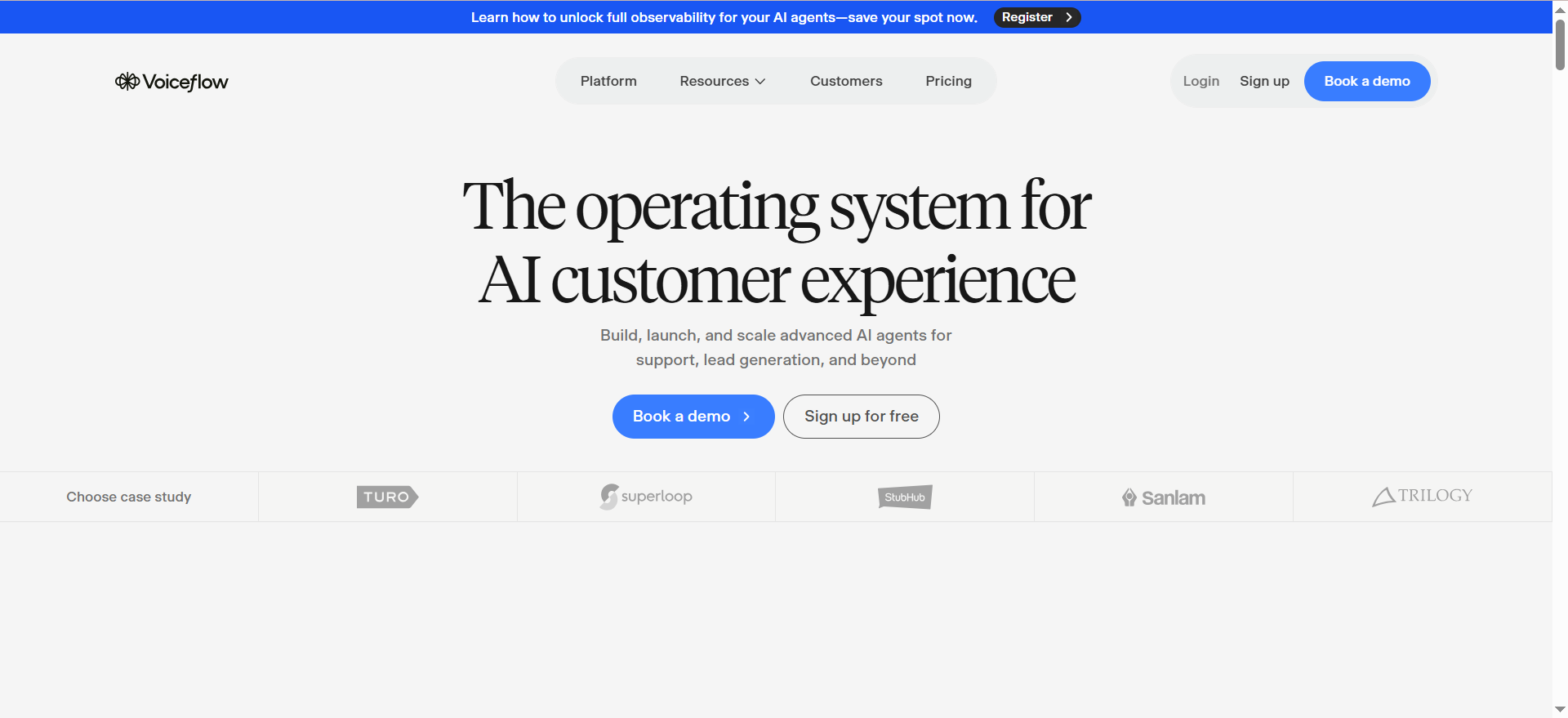
Voiceflow offers Voiceflow Learn, an official course platform with structured courses for building conversational AI agents. The courses include "Voiceflow Basics," "Build an AI Support Agent," "Launch a Slack Q&A Agent," and "Build a Shopify eCommerce AI Agent." Each course walks you through building a specific type of conversational agent from scratch using Voiceflow's drag-and-drop visual interface. Voiceflow also maintains a YouTube channel, blog tutorials, and an active Discord community for ongoing learning.
Why Teams Use It
Teams choose Voiceflow courses because they are the fastest path to deploying a customer-facing AI agent. While n8n and Make teach general-purpose automation with AI capabilities, Voiceflow courses are laser-focused on conversational AI — chatbots, voice agents, support bots, and sales agents. If your team's goal is to launch an AI agent that talks to customers, Voiceflow courses eliminate the distraction of learning broad automation concepts you do not need.
What It Is Good For
Voiceflow courses excel at teaching conversational design, knowledge base integration, intent recognition, multi-turn dialogue management, and channel deployment. You learn to build agents that can answer questions from uploaded documentation, qualify leads through conversation, handle support tickets, process e-commerce queries, and escalate to human agents when needed. The courses also cover testing and iteration workflows, so you learn how to improve agent performance after launch.
When It Is a Good Fit
Voiceflow courses are the right choice when your primary goal is building chat or voice AI agents for customer-facing use cases, when your team includes non-technical members who need to design conversational flows, when you need to integrate with CRM platforms like Salesforce or Zendesk, when you want to deploy agents across web chat, phone, Slack, or Shopify, or when you need to launch an agent in days rather than weeks.
When It Is Not a Good Fit
Voiceflow courses are not ideal if you need to build backend automation agents that process data, trigger workflows, or orchestrate multi-step business processes without a conversational interface. If your agents need to connect to hundreds of different apps and APIs, n8n or Make courses will teach more relevant skills. Voiceflow is also more expensive at scale than self-hosted alternatives.
How To Use It
Start with the "Voiceflow Basics" course on Voiceflow Learn to understand the platform's building blocks — steps, paths, variables, and knowledge bases. Then take the "Build an AI Support Agent" course to build your first functional agent. Move to specialized courses like the Shopify eCommerce agent or Slack Q&A agent based on your use case. Sign up for Voiceflow's free tier to practice alongside the courses — you get two agents and access to the full drag-and-drop builder.
Key Capabilities
Voiceflow courses teach you to design conversational flows with the visual drag-and-drop builder, integrate knowledge bases with long-form content for RAG-style responses, connect to GPT-4 and Claude for natural language understanding, build multi-channel agents that deploy to web, phone, Slack, and Shopify, implement intent recognition and entity extraction, create escalation paths to human agents, test and iterate agent performance, and connect to external tools and CRMs through API steps.
Pricing
Voiceflow Learn courses are free. The Voiceflow platform has four tiers: Free (2 agents, basic features), Pro ($60/month for 1 editor, 10,000 credits, up to 20 agents), Business ($150/month for 1 editor, 30,000 credits, unlimited agents), and Enterprise (custom pricing, typically $1,000–$2,000/month). Additional editors cost $50/month each.
Free Tier
Yes. All Voiceflow Learn courses are free. The platform free tier includes two agents, access to the full visual builder, and basic LLM integration. This is sufficient to complete the beginner and intermediate courses and deploy a basic agent.
Downsides and Limitations
Voiceflow courses are narrow in scope — they teach conversational AI agent building but do not cover workflow automation, data processing, or multi-system orchestration. The course library is smaller than what is available for n8n on Udemy. Pricing escalates quickly once you add editors or exceed the free tier's agent limit. The platform is cloud-only with no self-hosting option, which may not suit teams with strict data handling requirements.
4. Relevance AI
What It Does
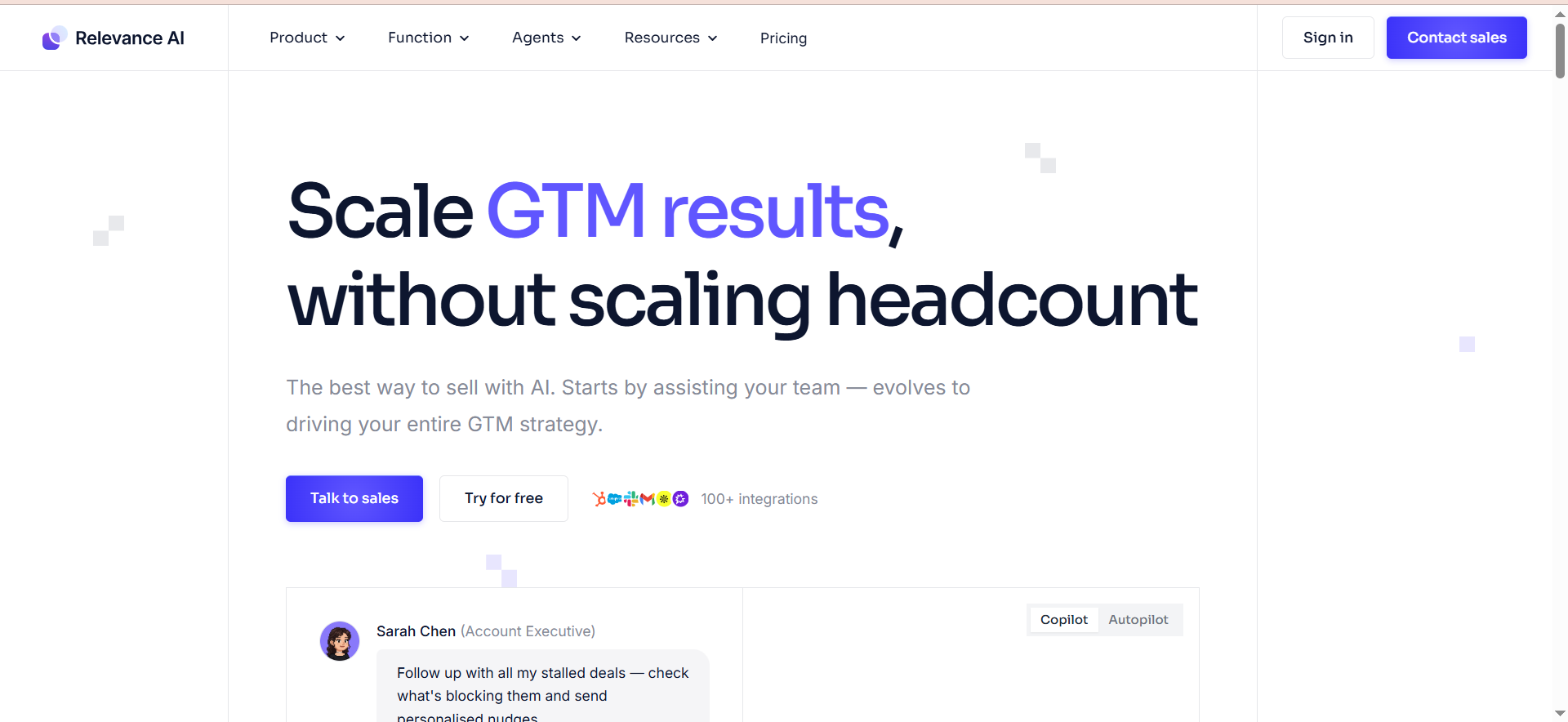
Relevance AI offers a learning ecosystem centered on its Relevance Academy, which includes official tutorials, a full beginner-to-deployment guide, and a partnership course with BuildClub called "AI Agents 101 and Custom Agents with Relevance AI." The platform teaches you to build no-code AI agent workforces — teams of agents that collaborate, share outputs, and execute multi-step tasks autonomously across sales, marketing, operations, and support. Learning resources focus on practical deployment rather than theory, with tutorials that walk you through building functional agents from the first session.
Why Teams Use It
Teams choose Relevance AI courses because the platform is purpose-built for deploying AI agent workforces rather than individual automations. The learning path teaches you to think in terms of agent teams — a BDR research agent, a content generation agent, a prospect qualification agent — that work together. For marketing ops managers and product managers, this multi-agent approach maps directly to how departments actually operate, making it easier to identify where agents create value.
What It Is Good For
Relevance AI courses are strongest at teaching multi-agent system design, tool creation, and autonomous task execution. You learn to build agents that research prospects, generate content, qualify leads, analyze data, and handle customer success workflows. The platform's agent marketplace with over 400 pre-built templates means courses can move quickly from "how agents work" to "customize this template for your use case" rather than building from zero.
When It Is a Good Fit
Relevance AI courses are the right choice when your team wants to deploy a system of collaborating AI agents rather than a single agent, when you need agents for sales, marketing, or operations workflows specifically, when your team prefers a no-code approach with agent templates as starting points, when you want to bring your own API keys to control AI model costs, or when you need agents that integrate with HubSpot, Salesforce, Slack, or Gmail.
When It Is Not a Good Fit
Relevance AI courses are not ideal if you want to learn general-purpose workflow automation — the platform is agent-first, not automation-first. If you need to build voice AI agents or conversational chatbots, Voiceflow is more specialized. If you want open-source flexibility and self-hosting, n8n is the better learning path. The platform's credit-based pricing can also be harder to predict for learners who want to experiment extensively.
How To Use It
Start with the official "Build Your First No-Code AI Agent" tutorial on Relevance AI to understand the platform's agent and tool architecture. Then take the BuildClub "AI Agents 101" course for a structured introduction guided by Relevance AI's co-founder. Browse the agent marketplace to find templates close to your use case and use them as learning accelerators. Sign up for the free tier (200 actions/month, $2 bonus vendor credits) to practice building and testing agents.
Key Capabilities
Relevance AI courses teach you to build autonomous agents with multi-step reasoning, create custom tools that agents can call during execution, design multi-agent systems where agents collaborate and hand off tasks, use 9,000+ integrations to connect agents to business systems, customize pre-built agent templates from the marketplace, manage AI model costs with bring-your-own-key pricing, implement agent analytics and performance monitoring, and deploy agents for sales research, content generation, lead qualification, and data analysis.
Pricing
Relevance Academy tutorials and documentation are free. The BuildClub course pricing varies. Relevance AI platform pricing includes: Free (200 actions/month, 1 user, $2 bonus vendor credits), Pro ($19/month annual, 30,000 actions/year, $240 vendor credits/year, 2 build users), Team ($234/month annual, 84,000 actions/year, $840 vendor credits/year, 5 build users), and Enterprise (custom). Most small teams spend $19–$234/month depending on agent volume and billing cycle.
Free Tier
Yes. Official tutorials and documentation are free. The platform free tier includes 200 actions per month, one user, $2 in bonus vendor credits, and access to the marketplace. This is enough to complete beginner tutorials and test basic agent functionality, though serious experimentation will require the Pro plan ($19/month annual).
Downsides and Limitations
The structured course ecosystem is thinner than n8n or Make — Relevance AI relies more on documentation and tutorials than formal course paths. The platform uses a dual-component pricing model splitting credits into Actions and Vendor Credits, which adds complexity for learners trying to estimate costs. The free tier's 200 actions/month is restrictive for extensive learning. The platform is newer than competitors, so community resources and third-party courses are less abundant.
5. Zapier
What It Does
Zapier offers learning resources for AI agents primarily through its blog, documentation, and third-party Udemy courses. Zapier Agents are autonomous AI teammates that can read email, run research, and take actions based on goals you set. While Zapier does not have a dedicated academy like Make, its extensive documentation, blog tutorials, and the broader Udemy ecosystem provide multiple entry points for learning to build AI agents within the Zapier platform. Courses like "Agentic AI for Absolute Beginners: n8n, Zapier and ChatGPT" cover Zapier alongside other platforms.
Why Teams Use It
Teams choose Zapier for AI agent learning because many organizations already use Zapier for basic automation, and adding AI agent capabilities to an existing Zapier setup is faster than learning an entirely new platform. With 8,500+ integrations — more than any other platform on this list — Zapier agents can connect to virtually any tool your team already uses. The learning curve is gentler because you are extending familiar concepts rather than starting from scratch.
What It Is Good For
Zapier courses and tutorials are best for teaching how to add AI capabilities to existing automation workflows. You learn to build Zapier Agents that autonomously monitor email, research topics, summarize information, and take actions across connected apps. Zapier Copilot teaches you to build automations using natural language, which lowers the barrier for non-technical team members. The platform's MCP server feature lets you expose 30,000+ Zapier actions to external LLMs, which courses teach as an advanced integration pattern.
When It Is a Good Fit
Zapier courses are the right choice when your team already uses Zapier and wants to upgrade to AI-powered agents, when you need the widest possible integration library (8,500+ apps), when your team includes non-technical members who benefit from natural language automation building via Copilot, or when you want to experiment with AI agents without committing to a new platform.
When It Is Not a Good Fit
Zapier courses are not ideal if you want a deep, structured learning path specifically for AI agents — Zapier's learning resources are more scattered across blog posts, docs, and third-party courses than Make Academy or Voiceflow Learn. If you need to self-host for data privacy, Zapier is cloud-only. If cost sensitivity is high, Zapier's add-on pricing for AI Agents (separate from base subscription) can stack up to $150–$200/month, making it expensive for learners who want to experiment at scale.
How To Use It
Start with Zapier's official documentation on Zapier Agents to understand the agent architecture — goals, data source access, scheduling, and oversight. Read the blog tutorials that walk through specific agent use cases. Then take a Udemy course like "Agentic AI for Absolute Beginners" that covers Zapier alongside n8n and ChatGPT for broader context. Sign up for Zapier's free tier (100 tasks/month) to build your first Zaps, then experiment with Agents on the free experimentation tier.
Key Capabilities
Zapier courses and tutorials teach you to build autonomous agents that set goals and decide actions, use Zapier Copilot to create automations with natural language, connect to 8,500+ app integrations, expose Zapier actions to external LLMs via MCP server, build multi-step Zaps with conditional logic, implement Tables, Forms, and Interfaces for data management, create chatbots with AI-powered responses, and monitor agent activity with oversight controls.
Pricing
Documentation and blog tutorials are free. Udemy courses range from $12 to $50. Zapier platform pricing: Free (100 tasks/month), Professional ($19.99/month for 750 tasks), Team ($69/month for 2,000 tasks), Enterprise (custom). AI Agents are priced separately: free experimentation tier, paid tiers based on interaction volume (up to 1,500 activities/month on Pro). Full AI stack (Copilot + Agents Pro + Chatbot) can reach $150–$200/month in add-on fees.
Free Tier
Yes. Documentation and blog tutorials are free. The platform free tier includes 100 tasks/month and 400 AI Agent activities/month for basic experimentation. This is enough to learn the fundamentals but not enough for sustained practice or production deployment.
Downsides and Limitations
Zapier lacks a structured, official academy for AI agents — learning is fragmented across docs, blog posts, and third-party courses. AI Agents and Chatbots are priced as separate add-ons, making cost management complex for learners. The free tier is restrictive at 100 tasks/month. Zapier's approach to AI agents is more recent and less mature than its core automation product, so some advanced agent features may feel less polished than competitors. Third-party course quality varies significantly.
How Do AI Agent Courses Differ From Traditional Automation Training
Traditional automation training teaches you to build deterministic workflows — if this happens, do that. Every path is predefined, every outcome is mapped. AI agent courses teach you to build systems that reason about inputs, choose which tools to use, and decide the best sequence of actions to reach a goal. The key difference is that automation training gives you predictable, repeatable workflows while AI agent training gives you adaptive systems that handle variability. In practice, this means AI agent courses spend significant time on prompt engineering, guardrails, error handling for non-deterministic outputs, and human-in-the-loop oversight that traditional automation courses never cover. Most AI agent courses also assume you already understand basic automation concepts like triggers, actions, and API connections, which is why Make Academy's foundation-first approach works well for teams starting from zero.
What Should You Learn First — Workflow Automation or AI Agents
Learn workflow automation first. Every AI agent course on this list assumes you understand concepts like triggers, webhooks, API calls, conditional logic, and data mapping. If you skip straight to AI agents, you will struggle with the foundational infrastructure that agents depend on. Make Academy handles this well by sequencing automation fundamentals before AI agent modules. n8n courses on Udemy often start with basic nodes and webhooks before introducing the AI Agent node. The practical reason is simple — most production AI agents are embedded within larger automation workflows, so you need both skills. Start with two to four weeks of automation fundamentals, then move to AI agent-specific training.
Which AI Agent Course Is Best for Non-Technical Marketing Teams
For non-technical marketing teams, Make Academy is the best starting point because it is free, structured, and starts from absolute basics before building toward AI agents. Voiceflow Learn is the second-best option if the team's primary goal is deploying a customer-facing chatbot or support agent. Both platforms use visual, drag-and-drop interfaces that do not require coding knowledge. Zapier is a reasonable third option if the team already uses Zapier for existing automations. Avoid starting with n8n if the team has no technical background — while n8n courses are excellent, they assume more comfort with concepts like JSON, APIs, and Docker that can frustrate marketing-focused learners.
Can You Build Production-Ready AI Agents After Taking One Course
You can build a functional agent after one course, but production-ready is a higher bar. A single course teaches you the platform mechanics — how to create an agent, connect integrations, and deploy it. Production readiness requires understanding error handling, edge case management, cost optimization, monitoring, and governance that most beginner courses cover only briefly. Expect to take one foundational course and then spend two to four weeks iterating on a real project before your agent is reliable enough for production. The n8n courses that include RAG, error handling, and human-in-the-loop modules come closest to production readiness in a single course. Make Academy's advanced path also covers the architecture needed for production deployment.
How Much Do AI Agent Courses Cost in 2026
The cost range is wide. Make Academy and Voiceflow Learn are completely free. Relevance AI's official tutorials are free. n8n and Zapier courses on Udemy range from $12 to $85, with Udemy sales frequently dropping prices to $12–$15. Beyond course fees, you need to factor in platform costs for practice: n8n self-hosted is free, Make's free tier gives you 1,000 credits/month, Voiceflow's free tier gives you 2 agents, Relevance AI's free tier gives you 200 actions/month with $2 bonus vendor credits, and Zapier's free tier gives you 100 tasks/month. For a team of one learning on free tiers, you can realistically spend $0–$15 total. For a team of three to five using paid platform tiers alongside courses, expect $19–$200/month in combined costs.
What Tools Do You Need Before Starting an AI Agent Course
At minimum, you need a computer with a modern web browser, a free account on the platform you are learning (n8n, Make, Voiceflow, Relevance AI, or Zapier), and an OpenAI or Anthropic API key for courses that involve LLM integration. Most courses walk you through API key setup. For n8n self-hosted courses, you also need Docker installed on your machine. Having a Gmail account, a Slack workspace, and a Google Sheets file ready will help you complete integration exercises that most courses include. No paid software is required to start — every platform on this list has a free tier sufficient for course exercises.
Are Free AI Agent Courses Worth Taking
Yes, with caveats. Make Academy's free courses are high quality because they are maintained by the platform team and follow a structured curriculum. Voiceflow Learn's free courses are similarly well-produced for conversational AI use cases. Relevance AI's free tutorials are practical and get you to a working agent quickly. Free Udemy courses for n8n tend to cover basics well but may feel incomplete compared to paid options. The main limitation of free courses is depth — they teach you to build a working agent but often skip advanced topics like production monitoring, cost optimization, multi-agent orchestration, and enterprise governance. If you are evaluating platforms, free courses are the best way to test fit before investing in paid training or platform subscriptions.
FAQs
No. Every platform on this list — n8n, Make, Voiceflow, Relevance AI, and Zapier — offers no-code or low-code courses designed for non-developers. n8n courses occasionally touch on JavaScript for custom functions, but this is optional for most agent-building scenarios. Make Academy, Voiceflow Learn, and Relevance AI courses require zero coding.
Most individual courses take five to fifteen hours to complete. Make Academy's full foundation path (six courses plus assessment) takes approximately twenty to thirty hours. Udemy courses for n8n range from four to twenty hours depending on depth. Voiceflow's beginner courses can be completed in under five hours. Plan for two to four weeks of part-time learning to reach a level where you can build and deploy a basic agent.
Make Academy offers assessments at the end of its learning paths, which serve as informal certifications within the Make ecosystem. The other platforms do not currently offer formal certifications. Udemy provides completion certificates for paid courses, but these carry limited professional weight. If formal certification matters to your team, Make Academy is the only option on this list with a structured assessment component.
n8n courses are the strongest option for building an AI agents consulting or agency practice. The "Master n8n AI Agents: Build & Sell AI Agents and Automations" course explicitly covers the commercial side of agent building. n8n's open-source model and self-hosting capability also give you more flexibility in how you package and price agent services for clients compared to cloud-only platforms.
Zaps are deterministic automations — you define a trigger and a sequence of actions that execute the same way every time. Zapier Agents are autonomous AI systems where you define a goal and grant access to data sources, and the agent reasons about the best way to achieve that goal. Agents can make decisions, perform web searches, and take different actions depending on context. Courses that cover both help you understand when to use each approach.