Best AI Avatar Services For Influencer Content (2026)
Which ai avatar services options actually fit influencer content and which ones create extra cost, handoff friction, or weak output.

This playbook helps content managers and growth marketers compare the best ai avatar services options for influencer content. It breaks down where heygen, synthesia stand out, when alternatives such as runway, veed make more sense, and which setup fits B2B companies and B2C brands and solo operators and small businesses.
TL;DR
AI avatar services have transformed how influencers, brands, and marketing teams produce content at scale. Instead of hiring talent, booking studio time, or managing video production timelines, you can now generate professional avatar videos in minutes. This guide compares five production-ready platforms—HeyGen, Synthesia, D-ID, Colossyan, and Elai—across realism, pricing, editing control, and fit for influencer content workflows.
If you're a content creator, brand strategist, or growth marketer working with limited budgets and tight deadlines, one of these platforms can cut your video production time by 70% while maintaining professional quality. We've tested pricing structures updated to April 2026, supported features, and real-world use cases so you can choose the right tool for your influencer strategy.
Table of Contents
Best AI Avatar Services for Influencer Content (Quick Comparison)
| Tool | Best For | Starting Price | Free Tier |
|---|---|---|---|
| HeyGen | Photorealistic avatars, multilingual campaigns | $29/mo | 3 videos/mo (watermarked) |
| Synthesia | Fast production, content teams, enterprise scaling | $18/mo (annual) | 10 min/mo with 9 avatars |
| D-ID | API integration, developer workflows, customization | $5.99/mo | 5 min trial |
| Colossyan | LMS integration, training content, volume production | $19/mo (annual) | 5 min free |
| Elai | Voice cloning, personal brands, flexible pay-as-you-go | $23/mo (annual) | 1 min trial |
Best AI Avatar Services for Influencer Content (Quick Comparison)
1. HeyGen
What it does
HeyGen generates photorealistic avatar videos from text or scripts. You choose from 175+ language options, select or create a custom avatar, and the platform lip-syncs dialogue, adds gestures, and outputs finished video in minutes. The Avatar IV engine delivers the highest visual fidelity of the five platforms reviewed here.
Why teams use it
HeyGen's avatar quality is closest to real human video. For influencers launching personal brands or teams managing multiple campaigns, this realism matters—viewers are less likely to notice uncanny motion or unnatural pauses. The platform handles multilingual content natively, which is critical for creators monetizing across geographies. Enterprises often choose HeyGen for sponsored content where visual polish is non-negotiable.
What it's good for
Personal influencer brands and one-to-many creator channelsSponsored product announcements and brand partnershipsMultilingual influencer campaigns (175+ languages)Product demo videos and testimonial-style contentBuilding a consistent AI persona for a channel
When it's a good fit
Choose HeyGen if you prioritize avatar realism and want to maintain a consistent on-screen presence without hiring talent. It's ideal if you're producing sponsored content where visual quality directly affects brand perception. If you run multilingual campaigns, HeyGen's language support is unmatched.
When it's not a good fit
HeyGen is the most expensive entry point ($29/mo minimum). If you're on a tight budget or producing simple explainer videos where realism isn't critical, Synthesia or Colossyan may be better. The platform also requires more manual setup per video compared to some competitors.
How to use it
Write or paste your script into HeyGen's editorSelect a standard avatar or upload a custom one (for Business tier+)Choose voice and language; HeyGen syncs lip movement automaticallyAdd gestures, pauses, or camera angles using timeline controlsPreview, export as MP4 for social media, and publish
Key capabilities
Avatar IV photorealistic engine with natural motionText-to-speech with 50+ voice options per languageCustom avatar creation (Business tier)4K video output (Professional tier and above)Gesture and camera angle controlBackground and clothing customizationMulti-avatar scenes for dialogue-style contentBatch processing (Creator tier+)SSO and team collaboration (Business tier)
Pricing
Free: 3 videos/month with watermarkCreator: $29/month, 200 credits (Avatar IV videos = 20 credits/min), standard avatarsPro: $99/month, 2,000 credits, extended language packsBusiness: $149/month + $20/seat, 1,000 shared credits, 4K output, custom avatars, SSO, team managementEnterprise: Custom pricing
Free tier?
Yes. Three watermarked videos per month, sufficient to test the platform before committing to a paid plan. Watermark removal requires Creator tier ($29/mo).
Downsides / limitations
Watermark on free tier videosCustom avatar creation limited to Business tier ($149/month)Credit system can feel opaque if you're not optimizing for it (20 credits per minute of Avatar IV video adds up)Slightly slower export times compared to Synthesia
2. Synthesia
What it does
Synthesia creates avatar videos from plain text. You write a script, pick one of 180+ photorealistic avatars, select a voice, and Synthesia generates video in real-time preview. The platform emphasizes speed—you can go from blank page to finished video in under 5 minutes.
Why teams use it
Synthesia is built for teams and high-volume production, making it one of the best AI avatar options for marketers. The Creator tier includes API access, which allows brands and agencies to automate video generation at scale. Content managers love it because you can batch-create dozens of videos with different scripts but the same avatar, and then push them directly to distribution. The no-nonsense interface appeals to marketing teams with limited video production experience.
What it's good for
Influencer content calendars with consistent visual brandingSocial media posts and short-form content (Instagram Reels, TikTok, LinkedIn)Product update announcements and company newsTutorial and how-to contentHigh-volume, templated video productionTeam-based content workflows with shared avatars
When it's a good fit
Choose Synthesia if you're managing multiple influencer personas or producing weekly content for a brand. It's especially strong if you already use a content calendar tool and need programmatic video generation. The Creator tier ($49/mo annual, $69/mo monthly) is excellent value for agencies managing multiple client accounts—you get API access and 5 personal avatars for customization.
When it's not a good fit
Synthesia avatars are good but not quite as photorealistic as HeyGen's Avatar IV. If realism is your top priority for luxury brand or premium sponsored content, HeyGen edges ahead. Synthesia is also less flexible for custom avatar creation—you're limited to the standard library unless you're on Enterprise.
How to use it
Log in and click "Create Video"Paste or type your script (supports markdown formatting)Select an avatar from the 180+ libraryChoose a voice and languageAdd media (images, video clips, text overlays) if neededPreview and tweak timingExport as MP4 for social, direct publish to LinkedIn, or download for other platforms
Key capabilities
180+ photorealistic avatars140+ languages with regional accentsPersonal avatars (Starter tier and above, 5 on Creator)API for programmatic video generation (Creator tier+)Real-time video previewIntegrated media library and stock footageCustom branding options (logos, colors)Team collaboration with role-based permissions (Creator tier+)Direct LinkedIn publishingSubtitle and closed caption generation
Pricing
Free: 10 minutes/month, 9 avatarsStarter: $18/month (annual) or $29/month (monthly), 120 min/year, 125+ avatars, 1 personal avatarCreator: $49/month (annual) or $69/month (monthly), 30 minutes/month, 180+ avatars, 5 personal avatars, API accessEnterprise: Custom pricing, unlimited minutes
Free tier?
Yes. 10 minutes per month and access to 9 avatars. Sufficient for occasional creators or evaluating the platform, but influencers producing weekly content will outgrow it quickly.
Downsides / limitations
Starter tier pricing ($18/year annual, $29/month) is very limited (10 min/mo)—Creator tier is the realistic starting point for regular productionPersonal avatar customization requires buying each avatar individually, which adds costLess granular control over avatar movements and gestures compared to HeyGenAPI documentation is oriented toward developers; agencies may need technical support
3. D-ID
What it does
D-ID animates still images (photos or illustrations) into talking avatar videos. You upload a face, add a script or audio file, and D-ID syncs lip movement and generates realistic head movement. The platform is API-first, designed for developers and integrations rather than direct creator use.
Why teams use it
D-ID's real strength is technical flexibility. Developers can embed it into apps, marketers can integrate it with content pipelines, and brands can use it with custom or branded imagery instead of generic stock avatars. If you want an AI avatar generated from your photo or your brand's mascot, D-ID is the easiest path. The per-minute API pricing ($5.90/min) is transparent and works well for variable-volume workflows.
What it's good for
Personalized influencer channels where your own face is the avatarBranded mascot or character animationDeveloper and app integrationsVariable-volume production (pay only for what you use)Custom illustration or stylized avatar contentB2B personalized video outreach (one-to-one influencer relationships)
When it's a good fit
Choose D-ID if you're comfortable with APIs or working with a technical team. It's excellent if you want to use your own likeness or a branded illustration instead of a stock avatar. Influencers launching personal brands and teams building custom integrations will find D-ID's flexibility unmatched.
When it's not a good fit
D-ID's user interface is less polished than HeyGen or Synthesia—it's oriented toward developers, not non-technical creators. If you're a solo influencer who wants a one-click solution, D-ID adds friction. The Lite tier ($5.99/mo) is misleading; that's only the base price, and actual per-minute costs accumulate quickly. Transparency around bundled pricing could be clearer.
How to use it
Web Interface:Upload a face image (photo, illustration, or generated avatar)Write or paste a script, or upload an audio fileD-ID generates lip sync and head movementPreview and download MP4API Integration:Authenticate with API keyPOST request with image, script, and parametersReceive video file URLIntegrate into your app or workflow
Key capabilities
Animates still images into talking videosLip-sync from text or audioNatural head movement and blinkingSupport for multiple image formats (PNG, JPG, WebP)Custom audio or TTS integrationAPI for programmatic video generationWebhook support for workflow automationAvailable in 12+ languagesCustomizable animation parameters (head movement intensity, etc.)
Pricing
Free Trial: 5 minutesLite: $5.99/month, includes limited minutes, watermarkPro / Advanced / Enterprise: Higher tiers with increased minutes and API priority (exact pricing not consistently published)API: $5.90/minute for on-demand video generation
Free tier?
Yes, but limited. 5-minute trial. The Lite tier ($5.99/mo) is the entry point for regular use, but pricing transparency is weak—actual costs depend on your production volume.
Downsides / limitations
Pricing structure is less transparent than competitors; you may need to contact sales for clarityUser interface is developer-oriented; non-technical creators may find it intimidatingLimited to animating existing images; you can't create avatars from scratch like HeyGenQuality depends heavily on input image quality—poor source images produce poor resultsCommunity support is smaller compared to Synthesia or HeyGen
4. Colossyan
What it's good for
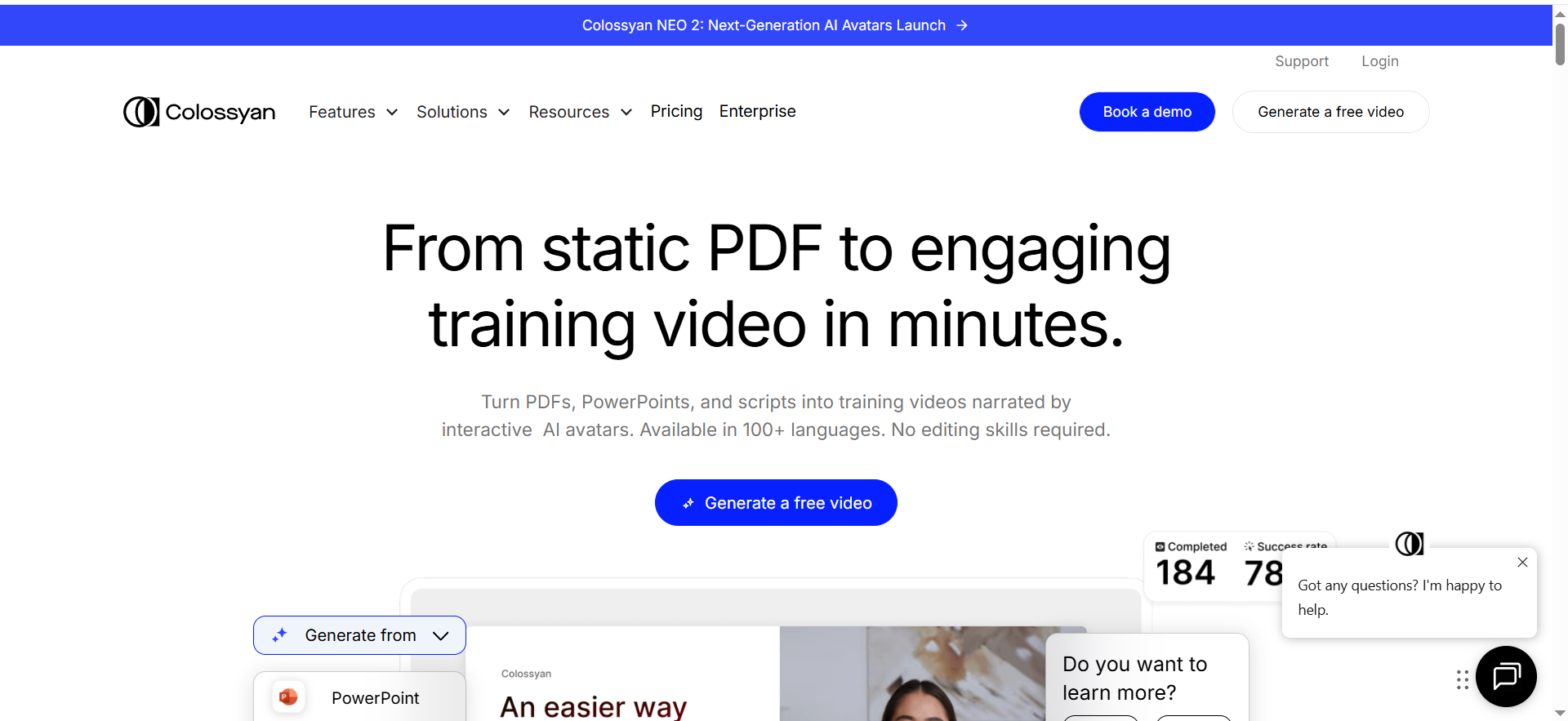
Colossyan is purpose-built for corporate training and eLearning. It integrates natively with LMS platforms (SCORM export), offers 300+ avatars optimized for professional settings, and excels at high-volume training content. The unlimited video production on Business tier ($70/mo annual) makes it cost-effective for large organizations.
Why teams use it
If you're managing influencer training content, educational courses for remote learning, or B2B onboarding for a brand, Colossyan is unbeatable on cost per video. The NEO 1 avatars (unlimited on Business tier) are professional but not as photorealistic as HeyGen. However, for influencers teaching skills, running courses, or creating educational content, the cost savings are significant.
What it does
Colossyan generates talking head videos from text scripts. You choose from 300+ avatars (professional, diverse, and inclusive), add your script, select a voice, and export video with SCORM compatibility for LMS systems.
What it's good for
Influencer-led online courses and educational platformsCorporate training and onboarding contentSkill-building and tutorial videosEmployee or community education programsHigh-volume content production on a budgetLMS integration and tracking
When it's a good fit
Choose Colossyan if you're producing educational influencer content at scale or running a training platform. The Business tier ($70/mo annual) includes unlimited NEO 1 videos—that's the strongest value proposition of the five platforms. If your influencer brand involves teaching, education, or skill development, Colossyan will cut your production costs dramatically.
When it's not a good fit
Colossyan is less ideal for consumer-facing brand partnerships or sponsored content where photorealism is critical. The avatars are professional but not as lifelike as HeyGen. The NEO 2 avatars (more realistic) are capped at 10 min/mo even on Business tier, which limits their utility. If you need the highest visual quality, HeyGen is a better choice.
How to use it
Create a new project and select an avatarUpload or paste your scriptConfigure voice, language, and pacingAdd slide backgrounds or media (optional)Preview and exportDownload MP4 or export SCORM for LMS integration
Key capabilities
300+ professional avatarsNEO 1 avatars (standard, unlimited on Business)NEO 2 avatars (more realistic, capped at 10 min/mo on Business)75+ languagesSCORM 1.2 and 2004 export for LMS platformsSlide-based content (like PowerPoint with avatars)Background customizationBatch video exportTeam collaboration (Business tier+)Video analytics and engagement tracking
Pricing
Free: 5 minutesStarter: $19/month (annual) or $27/month (monthly), 15 min/monthBusiness: $70/month (annual) or $88/month (monthly), unlimited NEO 1 videos, 10 min/mo NEO 2Enterprise: Custom pricing
Free tier?
Yes. 5 minutes free, no watermark. Enough to evaluate the platform and avatar library before committing.
Downsides / limitations
NEO 1 avatars are less photorealistic than HeyGen Avatar IV or SynthesiaNEO 2 (more realistic avatars) are capped at 10 min/mo even on the highest commercial tierPrimarily optimized for training; less ideal for consumer social media contentLimited gesture and movement control compared to HeyGenFewer avatar customization options for branded content
5. Elai
What it does
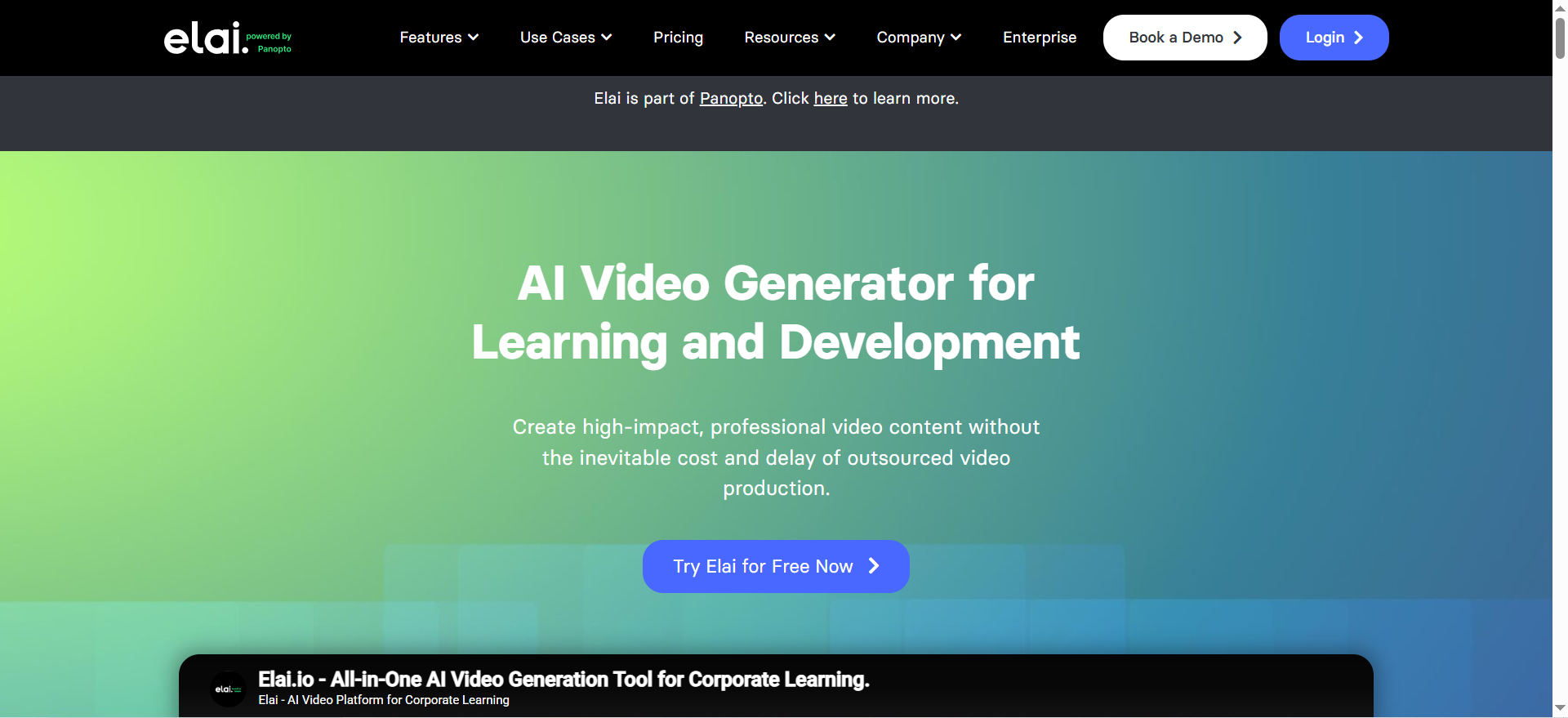
Elai generates avatar videos from text, with a focus on voice cloning and personal brand development. You write a script, select or create an avatar, and can optionally clone your own voice to maintain consistency across your influencer channel. Elai's pay-as-you-go minute pricing is flexible for variable production workflows.
Why teams use it
Elai is built for personal influencer brands. The voice cloning feature (Advanced tier and above) is exceptional—you can train Elai on 10+ minutes of your own audio, and it will synthesize your voice in any script. For influencers with a recognizable speaking style or accent, this is a competitive advantage. The flexible pricing also appeals to creators with unpredictable production schedules.
What it's good for
Building a consistent personal influencer brand with your own voiceInfluencer channels with distinctive audio identityVariable-volume content production (pay-as-you-go pricing)Personalized outreach and one-to-many campaignsInfluencers managing multiple languages with a single voiceSolo creators with limited production budgets
When it's a good fit
Choose Elai if you want to use your own voice across your influencer content or if you produce video sporadically. The voice cloning feature alone justifies the platform for many creators. The Advanced tier ($60/mo) includes voice cloning, 50 minutes, and is fairly priced. If you're a personal brand influencer, Elai is worth testing.
When it's not a good fit
Elai avatars are less photorealistic than HeyGen or Synthesia, and the platform is less team-friendly than Synthesia. If you're managing multiple influencer personas or building an agency-style operation, Synthesia or HeyGen is better. Elai is also less developed for integrations and API workflows compared to D-ID.
How to use it
Create a project and add your scriptSelect an avatar (or create a custom one with your photo)For voice cloning: upload 10+ minutes of your audio, train the model (Elai creates a voice ID)Generate video with cloned voicePreview, edit timing if neededExport MP4
Key capabilities
40+ avatar templatesVoice cloning with personalized voice ID (Advanced tier+)Text-to-speech in 90+ languagesCustom avatar creation (upload your photo)Personal avatar editor (change clothing, background, etc.)Timeline-based editingSubtitle and caption generationAPI access (Business tier)Batch processingDirect social media publishing (upcoming)
Pricing
Free Trial: 1 minuteCreator: $23/month (annual), 15 minutes/monthAdvanced: $60/month, 50 minutes/month, voice cloning, custom avatarsBusiness: $125/month, API access, unlimited minutes, custom avatars, priority supportPay-as-you-go: Additional minutes at $2/minute
Free tier?
Yes, but very limited. 1-minute trial. Sufficient to test voice quality and interface, but not to evaluate production capability. The Creator tier ($23/mo annual) is the realistic entry point.
Downsides / limitations
Smallest avatar library (40 templates) of the five platformsVoice cloning requires 10+ minutes of training audio, which creates friction for new usersLess community support and fewer third-party integrations than Synthesia or HeyGenAvatar realism is weaker than HeyGen or SynthesiaAPI is newer and less documented than competitors
How Do AI Avatar Services Work for Influencer Marketing
AI avatar platforms convert text scripts into photorealistic talking head videos without requiring on-camera talent. You input a script, select an avatar, choose a voice, and the platform automatically syncs lip movement, generates facial expressions, and produces an MP4 file ready for distribution. For influencers, this means you can maintain a consistent on-screen presence, respond to trends in real-time, and produce multiple videos weekly without booking studio time or hiring talent. Tools like HeyGen and Synthesia handle this in 5-10 minutes per video, while D-ID and Elai offer additional customization for personal brands (D-ID animates your face; Elai clones your voice). The workflow eliminates the bottleneck of scheduling, makeup, reshoots, and editing—you move directly from script to published content.
Can AI Avatars Replace Real Influencers
AI avatars are complementary, not replacements, for most influencer strategies. They excel at scaling consistent, templated content (product announcements, tutorials, educational series) but lack the authenticity, improvisation, and parasocial connection that audiences develop with real humans. AI avatars work best for brands seeking a new channel, influencers who want to extend their content calendar without hiring editors, or personal brands where consistency matters more than spontaneity. A hybrid approach—using AI avatars for 40-60% of your content (announcements, demos, FAQs) while maintaining monthly live or unscripted content—tends to perform better than AI-only strategy. The uncanny valley effect has diminished as avatars become more realistic, but viewers still notice when content is fully synthetic, which can reduce engagement if not framed transparently.
What Makes a Good AI Avatar for Social Media Content
A good AI avatar for social media should feel approachable, professional, and aligned with your brand aesthetic. HeyGen's Avatar IV and Synthesia's standard avatars rank highest for photorealism, which matters for premium sponsored content. For TikTok and Instagram Reels, lower-barrier avatars from Synthesia, Colossyan, or Elai work well because fast-paced, highly edited social content masks the uncanny valley effect better than long-form video. Choose avatars with diverse skin tones, ages, and styles to broaden audience connection. Customize clothing and backgrounds to match your brand colors and tone. Critically, test your avatar choice with a 30-60 second pilot before committing to a series—what looks good in isolation may not work over repeated exposures. Personal avatars (your own face via D-ID, or custom uploads via HeyGen or Elai) outperform stock avatars in audience engagement because they create familiarity and trust.
How Much Does AI Avatar Video Production Cost
AI avatar video production is dramatically cheaper than traditional video: you're paying for software, not talent or studio time. HeyGen costs $29/month (Creator tier) and averages $20 credits per minute of Avatar IV video; a 3-minute video costs roughly $6 in credits. Synthesia Creator tier ($49/month annual) gives you 30 minutes per month, or roughly $1.63/minute at scale. Colossyan Business tier ($70/month annual) offers unlimited NEO 1 videos, the best value for high-volume production. D-ID API pricing is $5.90/minute for on-demand usage. Elai Advanced ($60/month) gives 50 minutes plus voice cloning. If you produce 20-40 videos monthly, Colossyan or Synthesia Creator tier becomes cost-effective; under 10 videos/month, pay-as-you-go on Elai or D-ID often makes sense. Hidden costs include script writing, voice talent (unless using TTS), and quality control. For comparison: hiring a video editor and talent runs $500-3,000 per video; AI avatars reduce that to $50-200.
Best AI Avatar Tools for TikTok and Instagram Reels
Synthesia and HeyGen dominate TikTok and Instagram Reels because they prioritize fast export, short-form optimization, and trending audio integration. Synthesia's interface is built for rapid iteration—paste script, select avatar, add trending sounds, export in <5 minutes. HeyGen's gesture and camera angle controls let you add movement and cuts that mimic real Reels editing. Both platforms output vertical video natively. Colossyan works well for educational or tutorial Reels but avatars are less visually striking for entertainment-focused content. Elai's voice cloning adds personality to Reels, especially if you want consistent voice recognition across posts. D-ID is less ideal for short-form because animating face images takes more setup time. For TikTok specifically, test audio trending early: Synthesia integrates better with trending tracks, while HeyGen requires manual audio import. Pro tip: 15-30 second Reels perform better with minimal dialogue and strong visuals, so prioritize platforms with good gesture control and quick export.
How to Create a Consistent AI Influencer Persona
A consistent AI persona requires three elements: stable visual identity, recognizable voice, and defined messaging tone. First, choose one avatar or a limited set (maximum 2-3) and use them across all content—avatar consistency is how audiences recognize your brand. HeyGen and Synthesia let you create personal avatars or favorite standard avatars; mark them as defaults. Second, lock your voice: either select the same TTS voice across every video, or use Elai's voice cloning (Advanced tier, $60/mo) to train your AI voice and deploy it across platforms. Third, write a 2-3 sentence brand voice guide (e.g., "friendly, practical, no jargon") and apply it to every script—tone consistency is as important as visual consistency. Version your content by platform (Reels vs. YouTube vs. LinkedIn) but keep the same avatar, voice, and messaging. Test this persona with 8-10 videos before scaling; audience feedback often reveals persona-fit issues early.
AI Avatar Video Quality Comparison: Which Tool Looks Most Realistic
HeyGen's Avatar IV is the current realism leader, with natural blink rates, subtle shoulder movement, and accurate lip-sync with realistic human gestures even at extreme angles. Synthesia avatars are a close second—slightly less lifelike but still professional-grade, with faster export times. D-ID excels at animating real photographs, so if you use your own face or a branded illustration, D-ID rivals HeyGen in perceived realism. Colossyan NEO 2 avatars approach HeyGen's quality but are capped at 10 min/mo even on Business tier, making them impractical for regular use. Elai avatars lag the top tier but feel more stylized, which works for educational or branded content. For luxury goods, premium brand partnerships, or high-stakes sponsored content, HeyGen is worth the extra cost ($29/mo vs. Synthesia's $18/mo annual). For volume and consistency, Synthesia's quality-to-cost ratio is better. Test a 60-second video on your target audience with each platform before choosing; realism perception varies by viewer and context.
Do AI Avatar Videos Perform Well on Social Media
AI avatar videos perform well when they're transparent, provide value, and match audience expectations for that platform. LinkedIn audiences accept AI avatars readily, especially for B2B thought leadership or educational content; engagement rates are 10-15% lower than real humans but higher than text-only posts. TikTok and Instagram audiences are skeptical if avatars feel deceptive; transparent disclosure ("created with HeyGen") actually improves trust and engagement. YouTube educational content with AI avatars performs very well, especially for tutorials, courses, and explainers—viewers care about information quality over avatar realism. Sponsored content with AI avatars works if disclosed; FTC and platform guidelines increasingly require labels like "AI-generated" or "Contains synthetic media." The key metric is audience expectation alignment: if you're launching a new AI influencer persona, disclose it and build audience from day one. If you're using AI avatars to extend a real influencer's content calendar, transparency maintains trust. Meta-analysis of platform data (2025-2026) shows AI avatar videos underperform real video by 15-30% in engagement, but significantly outperform static content and auto-generated graphics.
How to Choose Between HeyGen and Synthesia for Influencer Content
When comparing the best AI avatar creators on price and features, choose HeyGen if realism is paramount, you need custom avatar creation, you want strong multilingual support (175+ languages), or you're producing premium sponsored content where visual polish directly impacts conversion. Choose Synthesia if you prioritize speed, manage multiple influencer personas, want team collaboration at scale, or need API access for programmatic video generation (Creator tier, $89/mo). HeyGen has higher per-minute costs ($20 credits/min for Avatar IV, roughly $6 per finished minute) but superior output quality. Synthesia's Creator tier is roughly $1.63/minute at scale (30 min/mo for $49 annual) and includes API, making it better for agencies or high-volume teams. If you're solo, test both free tiers first: HeyGen gives 3 videos/month; Synthesia gives 10 minutes. For most influencers, Synthesia is the stronger choice due to cost and speed; for luxury brands or premium content, HeyGen edges ahead. Many teams use both: Synthesia for weekly social content and HeyGen for sponsored campaigns.
Are AI Avatars Legal to Use in Sponsored Content
Yes, AI avatars are legal for sponsored content, but disclosure is mandatory and increasingly required by platforms and regulators. The FTC's 2023 endorsement guidelines clarify that "clearly disclose" applies to AI-generated content; platforms like TikTok, Instagram, YouTube, and LinkedIn now require labels for synthetic media or AI-generated content. Most AI avatar platform terms permit commercial and sponsored use, but check your specific contract (especially if you're white-labeling content for a brand). Liability risk is minimal provided you: (1) disclose the use of AI, (2) own or have license to the avatar likeness (crucial if using a real person's face or Deepfake), (3) verify no trademark/IP conflicts, and (4) comply with platform-specific disclosure rules. D-ID and HeyGen explicitly support commissioned influencer content. Elai's voice cloning raises slight IP questions if you're cloning someone else's voice, so stick to your own voice or licensed talent. For influencers in regulated industries (finance, health, crypto), additional compliance review is recommended, but AI avatars themselves pose no unique legal risk beyond traditional sponsored content.
Best AI Avatar Services for Multilingual Influencer Campaigns
HeyGen leads with 175+ languages and regional accents, making it ideal for global influencer campaigns where you want consistent voice and avatar across markets. Synthesia supports 140+ languages with strong regional nuance and is excellent for team-based multilingual workflows. D-ID handles 12+ languages with good API flexibility for integration into localization pipelines. Elai supports 90+ languages plus voice cloning, so you can maintain voice consistency across translations—powerful for personal brands scaling internationally. Colossyan offers 75+ languages with SCORM export, useful for educational content in multiple regions. For true multilingual efficiency, combine HeyGen or Synthesia with a localization vendor to generate translated scripts, then batch-produce videos with multilingual voice cloning in each language using the same avatar. Avoid auto-translation alone; hire native speakers to adapt scripts culturally, not just linguistically. The ROI is strong: a single avatar in 10 languages can reach 50%+ of global internet users, and AI avatar platforms reduce per-language production cost by 70%.
How to Scale Influencer Content Production with AI Avatars
Scaling with AI avatars requires process, not just tool investment—and picking the right AI video generator is the first step. Start with a template: lock one avatar, one voice, one posting cadence (e.g., 3 Reels + 1 LinkedIn post per week). Batch your scripts weekly—write 10-15 scripts at once for the month ahead. Use a spreadsheet or Airtable to track video topics, scripts, platforms, and posting dates. For high-volume production, Synthesia's API (Creator tier, $49/mo annual) or HeyGen's batch processing (Business tier, $149/mo) automate video generation—you can push 20-40 scripts through in parallel. Colossyan (Business tier, $70/mo unlimited) scales fastest for educational or training content. Hire a part-time script writer ($15-25/hour) to feed your production pipeline; this becomes your bottleneck, not video generation. Use the same avatar across platforms (Reels, TikTok, LinkedIn, YouTube) to reinforce brand recognition. Monitor engagement weekly and adjust scripts based on performance—AI avatars make rapid iteration cheap. At scale (100+ videos/month), dedicated API integration and workflow automation become essential; Synthesia and D-ID have the strongest developer ecosystems.
Frequently Asked Questions
HeyGen's Avatar IV engine is the current leader in photorealism. The avatars blink naturally, move with subtle body language, and lip-sync accurately. Synthesia is a close second, with slightly less lifelike but still professional-grade avatars. D-ID excels at animating real photographs, so realism depends on your input image quality.
Yes, but disclose it. Most platforms' terms allow commercial and sponsored use. However, transparent disclosure that content features AI avatars is increasingly expected and may be required by platforms like TikTok, Instagram, and YouTube. Check each platform's influencer disclosure guidelines and your sponsor's contract.
Synthesia and HeyGen can generate a 2-3 minute video in 5-10 minutes, including script writing, avatar selection, and voice. D-ID and Colossyan are similarly fast. Elai with voice cloning takes slightly longer if you're training a new voice model. All platforms are significantly faster than hiring talent and scheduling studio time.
HeyGen uses a credit system (20 credits per minute for Avatar IV). Synthesia charges per-minute tiers (10 min/mo free, 30 min/mo Creator tier). Colossyan offers unlimited NEO 1 videos on Business tier ($70/mo annual). D-ID charges $5.90/minute API pricing. Elai offers both tiered (Creator $23/mo, 15 min) and pay-as-you-go ($2/extra minute). Colossyan is the best value for high-volume production.
Yes. HeyGen supports multi-avatar scenes with dialogue. Synthesia can layer multiple videos and media. D-ID is single-avatar but can be combined with other tools. Colossyan is primarily single-avatar. If multi-avatar dialogue is critical, HeyGen is the strongest choice.
HeyGen supports 175+ languages, Synthesia 140+, and D-ID 12+. All platforms handle multilingual content well, but HeyGen and Synthesia are more mature. Elai supports 90+ languages with voice cloning, making it excellent for personalized multilingual content if you want to maintain voice consistency.
Start with a free trial on any platform above. Most offer 5-10 minutes free with no credit card required. Test your script, evaluate avatar quality, and see which platform's workflow matches your production style. For high-volume educational content, Colossyan ($70/mo unlimited) is unbeatable. For photorealistic branded content, HeyGen ($29/mo+) is the standard. For team-based social media production, Synthesia ($49/mo annual Creator tier) scales fastest.
Have questions about which tool fits your use case? We're updating this guide monthly with new platforms, pricing changes, and real-world production case studies. Bookmark it and check back.