Best AI Avatar Services For Multilingual Marketing Campaigns (2026)
A practical buyer's guide to picking the right ai avatar services stack for multilingual marketing campaigns across content and social.


This playbook helps content managers and growth marketers compare the best ai avatar services options for multilingual marketing campaigns. It breaks down where heygen, synthesia stand out, when alternatives such as runway, veed make more sense, and which setup fits B2B companies and B2C brands and solo operators and small businesses.
If you need one answer fast, HeyGen is the best overall choice for most multilingual marketing teams, because it combines avatar creation, video translation, lip sync, voice cloning, and brand controls in one marketer-friendly workflow. Synthesia is the strongest pick for teams that care most about repeatable templates, collaboration, and enterprise-ready governance. D-ID is especially interesting when personalization, video translation, or API-driven campaign workflows matter. Colossyan is a strong fit for structured team rollouts and scripted content, while Elai makes sense for budget-aware teams that still need multilingual avatar output. Current vendor pages show broad multilingual support across all five, but the real difference is not who supports “many languages.” It is who helps your team produce localized campaigns quickly, consistently, and without creating review chaos.
📋 Get Listed / Advertise
We update this guide monthly. Want your tool featured? Contact: aigrowthhacksofficial@gmail.com.
Table of Contents
Best AI Avatar Services For Multilingual Marketing Campaigns
| Tool | Best for | Why it stands out | Pricing signal |
|---|---|---|---|
| HeyGen | Best overall for multilingual campaign production | Strong translation workflow, lip sync, voice cloning, brand kit, large stock avatar library | Free plan, paid from $29/mo |
| Synthesia | Best for enterprise teams and repeatable branded video ops | Strong collaboration, templates, avatars, language coverage, enterprise controls | Free plan, Starter from $29/mo |
| D-ID | Best for personalized and API-led campaign workflows | Video translate, marketing suite, agents, integrations, fast production | Free to start |
| Colossyan | Best for structured scripted content and team workflows | Natural avatar delivery, localization, brand kits, multi-avatar scenes | Free trial, paid from $19/mo billed annually |
| Elai | Best for cost-conscious teams that still need multilingual video | Full avatar, voice, and language library on lower-cost plans, translation and voice cloning | Free plan, Creator from $29/mo or $23/mo billed annually |
Best AI Avatar Services For Multilingual Marketing Campaigns
Tool #1: HeyGen
What it does
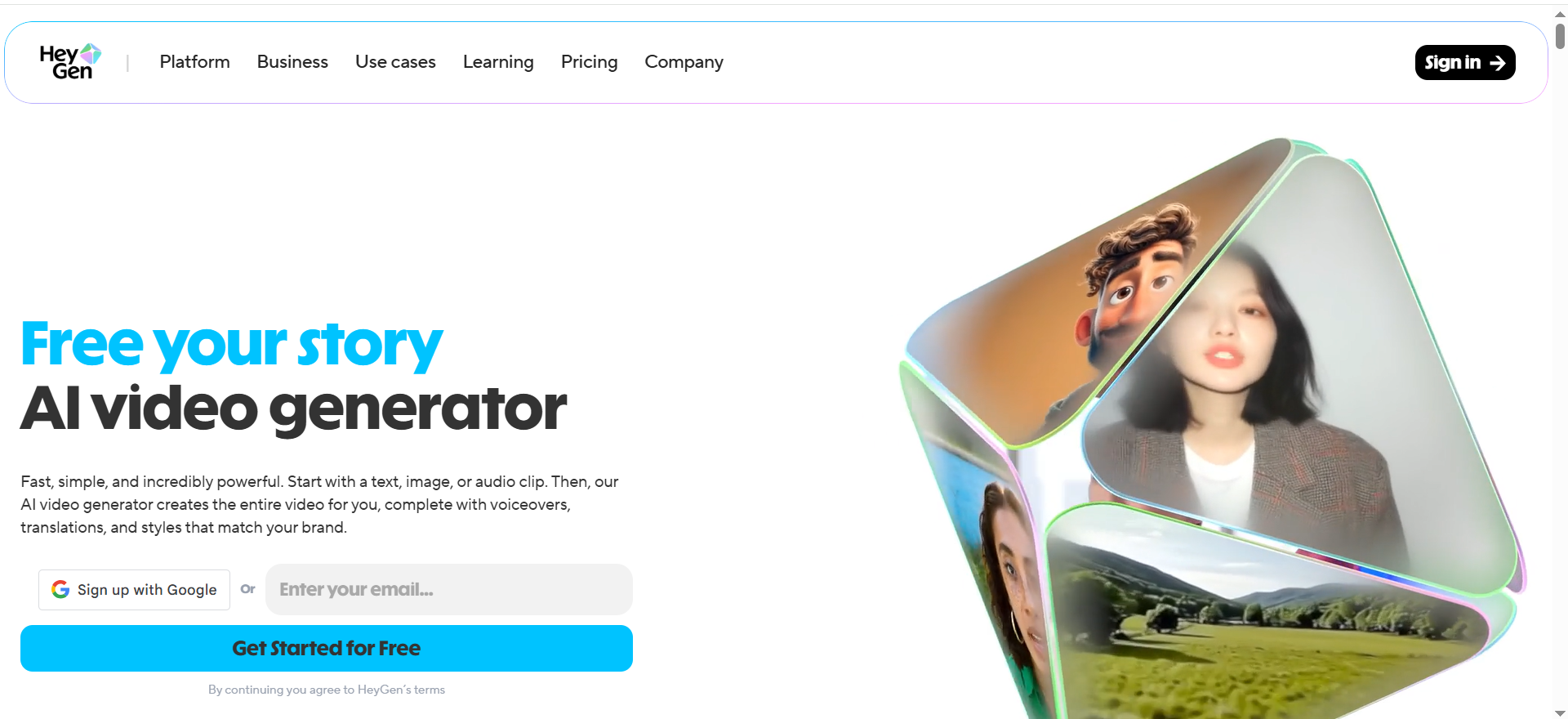
HeyGen is an AI video platform built for creating avatar-led videos and translating them across languages with lip sync, subtitles, and voice options. Its current pricing and product pages emphasize 175+ languages and dialects, voice cloning, stock video avatars, custom avatars, and built-in brand controls.
Why teams use it
Marketing teams tend to choose HeyGen when they want one platform that can handle both net-new avatar videos and localization of existing content. The reason it stands out is that the workflow is unusually direct: write or upload a script, choose an avatar, generate a version, then localize it into multiple markets without rebuilding the asset from scratch.
What it’s good for
HeyGen is strongest for multilingual product explainers, paid social variations, organic social clips, customer education videos, and landing-page videos where speed matters. It is especially useful when you want one source asset and multiple localized versions with consistent brand language and visual treatment.
When it’s a good fit
It is a good fit when your team needs a practical balance of realism, editing speed, and localization depth. It also fits well when brand consistency matters, because HeyGen’s Brand Kit and Brand Glossary are specifically positioned around keeping videos visually and verbally consistent across languages.
When it’s not a good fit
It is less ideal when your team needs very formal enterprise governance, or when your use case is more like structured internal learning content than campaign content. It can also feel expensive once team collaboration and higher-volume usage become central.
How to use it
Start with one campaign script and build a master version in your main language. Then create two or three localized variants for your highest-priority markets, review lip sync and terminology, save the approved template, and only then scale to the rest of the campaign. That gives you a benchmark for production time, approval speed, and post-edit effort before rolling it out broadly.
Key capabilities
HeyGen’s current Creator plan includes 700+ stock video avatars, 1 custom digital twin, voice cloning, 175+ languages and dialects, brand kit, and 1080p export. Its translation product also promotes 175+ languages and dialects with lip-synced video translation.
Pricing
HeyGen lists a free plan and a Creator plan at $29 per month, with higher team-oriented tiers available above that.
Free tier?
Yes. HeyGen says its free plan includes up to 3 videos per month, with limits on duration and export quality, making it fine for testing but not for running an actual multilingual campaign program.
Downsides / limitations
The main risk with HeyGen is that teams can underestimate review work. Even when translation is fast, multilingual campaign output still needs brand, terminology, and market review. The platform removes a lot of production friction, but it does not remove localization QA.
Tool #2: Synthesia
What it does
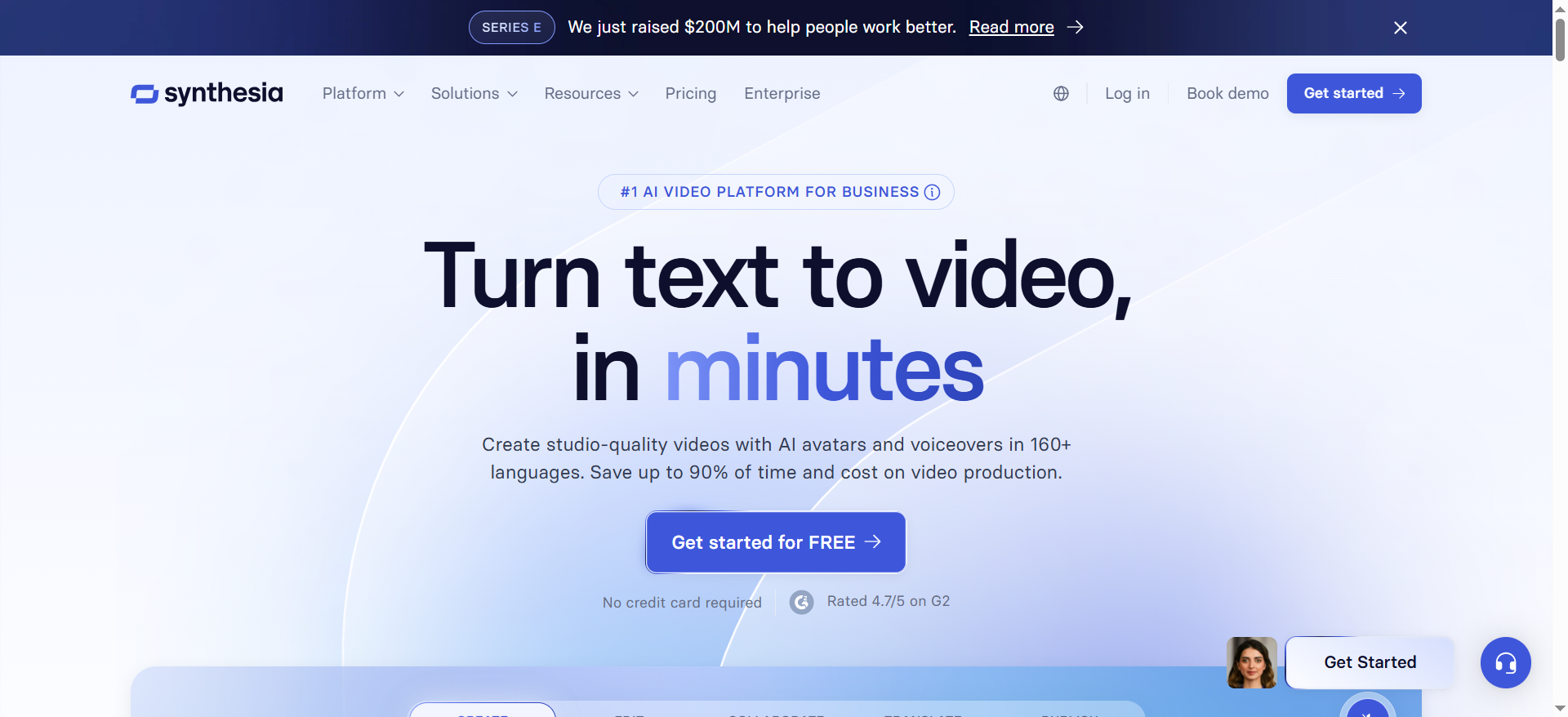
Synthesia is an AI video platform built around avatar-led business video creation. Its product and docs highlight 160+ languages, a large stock avatar library, branded video workflows, templates, and collaboration features designed for teams.
Why teams use it
Teams use Synthesia when they want a systematized, repeatable video operation. It is one of the strongest options for teams that need templates, shared workspaces, review workflows, and a more standardized content production process across departments or regions.
What it’s good for
Synthesia is excellent for multilingual explainers, product education, corporate messaging, sales enablement, and repeatable campaign formats where consistency matters more than flashy creative experimentation. It is also a strong fit when marketing works closely with enablement, customer success, or regional teams.
When it’s a good fit
It is a good fit when your team values process maturity. If you need reusable templates, shared editing, brand consistency, and a platform that can grow into a wider content operation, Synthesia is one of the safest choices.
When it’s not a good fit
It is less ideal if your main priority is fast-turn social experimentation or if you want the simplest possible translation-first workflow. Some smaller teams also find that its strongest governance and branding features sit higher up the pricing ladder.
How to use it
Build one campaign template for each major use case, such as product launch, feature update, customer education, or webinar promo. Then localize those templates by language and keep slides, avatars, terminology, and CTAs standardized so the review process stays light.
Key capabilities
Synthesia currently advertises 160+ languages, 240+ avatars on its main site, and current pricing pages mention free usage, Starter at $29 per month, and higher plans with more avatars, collaboration, AI dubbing, and API access. Its docs also state that brand kits are available on Enterprise.
Pricing
Synthesia offers a free plan, a Starter plan at $29 per month, and higher paid tiers including Creator and Enterprise options.
Free tier?
Yes. Synthesia says its free plan includes up to 10 minutes of video per month, 9 stock avatars, and AI voices in 160+ languages. That is enough to validate the experience but not enough for a serious campaign workflow.
Downsides / limitations
The biggest limitation is that some of the best team and brand controls are not aimed at the lightest-use buyer. For small teams running scrappy campaigns, Synthesia can feel more operationally structured than necessary.
Tool #3: D-ID
What it does
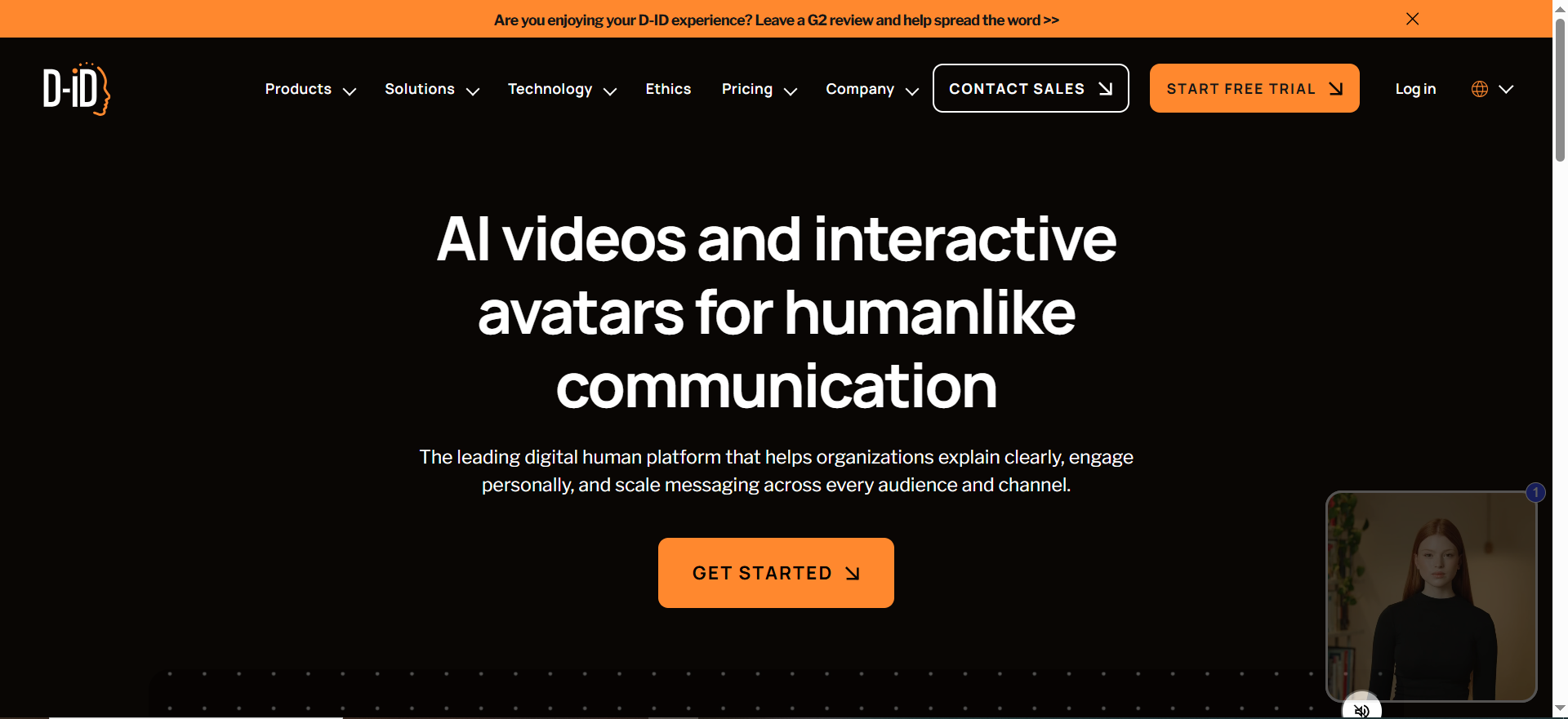
D-ID is an AI video platform centered on talking avatars, video translation, campaign personalization, and API-led experiences. Its current product pages position it strongly around multilingual creation, marketing suite workflows, video translate, and integrations.
Why teams use it
D-ID is compelling when you do not just want a standard avatar video editor. It is especially useful for teams exploring localized campaigns, interactive agents, personalized video experiences, or workflow automation through integrations and APIs.
What it’s good for
It is well suited to personalized outreach, multilingual campaign experiments, localized social video, and interactive use cases where an avatar is part of a broader digital experience. Its marketing suite is explicitly positioned around marketing funnel use cases.
When it’s a good fit
D-ID is a good fit when you want flexibility. If your team cares about campaign personalization, API connectivity, rapid output, or future-facing formats like interactive visual agents, D-ID deserves a serious look.
When it’s not a good fit
It is a weaker fit if your main need is a very polished, template-heavy, collaborative brand video workflow for a non-technical team. In those cases, HeyGen or Synthesia may be easier to operationalize.
How to use it
Use D-ID in one of two ways. For campaign teams, start with video translation and localized variants of existing assets. For more advanced teams, test personalized campaign flows or agent-driven experiences tied to product pages, outbound, or event follow-up.
Key capabilities
D-ID says it supports video creation and real-time interactions in 120+ languages, offers Video Translate with bulk translation, cloned voice, and lip movement adaptation, and supports integrations with tools like Canva and PowerPoint. It also positions the platform around AI avatars, campaigns, and agents.
Pricing
D-ID clearly offers a free starting point on Studio. Public pricing details on exact paid tiers are less straightforward on the main Studio page, so it is safest to treat it as free-to-start with plan specifics that vary by product and usage.
Free tier?
Yes, D-ID promotes a free starting option. That makes it easy to test translation and avatar creation before committing to a larger workflow.
Downsides / limitations
D-ID can be a little harder to evaluate at a glance because its platform spans several adjacent products. That flexibility is powerful, but for smaller marketing teams it can also make the initial buying process less straightforward.
Tool #4: Colossyan
What it does
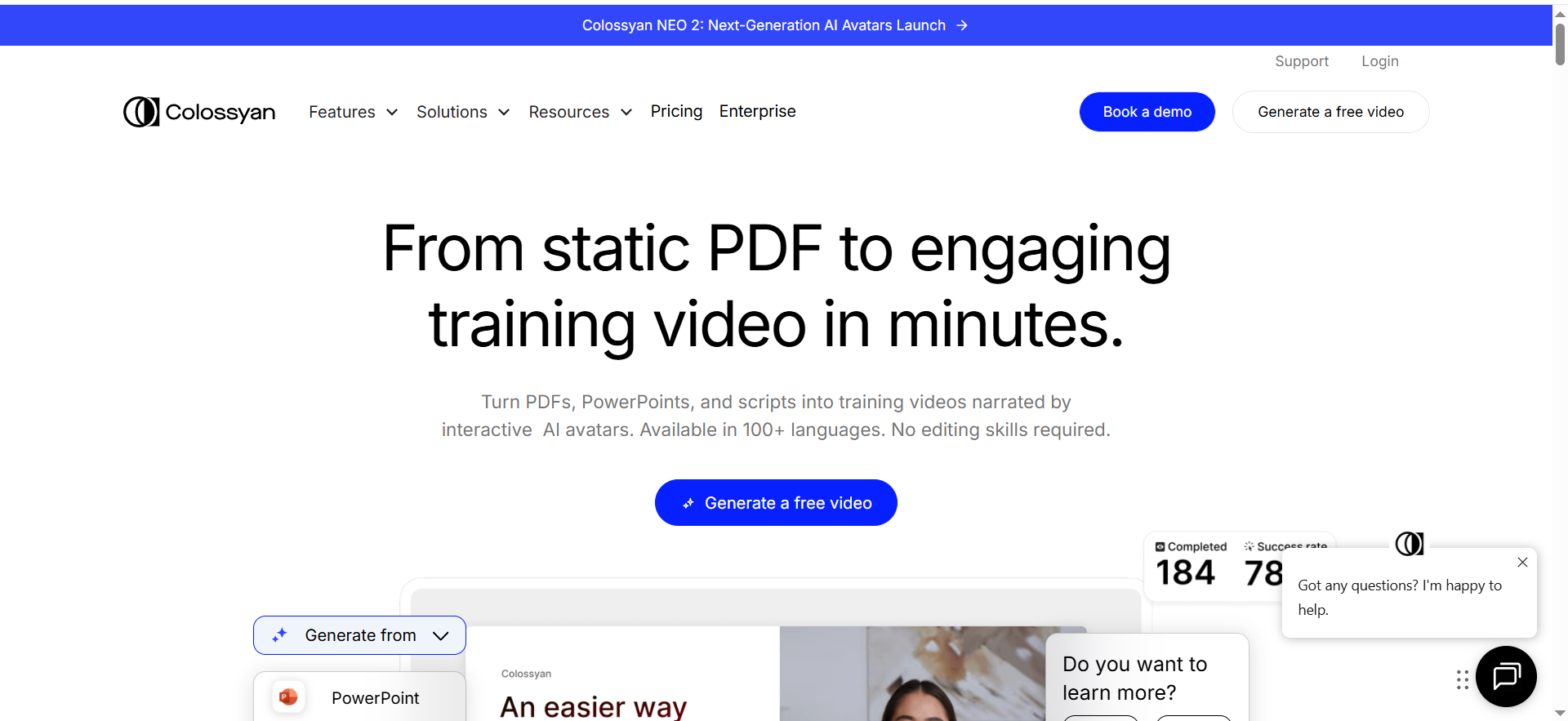
Colossyan is an AI video platform that combines avatars, localization, collaboration, and structured content workflows. Its current product pages emphasize 100+ languages, stock avatars, custom avatars, multiple-avatar scenes, brand kits, and more structured content production than many lightweight avatar tools.
Why teams use it
Colossyan often stands out for teams that want more than a quick avatar clip. It is good for organizations that need repeatable, scripted, professional-looking video content and want localization without switching platforms.
What it’s good for
While Colossyan is often associated with learning and enablement, it also fits multilingual product explainers, partner content, customer education, and structured campaign videos where clarity matters more than aggressive ad-style creative.
When it’s a good fit
It is a good fit when your marketing team works in a more structured way, especially if scripts, approval flows, and content reuse matter. It also works well when you need more controlled presentation style and multi-avatar dialogue formats.
When it’s not a good fit
It is not my first recommendation for fast-moving social teams that want a very lightweight campaign workflow. It is better when you value structure and repeatability over sheer speed.
How to use it
Use Colossyan to build a campaign template library for recurring formats, such as partner announcements, product explainers, onboarding snippets, or region-specific offers. Once your first template is approved, localization becomes much easier to standardize.
Key capabilities
Colossyan says its AI avatars support 100+ languages, offers 300+ stock avatars on its avatar page, and its pricing page highlights brand kits, custom avatars, multiple-avatar scenes, and voice use across languages.
Pricing
Colossyan’s pricing page lists Starter from $19 per month billed annually, while other current company pages also show a 14-day free trial and monthly presentation around the high-$20s depending on billing view or package context.
Free tier?
Colossyan clearly offers a free trial, and company pages say you can try all features during the trial without a credit card.
Downsides / limitations
For pure multilingual marketing, Colossyan can feel slightly more structured than some teams need. That is not a weakness if your organization values process, but it may be more platform than a solo marketer wants.
Tool #5: Elai
What it does
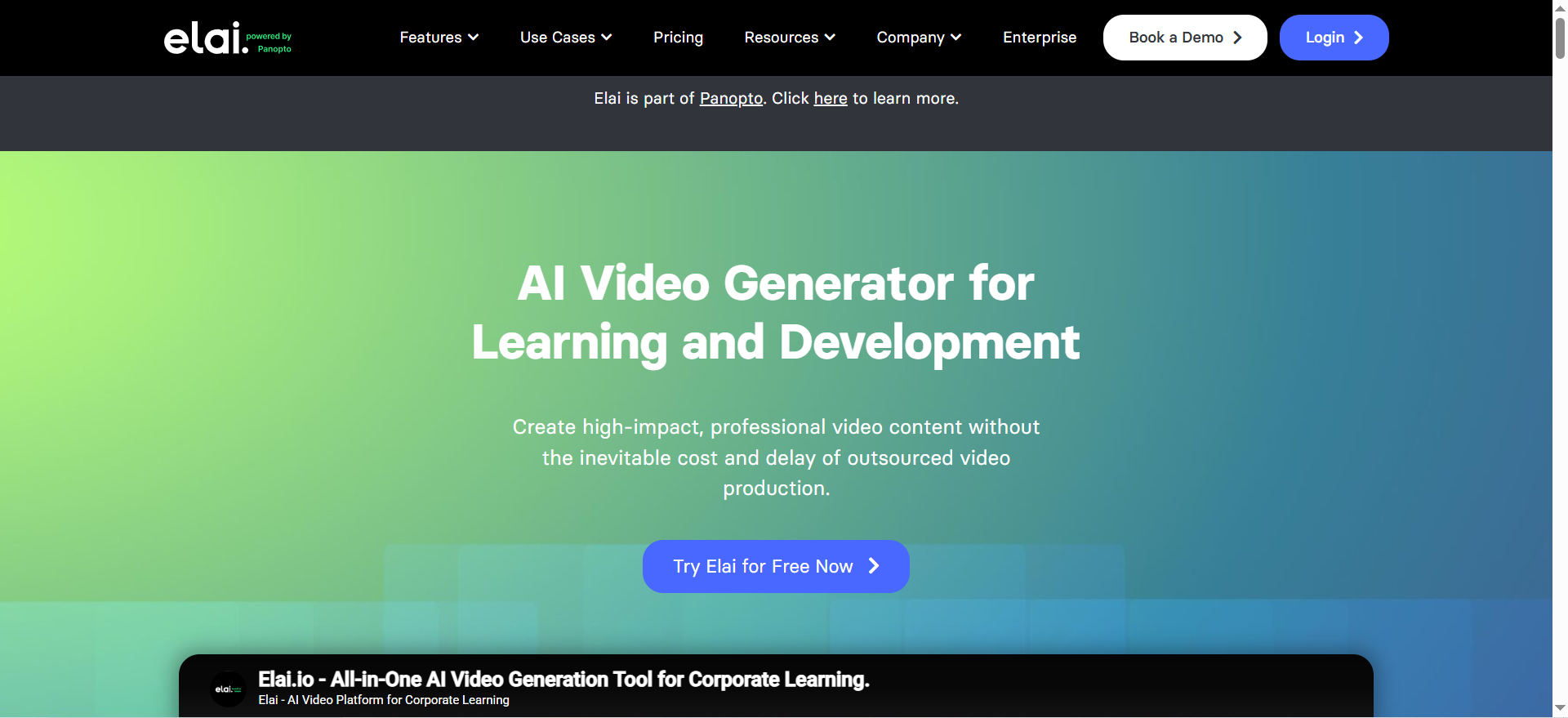
Elai is an AI video platform for avatar-led content creation with multilingual voice and translation support. Its current pages highlight one-click translation in more than 75 languages, multilingual voice cloning in 28 languages, and accessible entry pricing.
Why teams use it
Elai is attractive to smaller teams because it covers the main bases without forcing an enterprise-style setup. If your goal is to create multilingual avatar videos quickly and on a tighter budget, it makes the shortlist for that reason alone.
What it’s good for
It is good for straightforward product videos, localized explainers, social clips, and lightweight campaign content where you need language coverage and decent customization without overcomplicating the workflow.
When it’s a good fit
Elai is a good fit for solo operators, small businesses, early-stage teams, and lean marketing functions that want to test multilingual video before committing to a more expensive stack.
When it’s not a good fit
It is less compelling when your organization needs deeper team collaboration, richer brand governance, or the most advanced enterprise workflow controls.
How to use it
Start with one simple campaign format, such as a feature explainer or demo teaser. Use the first version to judge whether the avatar style, translation quality, and editing controls are good enough for your brand before scaling into larger campaign programs.
Key capabilities
Elai’s current site says users can translate videos into more than 75 languages, clone their own voice into 28 languages, and access a full avatar, voice, and language library on Creator plans.
Pricing
Elai’s pricing page shows a free plan and a Creator plan at $29 per month, or $23 per month billed annually.
Free tier?
Yes. Elai lists a free plan on its pricing page, which makes it practical for light testing.
Downsides / limitations
The tradeoff with Elai is that while it is cost-friendly and capable, it is not usually the first choice for teams that need the deepest enterprise controls or the strongest all-around campaign operating system.
📋 Get Listed / Advertise
We update this guide monthly. Want your tool featured? Contact: aigrowthhacksofficial@gmail.com.
Which AI Avatar Service Is Best For Which Team?
Choose HeyGen if you want the best overall balance of multilingual support, campaign speed, and marketer usability. Choose Synthesia if your team values templates, repeatability, and a more mature collaboration environment. Choose D-ID if your roadmap includes personalization, agents, or API-led campaign experiences. Choose Colossyan if you need more structured, scripted, or team-oriented production. Choose Elai if you want a lower-cost entry point into multilingual avatar video without dropping the essentials. For teams focused specifically on global campaign execution, it also helps to compare these options through the lens of best AI avatar services for multilingual marketing campaigns.
A simple rule helps here: if your biggest bottleneck is translation and scaling, start with HeyGen. If it is team process and consistency, start with Synthesia. If it is flexibility and experimentation, test D-ID. If it is structured content ops, shortlist Colossyan. If it is budget, start with Elai. If you are still narrowing the field, a side-by-side view like compare the best AI avatar creators on price and features can make the shortlist much easier.
What To Test Before You Buy
Before committing, run the same 60 to 90 second campaign script through your top two or three tools. Translate it into at least three target languages, ideally one easy market, one high-volume market, and one market where brand nuance matters. Review the output for lip sync quality, pronunciation, subtitle timing, avatar naturalness, edit speed, and how much manual cleanup each version needs.
You should also test the workflow, not just the output. How long does script review take? Can your team lock terminology? Can regional reviewers comment without breaking the process? Does the platform make branded reuse easy? The winner is usually not the tool with the flashiest demo. It is the one that keeps the whole team moving.
Common Mistakes In Multilingual Avatar Campaigns
The first mistake is choosing based on avatar realism alone. For marketing teams, workflow depth and localization control usually matter more after the first week. The second mistake is skipping terminology and market review, which leads to subtle but damaging brand inconsistencies. The third is assuming every language should use the same exact creative style. Some campaigns need localized messaging, not just localized narration.
The best rollout approach is simple: create one approved master format, build a review checklist, test a small market set, then scale. That gives you cleaner data on production time, approval friction, and output quality, and it lowers the risk of a messy rollout.
What is the best AI avatar service for multilingual marketing campaigns?
For most teams, HeyGen is the best overall choice because it combines avatar creation, video translation with lip sync, voice cloning, brand kit features, and broad language coverage in one workflow. Its current pricing page lists 175+ languages and dialects, translation with lip sync, and brand kit support on paid plans.
Which AI avatar tool is best for video translation and dubbing?
HeyGen and D-ID are the strongest picks for translation-heavy workflows. HeyGen emphasizes video translation with lip sync and 175+ languages and dialects, while D-ID promotes Video Translate with bulk translation, cloned voice support, and lip movement adaptation for localized videos.
Which AI avatar platform has the most realistic voices and lip sync?
For most marketers, HeyGen is the strongest all-around option for realistic lip-synced multilingual output, especially when translation is central to the workflow. Synthesia is also a strong contender for polished, brand-consistent output, but HeyGen’s translation and lip-sync positioning is more explicit on its current product pages.
Which AI avatar software is best for enterprise marketing teams?
Synthesia is the safest choice for enterprise marketing teams that need repeatable templates, collaboration, and operational consistency. HeyGen Business and Enterprise are also credible options because they add workspace collaboration, team management, centralized billing, proofreader seats, and enterprise security features.
Which tool is best for small teams and solo marketers?
Elai and HeyGen Creator are the most practical starting points for lean teams. Elai offers a free plan and a Creator tier from $29/month, while HeyGen’s Creator plan also starts at $29/month and includes strong multilingual support and voice cloning.
Which AI avatar platform is easiest for beginners?
HeyGen is the easiest place to start for most beginners because the workflow is simple, the free plan is accessible, and the product is clearly built for marketers who want quick avatar videos and translations without a complicated setup. Synthesia is also beginner-friendly, but it feels a bit more process-oriented once team workflows enter the picture.
How do AI avatar tools handle localization at scale?
The stronger platforms handle localization through script translation, multilingual voice generation, lip sync, templates, and team workflows. HeyGen supports 175+ languages and dialects and offers translation editing on higher tiers, while Synthesia focuses on templates and repeatable branded production. D-ID adds bulk translation and API-led options for teams that want more automation.
Can AI avatar tools keep brand consistency across languages?
Yes, but only the better platforms make this manageable. HeyGen includes brand kit features on paid plans, Synthesia offers branded video workflows and enterprise-oriented controls, and Colossyan includes brand kit support in its pricing structure. That said, even with those features, teams still need a terminology and regional review process.
Which AI avatar tools offer custom avatars?
All five on this list support some form of custom avatar capability, but the strongest public positioning comes from HeyGen, Synthesia, and Colossyan. HeyGen includes custom digital twins on its plans, Synthesia offers personal and custom avatars across higher tiers, and Colossyan highlights both stock and custom avatars on its platform pages.
Which AI avatar tools have free plans or free trials?
HeyGen, Synthesia, D-ID, and Elai all offer a free starting option, while Colossyan prominently offers a free trial. For testing quality, workflow, and translation output, that is enough to run a pilot without committing to a full rollout.
What should marketers test before choosing an AI avatar platform?
Marketers should test translation quality, lip sync, pronunciation, subtitle timing, avatar realism, edit speed, and approval workflow. The winning tool is usually not the one with the biggest language count. It is the one that lets your team produce localized videos with the least manual cleanup and the fewest approval bottlenecks. The available platform features point to this: translation, collaboration, brand controls, and template reuse matter more than flashy demos.
Are AI avatar services better for net-new videos or for translating existing videos?
They can do both, but the best use depends on the platform. HeyGen and D-ID are particularly strong for translating and adapting existing assets, while Synthesia and Colossyan are especially strong for structured net-new production where you want repeatable templates and cleaner governance from the start.
Which AI avatar tools support API or workflow integrations?
D-ID and HeyGen stand out most clearly here. D-ID positions itself around broader workflow flexibility and API-led use cases, while HeyGen’s business tiers list integrations with n8n, Make, HubSpot, and Zapier. These become more important once multilingual video production is part of a larger campaign system.
What are the downsides of using AI avatars for multilingual campaigns?
The main downsides are translation cleanup, brand nuance loss, voice or lip-sync edge cases, and review overhead. Even when tools support many languages, they do not replace market-level messaging judgment. AI avatar tools reduce production time, but they do not eliminate the need for human QA, especially on high-visibility campaigns. The presence of translation editing, proofreader seats, and collaboration features across vendors is a clue that manual review is still part of the real workflow.
How do HeyGen, Synthesia, D-ID, Colossyan, and Elai compare on pricing?
At the entry level, HeyGen Creator starts at $29/month, Synthesia Starter starts at $29/month, Elai Creator starts at $29/month or $23/month billed annually, and Colossyan Starter starts at $19/month billed annually. D-ID is clearly free-to-start publicly, but its paid pricing is less straightforward from the main Studio pricing page than the others. So for transparent self-serve entry pricing, HeyGen, Synthesia, Colossyan, and Elai are easier to compare side by side.
FAQs
For most teams, HeyGen is the strongest overall option because it combines avatar video creation, translation, lip sync, voice tools, and branding in one marketer-friendly workflow. Synthesia is the better choice when process consistency and collaboration matter more than speed alone.
Synthesia is one of the strongest enterprise picks because it emphasizes templates, collaboration, branded workflows, and shared workspaces. Colossyan also deserves attention when a structured content operation matters.
HeyGen and D-ID are especially strong here. HeyGen promotes lip-synced translation in 175+ languages and dialects, while D-ID’s Video Translate focuses on bulk translation, voice cloning, and lip movement adaptation.
Yes. HeyGen, Synthesia, D-ID, and Elai all offer a free starting point, while Colossyan offers a free trial. Those options are useful for testing quality and workflow, but most real campaign programs will need a paid tier.
Workflow quality matters more once you move beyond a simple demo. Most leading tools now support a large number of languages, so the real differentiators are brand consistency, review process, editability, and how much cleanup the output needs before publish.
No. They can dramatically speed up production, but they do not replace market judgment, brand review, or terminology control. The strongest teams use AI avatar platforms to reduce production cost and time, then keep a lightweight human QA layer for important markets.
📋 Get Listed / Advertise
We update this guide monthly. Want your tool featured? Contact: aigrowthhacksofficial@gmail.com.