Best Geo Software For AI Search Optimization (2026)
How B2B companies and SaaS companies can shortlist the best geo software tools for ai search optimization without wasting evaluation cycles.


This playbook helps SEO specialists and content managers compare the best geo software options for ai search optimization. It breaks down where ahrefs, semrush stand out, when alternatives such as screaming-frog, se-ranking make more sense, and which setup fits B2B companies and SaaS companies and solo operators and small businesses.
AI search engines now answer billions of queries directly. ChatGPT, Perplexity, Google AI Overviews, and Gemini pull information from the web, synthesize it, and present answers without sending users to your site. If your content is not structured for these engines, you are invisible to a growing share of your audience.
Generative Engine Optimization (GEO) is the practice of making your content discoverable, citable, and recommendable by AI search systems. The right geo software helps you track AI visibility, optimize content structure, identify gaps in your topical coverage, and monitor how AI engines reference your brand compared to competitors.
This guide compares the five best geo software platforms for AI search optimization in 2026. We evaluated Ahrefs, Semrush, Surfer SEO, Clearscope, and MarketMuse across pricing, AI visibility features, content optimization depth, and workflow fit for teams of different sizes. Whether you are a solo SEO specialist or a marketing team at a mid-market SaaS company, you will find a clear recommendation below.
The short answer: Semrush is the strongest all-in-one option for teams that need both traditional SEO and AI visibility tracking in a single platform. Ahrefs is the better pick for teams focused on backlink intelligence and competitive analysis with emerging GEO add-ons. Surfer SEO wins for content-first teams that need real-time on-page optimization with AI visibility scoring. Clearscope is the cleanest editor for content teams that want simplicity and NLP-powered grading. MarketMuse is the most strategic option for enterprise teams managing large content libraries.
Table of Contents
Best Geo Software For AI Search Optimization (Quick Comparison)
| Tool | Best For | Starting Price | AI Visibility Tracking | Free Tier |
|---|---|---|---|---|
| Ahrefs | Backlink analysis + competitive GEO intelligence | $29/mo (Starter) | Yes (Project Boost Max add-on) | No (paid only) |
| Semrush | All-in-one SEO + AI visibility suite | $139.95/mo (Pro) | Yes (AI Visibility Toolkit, Semrush One) | Limited free account |
| Surfer SEO | On-page content optimization + AI scoring | $99/mo (Essential) | Yes (AI Tracker) | No (paid only) |
| Clearscope | NLP-powered content grading + AEO tracking | $129/mo (Essentials) | Yes (Expand AEO feature) | No (paid only) |
| MarketMuse | Enterprise content strategy + gap analysis | $0/mo (Free, 10 queries) | Limited | Yes (10 queries/mo) |
Best Geo Software For AI Search Optimization (Quick Comparison)
Tool #1: Ahrefs
What It Does
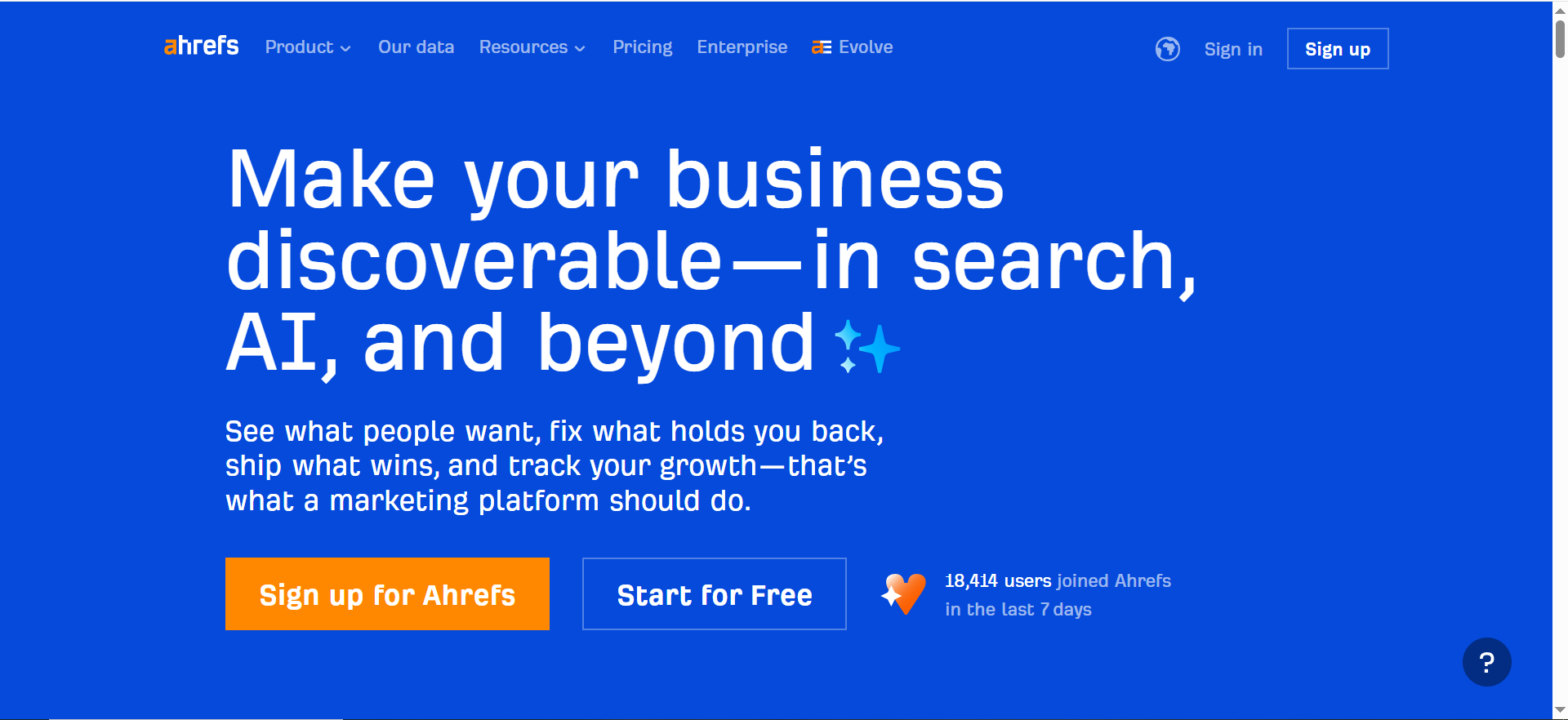
Ahrefs is a comprehensive SEO platform built around one of the largest backlink indexes on the web. It covers site auditing, keyword research, rank tracking, content exploration, and competitive analysis. In 2026, Ahrefs expanded into generative engine optimization with two key additions: AI URL detection in its Project Boost Max add-on, which identifies AI-generated content on your pages, and Bot Analytics, a separate feature that shows which AI crawlers (GPTBot, ChatGPT-User, PerplexityBot, and others) are visiting your site and which pages they access.
Why Teams Use It
SEO teams choose Ahrefs for the depth of its backlink data and the accuracy of its keyword difficulty scores. The Site Explorer tool remains one of the fastest ways to reverse-engineer a competitor's link profile, and the Content Explorer helps identify topics that are gaining traction across the web. For GEO, the Bot Analytics feature shows which AI engines are crawling your pages and how often, while AI URL detection identifies AI-generated content across your site.
What It Is Good For
Ahrefs excels at competitive backlink analysis, keyword gap identification, and technical site audits. The Rank Tracker provides daily updates across multiple search engines. The Content Explorer helps find content opportunities based on organic traffic trends and social shares. The Bot Analytics tool lets teams see whether ChatGPT, Perplexity, and other AI bots are actively crawling their most important pages, while AI URL detection identifies AI-generated content across the site.
When It Is a Good Fit
Ahrefs fits SEO specialists and growth marketers at B2B and SaaS companies who prioritize link building and competitive intelligence. It works well for teams that already have a strong content workflow and need a platform focused on technical SEO and backlink strategy, with emerging GEO capabilities layered on top.
When It Is Not a Good Fit
Ahrefs is not the best choice for teams whose primary need is content optimization or AI visibility tracking. The GEO features are add-ons with additional costs ($50 to $200/month depending on your plan), and the platform does not include a built-in content editor or NLP-powered content grading. If your main job is writing and optimizing content for AI citations, a content-focused platform will serve you better.
How to Use It
Start with Site Explorer to audit your domain and identify your strongest pages. Use Keywords Explorer to find high-intent queries in your niche. Set up Rank Tracker projects for your core keywords. Enable Project Boost Max to activate AI URL detection for identifying AI-generated content. Set up Bot Analytics via Cloudflare integration to monitor your AI crawl logs and see which pages AI engines are accessing. Use Content Explorer to find content gaps where competitors are earning AI citations you are missing.
Key Capabilities
Site Explorer with backlink index, Keywords Explorer with keyword difficulty scores, Site Audit for technical SEO, Rank Tracker with daily updates, Content Explorer for content research, AI URL detection via Project Boost Max, Bot Analytics for AI crawler monitoring, Batch Analysis for bulk URL checks, and Domain Comparison for competitive benchmarking.
Pricing
Ahrefs offers a Starter plan at $29/month, Lite at $129/month, Standard at $249/month, Advanced at $449/month, and Enterprise starting at $1,499/month. Project Boost Max (required for AI URL detection) is an additional $50 to $200/month depending on your base plan.
Free Tier?
No. Ahrefs does not offer a free tier. The $29/month Starter plan is the lowest entry point, introduced in January 2026.
Downsides and Limitations
The GEO features are still emerging and require a paid add-on. There is no built-in content editor or NLP grading. The pricing can escalate quickly when you add Project Boost Max and need multiple user seats. The Starter plan is quite limited in data access. Local SEO and geo-targeting features are less developed compared to Semrush.
Tool #2: Semrush
What It Does
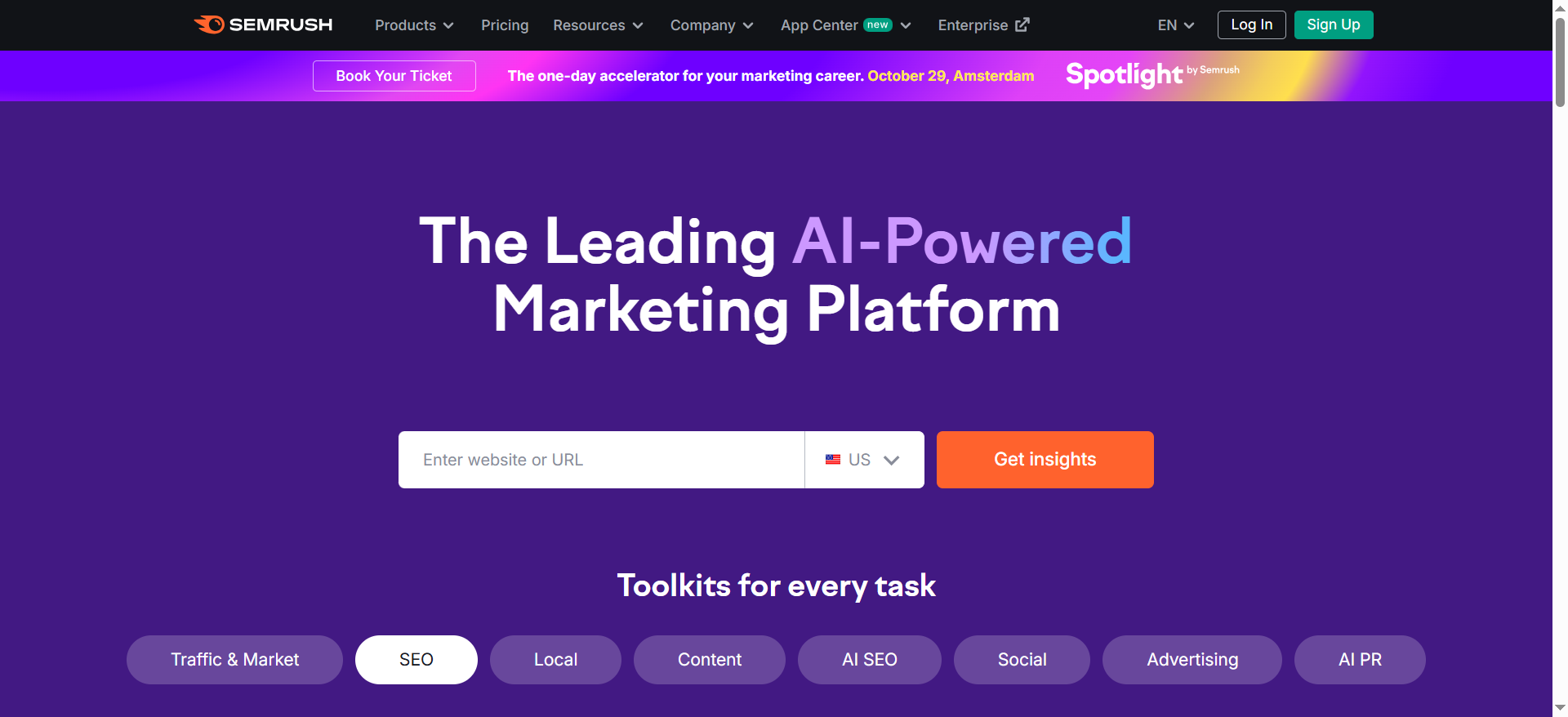
Semrush is a full-spectrum digital marketing platform covering SEO, paid ads, social media, and content marketing. For AI search optimization, Semrush introduced the AI Visibility Toolkit and Semrush One, which combine traditional SEO with AI search visibility tracking across ChatGPT, Google AI Overviews, Gemini, and Perplexity. Semrush Local adds geo-specific features like GBP AI Agent and Map Rank Tracker.
Why Teams Use It
Marketing teams choose Semrush because it consolidates SEO, content, competitive intelligence, and now AI visibility into one platform. The breadth of tools means fewer subscriptions and a unified reporting view. The Semrush One bundles are designed for brands that want to track their presence in both traditional search results and AI-generated answers.
What It Is Good For
Semrush is strongest in competitive keyword analysis, position tracking, site auditing, and AI visibility monitoring. The AI Visibility Toolkit tracks your brand mentions, sentiment, and share of voice across AI platforms. Semrush Local provides geo-specific rank tracking with Map Rank Tracker and GBP (Google Business Profile) optimization. The Content Marketing Platform includes topic research and SEO content templates.
When It Is a Good Fit
Semrush is the best fit for marketing teams and agencies that need an all-in-one platform covering SEO, AI visibility, local/geo tracking, and competitive analysis. It works especially well for mid-market and enterprise teams managing multiple domains or locations. If you want one subscription that handles both traditional SEO and AI search optimization, Semrush is the strongest option.
When It Is Not a Good Fit
Semrush can feel overwhelming for solo operators or small teams that only need content optimization. The pricing is on the higher side, especially for the Semrush One bundles, and the platform's breadth means a steeper learning curve. If your only need is writing better content for AI citations, a focused tool like Surfer SEO or Clearscope will be simpler and cheaper.
How to Use It
Set up a project for your domain. Run Position Tracking for your core keywords. Enable the AI Visibility Toolkit to start monitoring your brand across AI platforms. Use the Keyword Gap tool to find queries where competitors appear in AI answers but you do not. For geo-specific work, activate Semrush Local with Map Rank Tracker to monitor Google Maps rankings by location. Use the Content Marketing Platform to create briefs optimized for both SEO and AI citation.
Key Capabilities
Keyword research with 26 billion keywords, Position Tracking, Site Audit, Backlink Analytics, AI Visibility Toolkit (brand monitoring across AI platforms), Semrush Local with Map Rank Tracker and GBP AI Agent, Content Marketing Platform with topic research, Competitive analysis with domain overview and traffic analytics, and Listing Management across 70+ directories.
Pricing
Semrush SEO Toolkit plans: Pro at $139.95/month, Guru at $249.95/month, Business at $499.95/month. Annual billing saves approximately 17%. Semrush One bundles: Starter at $199/month, Pro+ at $299/month, Advanced at $549/month. Semrush Local: Base plan at $30/month per location, Pro plan at $60/month per location.
Free Tier?
Semrush offers a limited free account with restricted daily queries and feature access. It is useful for initial exploration but not sufficient for regular use.
Downsides and Limitations
The cost adds up quickly, especially when combining SEO Toolkit, AI Visibility, and Local plans. The interface can be complex for new users. Some advanced AI visibility features are only available in higher-tier or Semrush One bundles. Per-location pricing for Semrush Local can become expensive for multi-location businesses.
Tool #3: Surfer SEO
What It Does
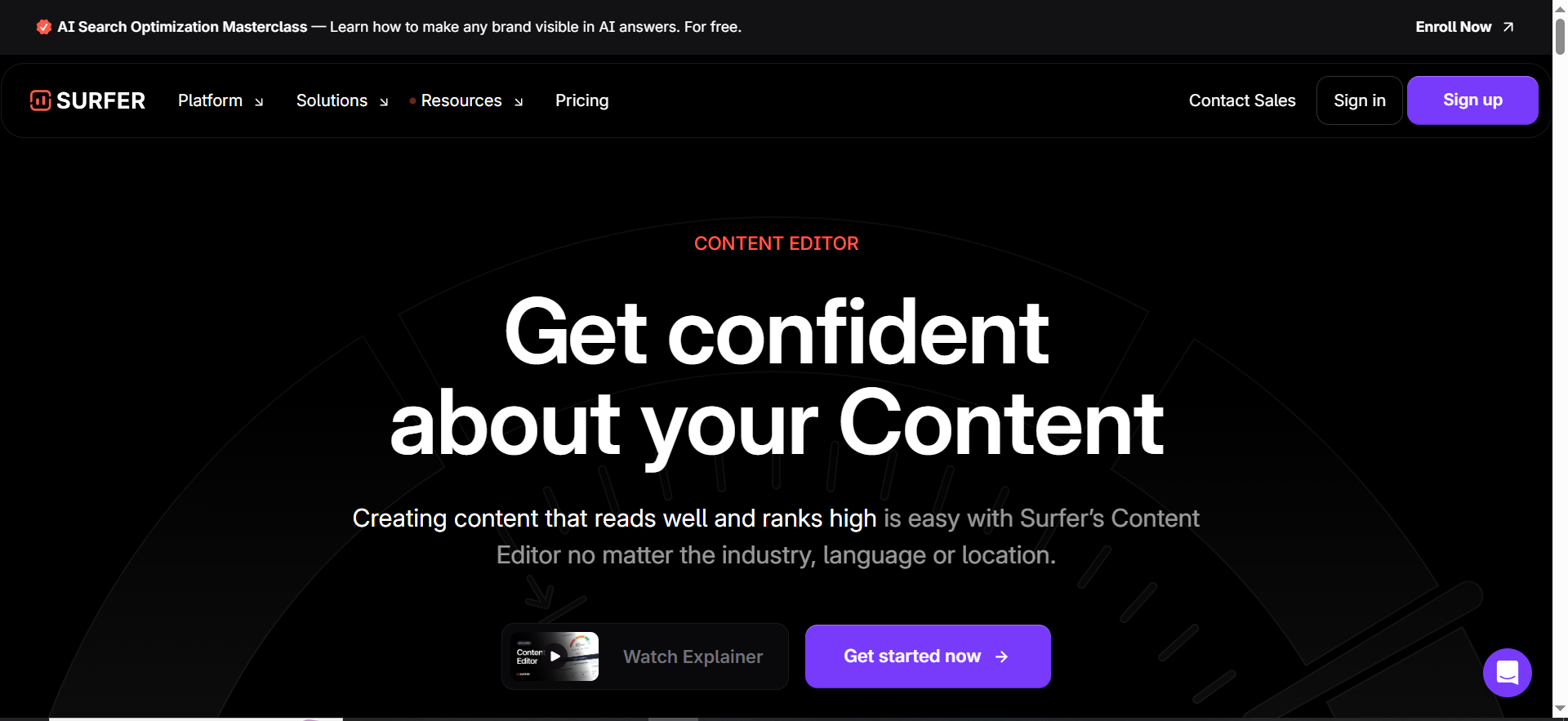
Surfer SEO is a cloud-based content optimization platform that analyzes top-ranking pages for a given keyword and provides data-driven recommendations for your content. In 2026, Surfer expanded beyond on-page SEO to include AI Tracker, which monitors your content's visibility and citation rate across AI search engines.
Why Teams Use It
Content teams choose Surfer SEO because it translates SERP data into actionable content recommendations. Instead of guessing what makes a page rank, the Content Editor shows you exactly which terms to include, how long your content should be, and how to structure your headings. The AI Tracker adds a new dimension by showing whether your content is being picked up by AI engines.
What It Is Good For
Surfer SEO is strongest in real-time content optimization. The Content Editor integrates with Google Docs, WordPress, and ChatGPT, so you can optimize without switching tools. Surfer AI can generate full article drafts from a keyword. The Topical Map feature helps you plan content clusters that build topical authority. AI Tracker provides a Visibility Score that shows how often AI engines mention your content, with competitor share-of-voice comparisons.
When It Is a Good Fit
Surfer SEO is ideal for content-first teams, freelance writers, and agencies that produce a high volume of optimized content. It works well for teams that need a content editor with built-in SEO scoring and want to add AI visibility tracking without subscribing to a full SEO suite. The $99/month entry point makes it accessible for smaller teams.
When It Is Not a Good Fit
Surfer SEO does not provide backlink analysis, technical site audits, or the depth of keyword research that Ahrefs or Semrush offer. If your team needs a full SEO toolkit, you will still need a separate platform for link building and technical SEO. The AI Tracker is useful but less comprehensive than Semrush's dedicated AI Visibility Toolkit.
How to Use It
Start by entering your target keyword into the Content Editor. Surfer analyzes the top-ranking pages and generates a content brief with recommended terms, word count, heading structure, and content score targets. Write or paste your content into the editor and optimize until you hit the target Content Score. Use the Topical Map to plan your next pieces. Enable AI Tracker to monitor how AI engines are responding to your optimized content.
Key Capabilities
Content Editor with real-time optimization scoring, Surfer AI for automated article generation, AI Tracker for AI visibility monitoring, Topical Map for content cluster planning, Content Audit for updating old pages, SERP Analyzer, Keyword Research tool, and integrations with Google Docs, WordPress, and ChatGPT.
Pricing
Essential plan at $99/month ($79/month billed annually), Scale plan at $219/month ($175/month billed annually), Enterprise with custom pricing. Annual billing provides a 20% discount.
Free Tier?
No. Surfer SEO does not offer a permanent free tier. Occasional free trials may be available.
Downsides and Limitations
No backlink analysis or technical site audit. The keyword research tool is less robust than Ahrefs or Semrush. AI Tracker is relatively new and may not cover all AI platforms yet. Content Score recommendations can sometimes overemphasize keyword density. The Scale plan price can be steep for solo operators.
Tool #4: Clearscope
What It Does
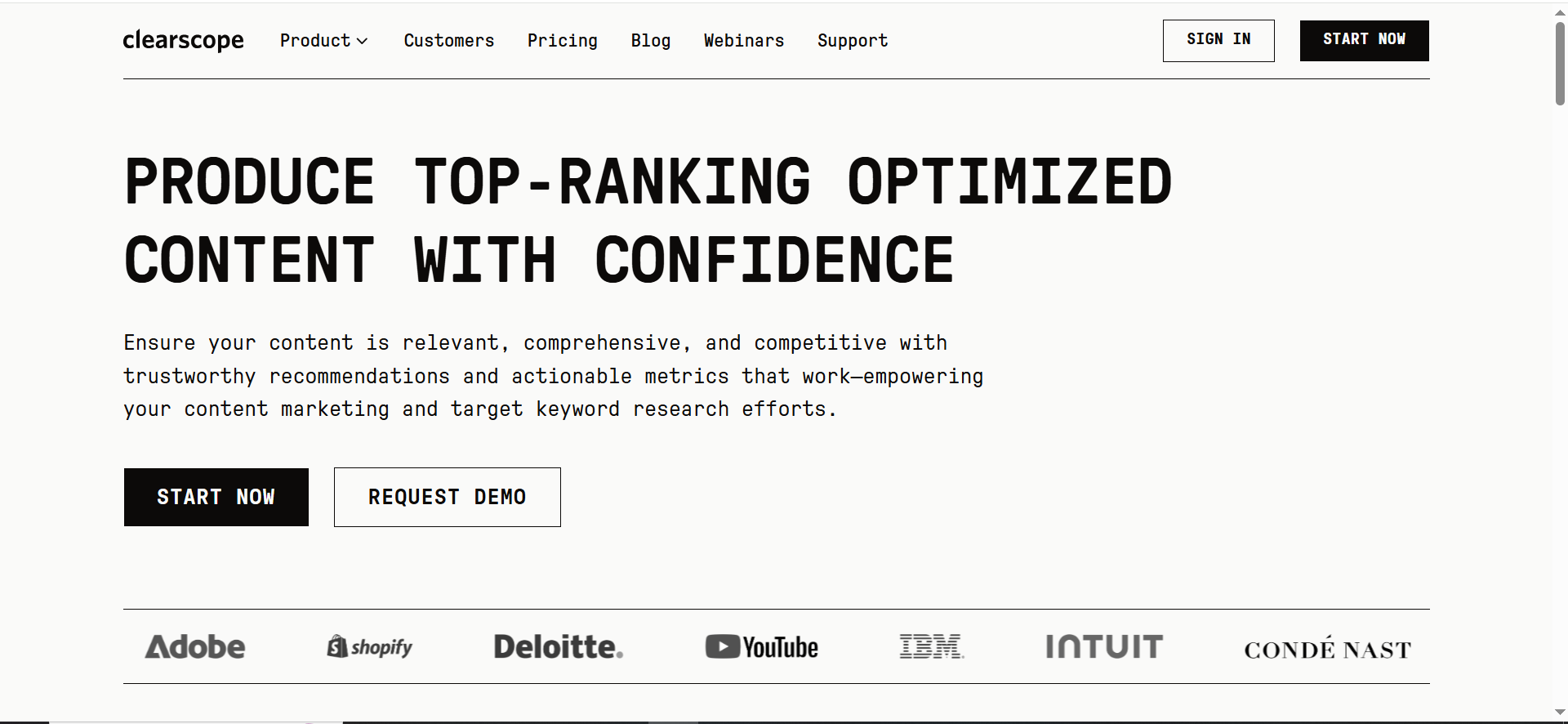
Clearscope is an AI-powered content optimization platform that uses natural language processing models from Google, OpenAI, and IBM Watson to analyze what top-ranking content covers for a given query. It tells you which terms, topics, and questions to include in your article to match search intent. In 2026, Clearscope added Answer Engine Optimization (AEO) tracking through its Expand feature.
Why Teams Use It
Content teams choose Clearscope for its clean, distraction-free editor and the reliability of its content grading. The platform assigns a letter grade (A++ to F) based on how comprehensively your content covers the topic compared to top-ranking pages. The new AEO tracking lets teams see how visible their brand is in AI chatbot responses from ChatGPT and Gemini.
What It Is Good For
Clearscope is strongest in content grading and topic coverage analysis. The editor provides real-time feedback as you write, showing which important terms are missing and how your content compares to the competition. AI-powered internal linking suggests relevant pages to link to as you write. The Content Inventory monitors your published pages and flags when they need updates. The Expand AEO feature tracks brand citations in AI-generated answers.
When It Is a Good Fit
Clearscope is ideal for content marketing teams and agencies that prioritize content quality and want a straightforward tool without the complexity of a full SEO suite. It works especially well for teams with multiple writers who need a consistent standard for content quality. The unlimited users and projects model makes it cost-effective for larger editorial teams.
When It Is Not a Good Fit
Clearscope does not provide keyword research, backlink analysis, rank tracking, or technical site audits. You need a separate SEO platform for those functions. The starting price of $129/month with limited queries can feel expensive for solo users. If you need comprehensive AI visibility tracking across multiple platforms, Semrush's AI Visibility Toolkit is more robust.
How to Use It
Create a new report by entering your target keyword. Clearscope analyzes the top-ranking pages and generates a list of recommended terms and topics. Write your content in the editor (or paste from Google Docs) and optimize until you reach an A or A+ grade. Use Topic Explorations for research. Monitor your published pages in the Content Inventory. Check the Expand feature to see how your content appears in AI chatbot responses.
Key Capabilities
Content Editor with NLP-powered grading (A++ to F), Topic Explorations for keyword and topic research, Content Inventory for monitoring published pages, AI-powered internal linking suggestions, Answer Engine Optimization (AEO) tracking via Expand, unlimited users and projects on all plans, and integrations with Google Docs and WordPress.
Pricing
Essentials plan at $129/month (20 AI Drafts, 20 Topic Explorations, 50 monitored pages), Business plan at $399/month with expanded limits, and Enterprise with custom pricing. No contracts. Unlimited users and projects included on all plans.
Free Tier?
No. Clearscope does not offer a free tier. All plans are paid.
Downsides and Limitations
No keyword research, backlink analysis, or technical SEO features. The Essentials plan limits you to 20 Topic Explorations per month, which is tight for teams with high output. AEO tracking is limited to ChatGPT and Gemini as of 2026. The price per query is higher than competitors like Surfer SEO. No rank tracking or SERP monitoring.
Tool #5: MarketMuse
What It Does
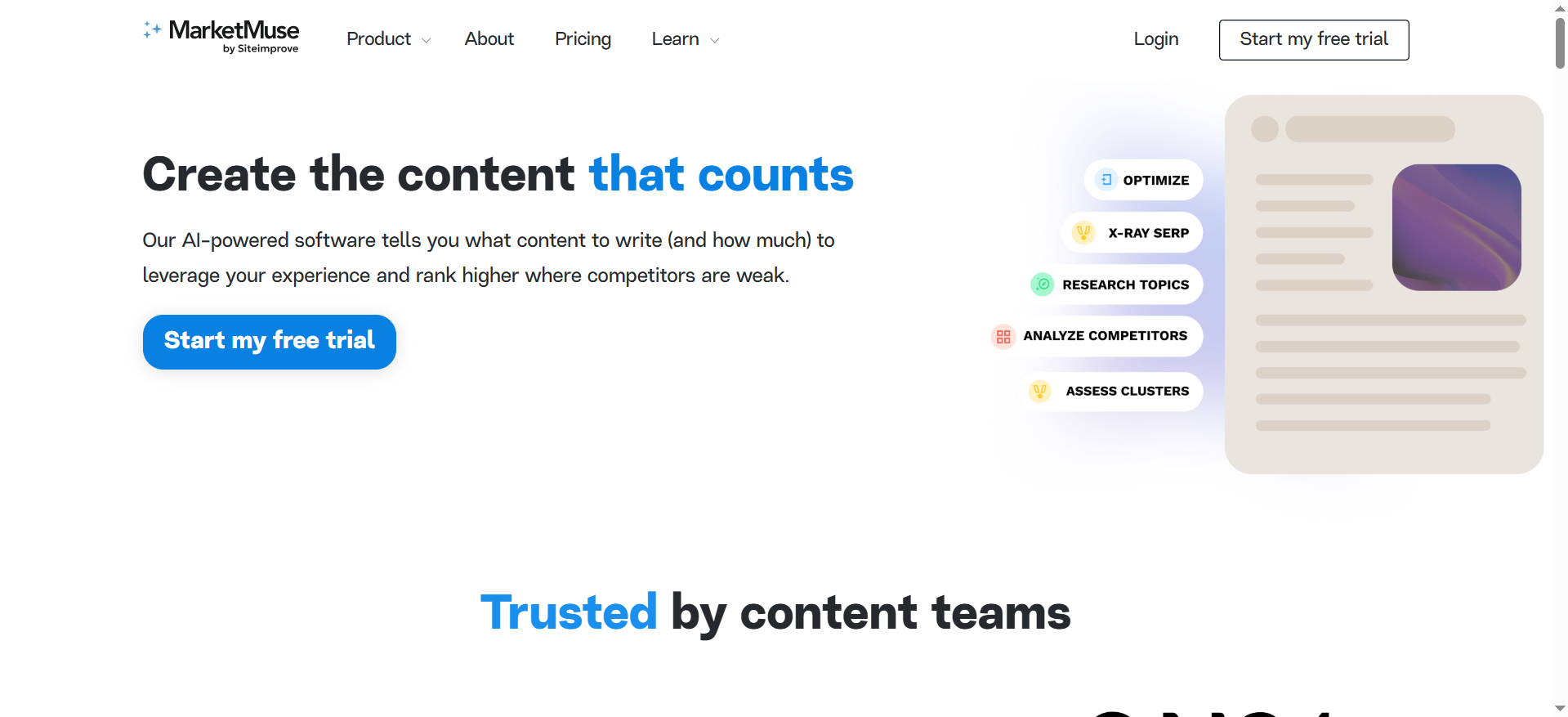
MarketMuse is an AI-powered content strategy platform that analyzes your entire content library, identifies gaps, and provides data-driven recommendations for what to write, update, or remove. It uses topic modeling to assess your site's topical authority and generates comprehensive content briefs with target topics, subtopics, questions, and competitive analysis.
Why Teams Use It
Enterprise content teams and agencies choose MarketMuse for its strategic view of content. Instead of optimizing individual pages, MarketMuse evaluates your entire site against the topical landscape and shows where you have authority, where you have gaps, and where competitors are winning. The Content Score benchmarking gives a data-driven target for each piece.
What It Is Good For
MarketMuse is strongest in content inventory analysis, content planning, and strategic gap identification. The Inventory Analysis evaluates your full content library, flagging thin content, cannibalization issues, and pages with the highest improvement potential. The Compete application shows how your topical authority compares to specific competitors. Content Briefs include target topics, related subtopics, questions to answer, and word count targets.
When It Is a Good Fit
MarketMuse is the right choice for enterprise teams and agencies managing large content libraries (hundreds or thousands of pages) that need a strategic planning tool. It works best when content strategy is a core revenue driver and the team needs to prioritize which pages to create, update, or consolidate. The site-wide analysis is uniquely valuable for teams with complex content operations.
When It Is Not a Good Fit
MarketMuse is overkill for small teams or solo operators who produce a few articles per month. The pricing climbs quickly for teams that need unlimited queries and full feature access. AI visibility tracking is limited compared to Semrush or Surfer SEO. If you need real-time content optimization as you write, Surfer SEO or Clearscope provides a better in-editor experience.
How to Use It
Start by connecting your domain for Inventory Analysis. Review the results to identify your strongest topic clusters and biggest content gaps. Use the Research application to explore a topic and see the subtopics, questions, and competitors you need to cover. Generate a Content Brief for your target topic, then hand it to your writing team. After publishing, track the page's Content Score and compare it against the competitive benchmark.
Key Capabilities
Inventory Analysis for site-wide content auditing, Topic Modeling for topical authority assessment, Content Briefs with subtopics and competitive analysis, Content Score benchmarking against top-ranking pages, Compete application for competitor content comparison, Research application for topic exploration, Team collaboration features, and Managed Topic Clusters on premium plans.
Pricing
Free plan with 10 queries per month and limited features. Optimize plan at $99/month (or $999/year). Research plan at $249/month (or $2,499/year) for up to 3 users. Strategy plan at custom pricing for agencies and enterprise teams. Annual contracts available at a discount.
Free Tier?
Yes. MarketMuse offers a free plan with 10 queries per month for one user, with access to Topic Navigator and basic keyword and SERP tools. It is useful for initial exploration of the platform but not sufficient for production use.
Downsides and Limitations
The free and lower-tier plans are quite limited. Premium pricing is high for small teams. AI visibility tracking is not a core feature. No built-in backlink analysis or technical SEO. The interface has a learning curve, especially for the Inventory Analysis and topic modeling features. Content Briefs can sometimes generate recommendations that feel generic for niche topics.
What Is Generative Engine Optimization and Why Does It Matter
Generative Engine Optimization (GEO) is the practice of structuring and optimizing content so that AI search engines cite, recommend, or mention your brand when answering user queries. Unlike traditional SEO, which focuses on ranking in search engine results pages, GEO ensures your content is the source that AI systems like ChatGPT, Perplexity, Google AI Overviews, and Gemini pull from when generating answers.
GEO matters because AI search is not replacing traditional search, it is layering on top of it. Users increasingly get their answers from AI-generated summaries rather than clicking through to websites. Brands that are not optimized for this new layer lose visibility, traffic, and eventually revenue. In 2026, the brands winning at GEO are typically the same brands with strong traditional SEO foundations, but they have added specific practices around content structure, citation-friendliness, and data richness that SEO alone does not address.
How Does GEO Differ From Traditional SEO
Traditional SEO optimizes content to rank in search engine results pages. GEO optimizes content to be cited in AI-generated answers. The key differences are in what gets optimized and how success is measured.
In traditional SEO, you optimize for keywords, backlinks, page speed, and user experience. In GEO, you optimize for clarity of information, structured data, citation-friendliness, and brand authority across multiple platforms. Traditional SEO success is measured by rankings, organic traffic, and click-through rates. GEO success is measured by citation frequency, brand mention rate, share of voice in AI responses, and sentiment in AI-generated answers.
The overlap is significant. Content that ranks well in traditional search tends to get cited more often by AI engines, because AI systems still rely on web content as their primary source. But GEO adds requirements that traditional SEO does not cover, such as ensuring your content's opening paragraph directly answers the query, structuring data in formats AI can easily extract, and making your robots.txt accessible to AI crawlers like ChatGPT-User. We break down these requirements step by step in our guide to AI search optimization techniques.
How to Track AI Search Visibility for Your Brand
Tracking AI search visibility requires monitoring how often your brand appears in AI-generated responses, what context it appears in, and how it compares to competitors. Several approaches work in 2026. For a detailed comparison of monitoring platforms, see our roundup of the best AI search monitoring tools for SEO professionals.
First, use a dedicated AI visibility tool. Semrush's AI Visibility Toolkit tracks brand mentions across ChatGPT, Google AI Overviews, Perplexity, and Gemini. Surfer SEO's AI Tracker provides a Visibility Score with competitor share-of-voice comparisons. Clearscope's Expand feature tracks brand citations in ChatGPT and Gemini responses.
Second, check your server logs. Look for AI crawler user agents such as ChatGPT-User, GPTBot, PerplexityBot, Google-Extended, and ClaudeBot. If these bots are not visiting your pages, AI engines may not have fresh access to your content. Check your robots.txt to ensure you are not inadvertently blocking AI crawlers.
Third, monitor indirect indicators. Track branded search volume, direct traffic trends, AI referral traffic in Google Analytics (look for referrals from chat.openai.com, perplexity.ai, and similar domains), and conversion rate changes that correlate with AI visibility improvements.
Do You Need Separate Tools for GEO and SEO
Not necessarily, but it depends on your team's needs and budget. Some platforms, like Semrush One, combine traditional SEO and AI visibility tracking in a single subscription. Others, like Ahrefs, offer GEO as an add-on to their existing SEO toolkit.
For most teams in 2026, the practical answer is to use one primary SEO platform (Ahrefs or Semrush) for keyword research, backlink analysis, and rank tracking, and then layer on a content optimization tool (Surfer SEO, Clearscope, or MarketMuse) that includes AI visibility tracking. This two-tool stack covers both traditional SEO and GEO without paying for features you do not use.
If budget is a constraint, Semrush One at $199/month provides the broadest coverage of both SEO and GEO in a single subscription. For a side-by-side breakdown, see our AI search optimization platforms comparison. If you already have an Ahrefs subscription and primarily need content optimization with AI tracking, adding Surfer SEO at $99/month is the most cost-effective combination.
How to Optimize Content for AI Citations
Optimizing content for AI citations requires specific practices beyond traditional SEO. AI systems evaluate content differently than search engine crawlers, and the structure of your content directly affects whether it gets cited.
Start with the first 200 words. AI systems that use real-time retrieval, such as Perplexity and Google AI Overviews, evaluate a page's relevance primarily on its opening content. If Google AI Overviews is your main priority, our guide to optimizing content for Google AI Overviews covers platform-specific best practices. Your first 200 words should directly and completely answer the primary query. Do not build up to the answer.
Use clear, factual statements. AI engines prefer content that makes specific, verifiable claims over content that is vague or hedging. Include numbers, dates, comparisons, and direct answers wherever possible.
Structure content for extraction. Use comparison tables, numbered lists, definition blocks, and FAQ sections that AI systems can easily parse and cite. Each section should be self-contained enough that an AI engine can quote it without needing context from other sections.
Build authority signals. AI systems consider the reputation and authority of sources. Earn backlinks, maintain active brand presence across platforms, and ensure your author bios establish expertise. Schema markup helps AI systems understand who created the content and what credentials they have.
What Metrics Should You Track for AI Search Optimization
The metrics that matter for AI search optimization fall into two categories: direct AI visibility metrics and indirect business impact metrics.
Direct metrics include citation frequency (how often your brand or content is cited in AI-generated answers), brand mention rate (how often your brand is mentioned compared to competitors), share of voice (your percentage of mentions in AI responses for a given topic), and sentiment (whether AI engines describe your brand positively, neutrally, or negatively).
Indirect metrics include branded search volume trends (an increase often correlates with AI visibility), direct traffic growth, AI referral traffic (from chat.openai.com, perplexity.ai, and similar domains), conversion rate changes, and organic traffic trends for pages optimized for AI citations.
Tools like Semrush's AI Visibility Toolkit, Surfer SEO's AI Tracker, and Clearscope's Expand feature provide dashboards for the direct metrics. Google Analytics and Google Search Console provide the indirect business metrics.
Is GEO Worth Investing In for Small Businesses
Yes, but the investment should be proportional to your content volume and audience behavior. For small businesses with a blog and a few key landing pages, GEO investment means following best practices in content structure and ensuring AI crawlers can access your site. This costs nothing beyond time and attention.
For small businesses that rely on content marketing for lead generation, a tool like Surfer SEO ($99/month) provides on-page optimization with AI visibility tracking at a price point that makes sense. You do not need an enterprise GEO platform to benefit from AI search optimization.
The key question is whether your target audience uses AI search tools to find information in your niche. If your customers are SaaS buyers, ecommerce shoppers, or B2B decision-makers, AI search adoption is high and growing. If your audience is local consumers searching for nearby services, traditional local SEO and Google Business Profile optimization may deliver more value than dedicated GEO tools.
Frequently Asked Questions
Geo software for AI search optimization refers to tools that help you optimize your content to appear in AI-generated search results from platforms like ChatGPT, Perplexity, Google AI Overviews, and Gemini. These tools combine traditional SEO capabilities with AI visibility tracking, content optimization, and brand monitoring across AI search engines.
Surfer SEO is the most beginner-friendly option. Its Content Editor provides clear, visual guidance on what to improve, and the AI Tracker gives you a simple Visibility Score. The $99/month Essential plan includes everything you need to start optimizing for both traditional search and AI search without a steep learning curve.
MarketMuse offers a free tier with 10 queries per month, which is useful for initial research but not enough for regular content production. Beyond that, most GEO capabilities require paid tools. However, you can implement GEO best practices (like structuring content for AI extraction and checking your robots.txt for AI crawler access) without any paid software.
Pricing ranges widely. Entry-level options start at $29/month (Ahrefs Starter) and $99/month (Surfer SEO Essential). Mid-range plans like Semrush Pro ($139.95/month) and Clearscope Essentials ($129/month) offer more features. Full AI visibility suites like Semrush One start at $199/month. Enterprise-grade tools like MarketMuse Strategy have custom pricing for larger teams.
Absolutely. AI search engines rely on web content as their primary source. Pages that rank well in traditional search are more likely to be cited by AI engines. GEO is an additional layer on top of strong traditional SEO, not a replacement. The brands performing best in AI search in 2026 are the same brands with strong keyword rankings, backlink profiles, and technical SEO foundations.
Use AI visibility tracking tools like Semrush's AI Visibility Toolkit, Surfer SEO's AI Tracker, or Clearscope's Expand feature to monitor citations automatically. You can also manually test by asking ChatGPT, Perplexity, and Google AI Overviews questions related to your content and checking whether your brand or pages are mentioned. Check server logs for AI crawler activity (GPTBot, ChatGPT-User, PerplexityBot) to confirm AI engines are accessing your content.
GEO (Generative Engine Optimization) and AEO (Answer Engine Optimization) are closely related terms that are often used interchangeably. Both refer to optimizing content for AI-powered search systems. GEO specifically focuses on generative AI engines that synthesize answers from multiple sources. AEO is a broader term that includes optimizing for featured snippets, voice search, and any system that provides direct answers. In practice, the optimization strategies overlap significantly.