Best AI Brand Visibility Checking Tool (2026)
A practical buyer's guide to picking the right ai brand visibility checking tool stack for SEO and AI search across SEO and content.

This playbook helps SEO specialists and content managers compare the best ai brand visibility checking tool options for SEO and AI search. It breaks down where ahrefs, semrush stand out, when alternatives such as screaming-frog, se-ranking make more sense, and which setup fits B2B companies and SaaS companies and solo operators and small businesses.
AI search engines now handle a significant share of how people discover and evaluate brands. If your brand doesn't appear when someone asks ChatGPT, Perplexity, or Google AI Overviews about your category, you're missing visibility that traditional SEO tools can't measure. This guide breaks down the five strongest tools for checking and tracking AI brand visibility so you can pick the one that fits your team, budget, and workflow. Ahrefs and Semrush lead for teams already invested in SEO platforms, Profound is the specialist pick for dedicated AI visibility monitoring, BuzzStream covers the digital PR angle, and Muck Rack bridges earned media with AI-generated mentions.
Table of Contents
Best AI Brand Visibility Checking Tools (Quick Comparison)
| Tool | Best For | Starting Price | Key Differentiator |
|---|---|---|---|
| Ahrefs | SEO teams wanting AI visibility inside their existing workflow | $129/mo + AI add-ons | Brand Radar with 252M+ monthly prompt database across 6 AI platforms |
| Semrush | Teams needing affordable standalone AI visibility tracking | $99/mo standalone | $99/mo standalone |
| Profound | Dedicated AI visibility monitoring at enterprise scale | $99/mo (ChatGPT only) | Tracks 9 AI platforms including Claude, Grok, and Amazon Rufus |
| BuzzStream | Digital PR teams building brand visibility through outreach | $29/mo | Contact discovery and relationship management for media outreach |
| Muck Rack | PR teams tracking earned media impact on AI responses | Custom pricing | Generative Pulse shows brand appearance in AI-generated responses |
Best AI Brand Visibility Checking Tools (Quick Comparison)
Tool #1: Ahrefs
What it does
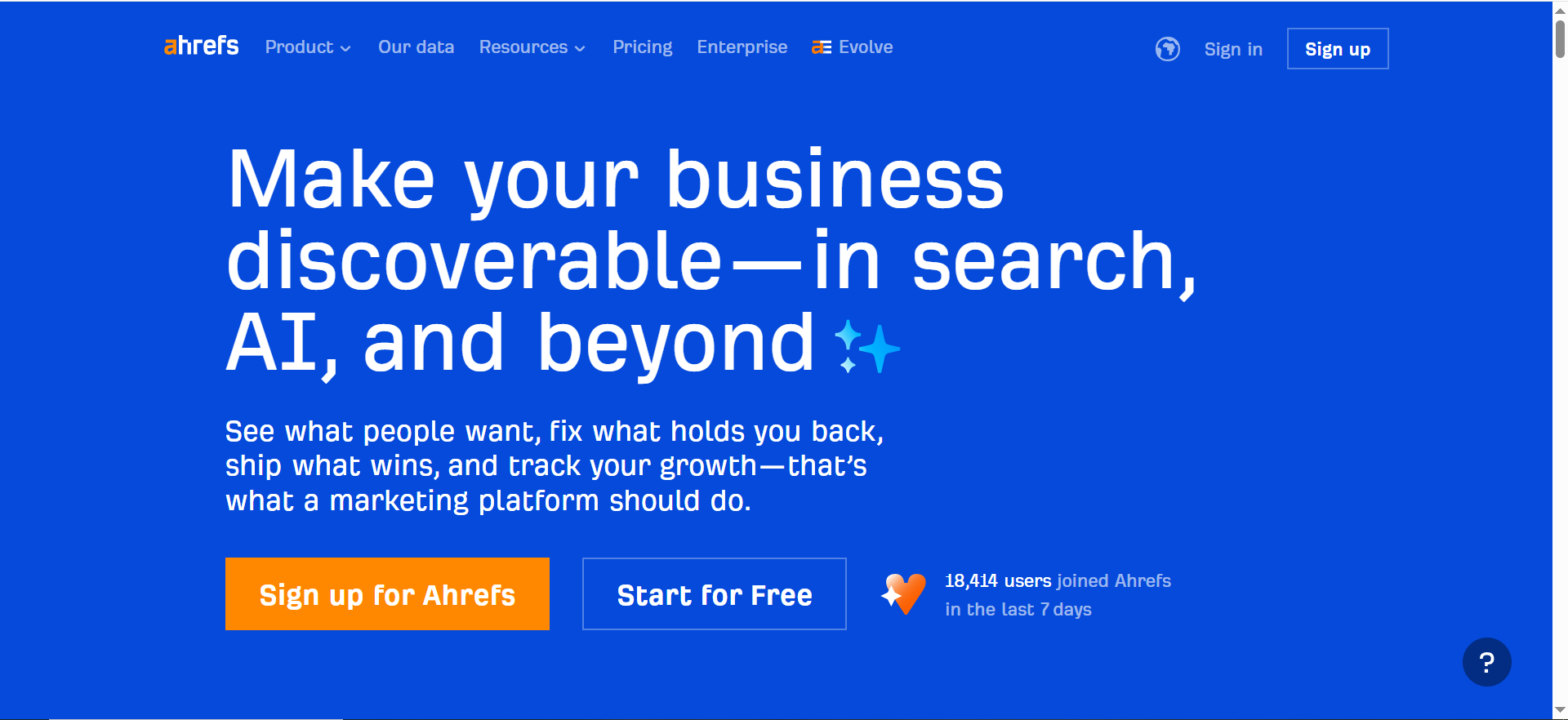
Ahrefs is a comprehensive SEO platform that added Brand Radar, a tool specifically designed to track how brands appear across AI-generated responses. Brand Radar maintains a database of over 252 million monthly prompts across six major AI platforms, including ChatGPT, Google AI Overviews, and Perplexity. It shows what percentage of AI conversations mention your brand and surfaces prompts you didn't know were relevant to your business.
Why teams use it
Most SEO teams already use Ahrefs for backlink analysis, keyword research, and site auditing. Brand Radar extends that existing workflow into AI visibility without requiring a separate tool or login. Teams use it because it answers a simple question: when someone asks an AI assistant about your category, does your brand come up? The 252 million prompt database means you're discovering mentions you wouldn't find by manually testing prompts yourself.
What it's good for
Ahrefs works best for teams that want to monitor AI brand visibility alongside traditional SEO metrics in one dashboard. It's particularly strong for tracking how brand mentions shift over time, understanding which AI platforms mention you most, and discovering new prompts where competitors appear but you don't. The YouTube, TikTok, and Reddit mention tracking (currently in beta) adds upstream discovery signals, since AI platforms often cite content from these sources.
When it's a good fit
Ahrefs is a good fit when your team already uses it for SEO and wants to add AI visibility tracking without adopting a new platform. It works well for mid-market and enterprise teams that need deep prompt-level data and can justify the higher combined cost. If you need to track visibility across all six major AI platforms simultaneously, the all-in-one bundle makes this manageable from a single tool.
When it's not a good fit
Ahrefs is not a good fit when budget is a primary concern. The base plan starts at $129 per month, but AI index add-ons cost $199 per month per platform or $699 per month for all six. That puts the minimum total at roughly $828 per month for full AI visibility coverage. If you only need AI visibility tracking and don't use Ahrefs for traditional SEO, you're paying for features you won't use.
How to use it
Start by connecting your domain in Brand Radar. The tool automatically scans its prompt database to find where your brand appears. From there, set up custom prompt tracking for queries that matter to your business. Review the platform breakdown to see which AI engines mention you most, and use competitor comparison to find gaps. The YouTube and social mention reports (in beta) help identify upstream content that AI systems are citing.
Key capabilities
Brand Radar with 252M+ monthly prompt databaseTracking across 6 AI platforms (ChatGPT, Google AI Overviews, Perplexity, Gemini, Claude, Copilot)Custom AI prompt tracking on all paid plans except StarterYouTube, TikTok, and Reddit mention tracking (beta)Competitor brand comparison in AI responsesIntegration with existing Ahrefs SEO workflow (backlinks, keywords, site audit)
Pricing
Ahrefs plans start at $29 per month (Starter), though the Lite plan at $129 per month is the minimum tier required for AI index add-ons. AI index add-ons are priced at $199 per month per platform or $699 per month for a bundle covering all six AI platforms. The total minimum cost for Brand Radar with full coverage is approximately $828 per month, scaling higher on upper-tier Ahrefs plans.
Free tier?
Yes, partially. Brand Radar is available on all Ahrefs paid plans with basic features. Custom prompt tracking is included on all paid plans except the Starter tier. However, the full AI index add-ons that unlock deep platform-by-platform tracking require additional payment.
Downsides / limitations
The cost adds up quickly. A team that needs full AI visibility across all platforms is looking at over $800 per month before factoring in the Ahrefs plan tier they need for other SEO features. The YouTube and social tracking features are still in beta, which means coverage and reliability may vary. For teams that don't use Ahrefs for traditional SEO, the combined cost is hard to justify compared to standalone AI visibility tools.
Tool #2: Semrush
What it does
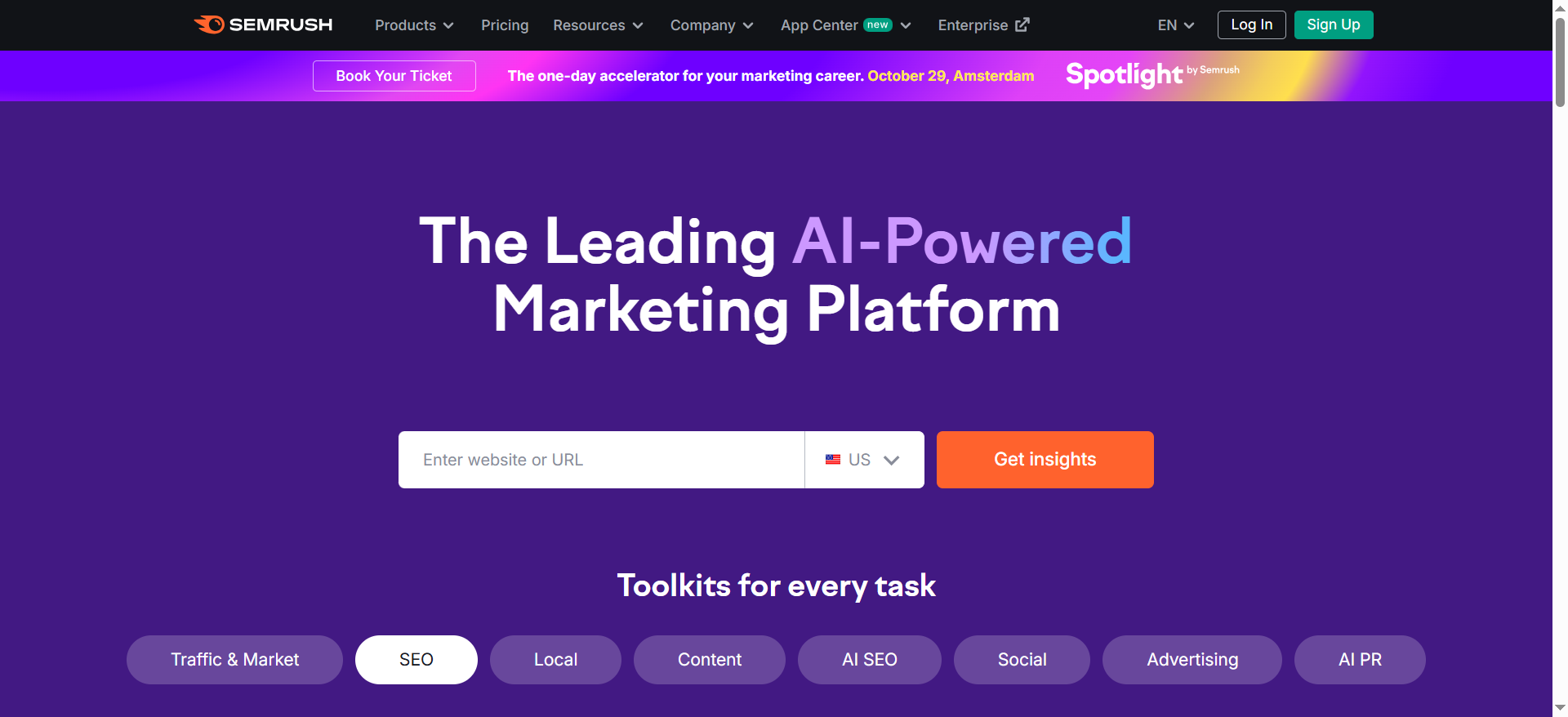
Semrush offers an AI Visibility Toolkit that tracks how brands appear in AI-generated answers across ChatGPT, Gemini, SearchGPT, and Perplexity. The toolkit monitors over 100 million relevant LLM prompts globally, including the largest US database at 90 million prompts and a ChatGPT-specific database of 29 million prompts. It lets you benchmark your AI visibility, analyze brand perception and sentiment against competitors, discover relevant prompts to target, and track daily AI visibility changes.
Why teams use it
Semrush appeals to teams that want a more affordable entry point into AI visibility tracking. The standalone AI Visibility Toolkit at $99 per month is significantly cheaper than building comparable coverage through Ahrefs add-ons. Teams also use it because Semrush's prompt database is substantial, and the ability to track 25 custom prompts with daily AI rankings gives actionable, ongoing data rather than just a one-time snapshot.
What it's good for
Semrush is strong for competitive benchmarking in AI search. The toolkit shows not just whether your brand appears, but how your brand perception and sentiment compare to competitors. It's also useful for discovering prompts you should be targeting — the 100 million prompt database surfaces opportunities where your competitors appear but you don't. The free AI Search Visibility Checker gives you a quick diagnostic before committing to a paid plan.
When it's a good fit
Semrush is a good fit for teams that want dedicated AI visibility monitoring without the overhead of a full SEO suite, since the standalone toolkit works independently at $99 per month. It's also ideal for teams already on Semrush who want to add AI visibility to their existing workflow through the Semrush One bundles ($199 to $549 per month). If you need enterprise-grade coverage, the Enterprise AIO starting at $499 per month scales well for larger organizations.
When it's not a good fit
Semrush covers four AI platforms (ChatGPT, Gemini, SearchGPT, Perplexity), which is fewer than some competitors. If you need to track Claude, Grok, or Copilot, Semrush won't cover those. The 25-prompt limit on the standalone plan may also feel restrictive for teams monitoring multiple product lines or regions. Additional prompts cost $60 per 50 prompts, and additional domains cost $99 per domain per month, which can escalate costs for multi-brand companies.
How to use it
Sign up for the standalone AI Visibility Toolkit or add it to an existing Semrush plan. Start with the free AI Search Visibility Checker to get a baseline snapshot. Then configure your domain and set up the 25 custom prompts you want to track daily. Use the competitive analysis view to benchmark against key competitors, and review the prompt discovery section to find new queries where you should be visible.
Key capabilities
Monitoring across ChatGPT, Gemini, SearchGPT, and Perplexity100M+ LLM prompts database (90M+ US, 29M+ ChatGPT-specific)25 custom prompt tracking with daily AI rankingsBrand perception and sentiment analysis vs. competitorsPrompt discovery for new visibility opportunitiesFree one-time AI Search Visibility Checker
Pricing
The standalone AI Visibility Toolkit costs $99 per month. Semrush One bundles start at $199 per month (Starter), $299 per month (Pro+), and $549 per month (Advanced). Enterprise AIO starts at $499 per month. Additional domains cost $99 per domain per month. Additional prompt tracking costs $60 per 50 prompts.
Free tier?
Yes. Semrush offers a free AI Search Visibility Checker that provides a one-time diagnostic of how your brand appears across AI platforms. It's limited to a single snapshot rather than ongoing monitoring, but it's useful for getting a quick baseline before committing to a paid plan.
Downsides / limitations
Platform coverage is narrower than some competitors, with four AI platforms versus the six or nine that other tools track. The 25-custom-prompt limit on the standalone plan can be restrictive, and scaling up gets expensive quickly with per-domain and per-prompt add-on costs. Teams that need coverage across Claude, Grok, or Copilot will need to supplement Semrush with another tool.
Tool #3: Profound
What it does
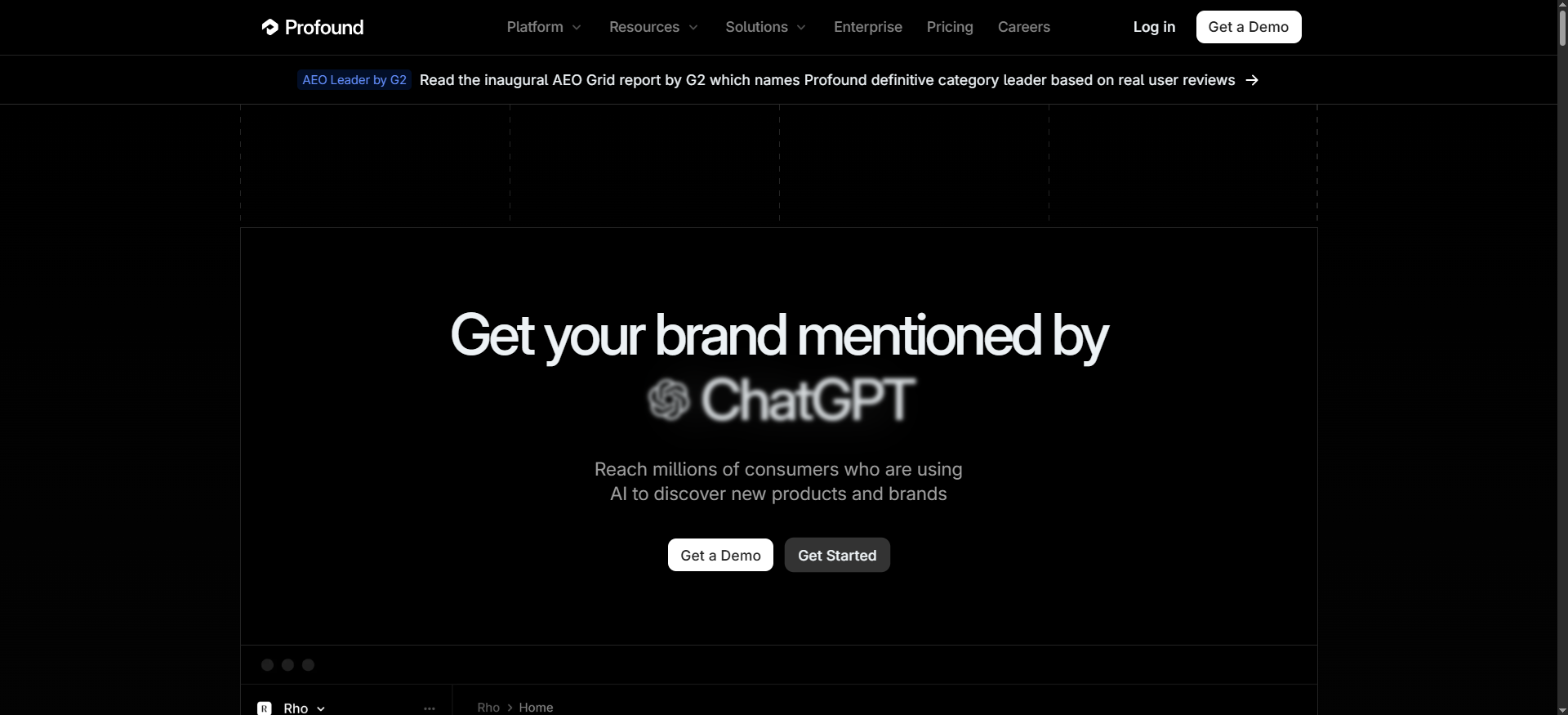
Profound is a dedicated AI visibility monitoring platform that tracks brand mentions across nine AI platforms: ChatGPT, Perplexity, Google AI Overviews, Google AI Mode, Gemini, Microsoft Copilot, Claude, Grok, and Amazon Rufus (coming soon). Its Conversation Explorer reveals real-time AI search volume data that traditional analytics can't capture, showing how often industry topics are discussed across AI platforms. Agent Analytics monitors how bots and crawlers from AI platforms access your website.
Why teams use it
Teams choose Profound when AI visibility is a primary strategic concern rather than just an add-on to traditional SEO. The platform tracks nine AI engines, which is the broadest coverage available. The Conversation Explorer provides data that Ahrefs and Semrush don't offer — real-time insight into AI search volume for industry topics. For enterprise teams, SOC 2 Type II certification and HIPAA compliance make Profound one of the few options that can handle healthcare and regulated industry data.
What it's good for
Profound excels at deep AI visibility intelligence. The Agent Analytics feature shows which AI crawlers are accessing your site and how they're processing your content, giving you insight into the mechanics of AI visibility rather than just the outcomes. The pitch workspaces (25 custom prompts each) are designed for agencies and consultants who need to demonstrate AI visibility value to clients. The breadth of platform coverage makes it the most comprehensive option for teams that need visibility across every major AI engine.
When it's a good fit
Profound is a good fit for enterprise teams, agencies, and brands in regulated industries (healthcare, finance) that need broad AI platform coverage and compliance certifications. It's also ideal for teams where AI visibility is the primary goal rather than a secondary feature inside a larger SEO tool. If you need to track Claude, Grok, or Copilot alongside the usual ChatGPT and Perplexity, Profound is one of the few tools that covers all of them.
When it's not a good fit
Profound is not a good fit for small teams or solo practitioners on tight budgets. The Starter plan starts at $99 per month but only covers ChatGPT. Meaningful multi-platform features start at $399 per month on the Growth plan, and full enterprise capabilities are priced from $2,000 to $5,000+ per month. If you already use Ahrefs or Semrush for SEO and just need basic AI visibility, adding Profound creates tool overlap and additional cost. The platform focuses specifically on AI visibility, so it won't replace your traditional SEO toolkit.
How to use it
Set up your brand domain and configure the AI platforms you want to track. Use the Conversation Explorer to understand what prompts and topics are generating AI responses in your industry. Review Agent Analytics to see how AI crawlers interact with your site. Set up custom prompt tracking to monitor specific queries daily. For agencies, create pitch workspaces to demonstrate AI visibility insights to prospects and clients.
Key capabilities
Tracking across 9 AI platforms (ChatGPT, Perplexity, Google AI Overviews, AI Mode, Gemini, Copilot, Claude, Grok, Amazon Rufus coming soon)Conversation Explorer with real-time AI search volume dataAgent Analytics for AI bot and crawler monitoringSOC 2 Type II certification and HIPAA complianceDedicated pitch workspaces with 25 custom prompts eachAnswer engine optimization recommendations
Pricing
The Starter plan begins at $99 per month, limited to ChatGPT tracking only with 50 prompts. The Growth plan costs $399 per month and covers three platforms (ChatGPT, Perplexity, Google AI Overviews). Enterprise plans range from $2,000 to $5,000+ per month depending on brand count, query volume, and reporting needs. Annual commitments are typically required for enterprise tiers.
Free tier?
No. Profound does not offer a free tier or free diagnostic tool. You'll need a paid plan to access any tracking features, though the entry-level plan provides basic monitoring at a lower price point.
Downsides / limitations
Cost is the main barrier. Enterprise-grade features that justify choosing Profound over adding AI visibility to Ahrefs or Semrush start at $399 per month on the Growth plan. The platform focuses exclusively on AI visibility, meaning you'll still need separate tools for traditional SEO, backlink analysis, and keyword tracking. For teams that don't need nine-platform coverage or compliance certifications, the premium over Semrush's $99 standalone option is hard to justify.
Tool #4: BuzzStream
What it does
BuzzStream is a digital PR and link building platform that helps teams research prospects, build media lists, send personalized outreach emails at scale, and track campaign performance. While it doesn't monitor AI-generated responses directly, it addresses brand visibility from the earned media angle — building the media placements, backlinks, and brand mentions that AI systems use as source material when generating responses.
Why teams use it
Teams use BuzzStream because AI visibility doesn't exist in isolation. AI platforms pull from web content, news coverage, and media mentions when generating responses. BuzzStream helps teams build the kind of brand presence that AI systems reference: press coverage, influencer mentions, and authoritative backlinks. It's the upstream work that feeds into AI visibility downstream.
What it's good for
BuzzStream is strong for scaling digital PR campaigns that generate the earned media signals AI platforms rely on. The contact research and discovery features automatically find and gather contact information for journalists, bloggers, and influencers. The centralized database keeps track of every relationship and interaction, and the email outreach tools let you send personalized pitches at scale while tracking open rates, replies, and placements.
When it's a good fit
BuzzStream is a good fit for teams that understand AI visibility starts with building real brand presence across the web. If your brand isn't appearing in AI responses because you lack media coverage, expert citations, and authoritative mentions, BuzzStream addresses the root cause rather than just measuring the symptom. It's particularly useful for agencies managing multiple clients and teams running ongoing digital PR campaigns.
When it's not a good fit
BuzzStream is not a good fit if you need direct AI visibility monitoring. It doesn't track how your brand appears in ChatGPT, Perplexity, or any AI platform. It's a brand-building tool, not a brand-measurement tool. Teams that already have strong media presence and need to track AI visibility should look at Ahrefs, Semrush, or Profound instead. The UI has also been criticized as dated and cluttered in recent reviews.
How to use it
Start by importing or building your media contact lists using BuzzStream's contact research tools. Set up your outreach campaigns with personalized email templates. Track your campaign metrics including open rates, reply rates, and successful placements. Use the link management features to monitor the backlinks and mentions you've earned. Over time, these earned media signals contribute to how AI platforms reference your brand.
Key capabilities
Automatic contact research and discovery for journalists, bloggers, and influencersCentralized relationship management databasePersonalized email outreach at scaleCampaign tracking with open rates, replies, and placement metricsLink management and backlink monitoringCustom fields and advanced organization features
Pricing
BuzzStream offers three tiers: Group at $29 per month for a single user, Professional at $99 per month for teams up to 10, and Company at $249 per month for larger teams up to 100 users. Annual billing is available at a discount.
Free tier?
No. BuzzStream does not offer a free tier, though a free trial is available for new users to test the platform before committing to a paid plan.
Downsides / limitations
BuzzStream doesn't directly monitor AI brand visibility. It's an outreach and PR tool, not an AI tracking tool. Several reviewers have noted that the UI feels dated and cluttered compared to newer alternatives. Some users have also reported price increases without corresponding new features. If your primary need is measuring AI visibility rather than building it, BuzzStream alone won't solve that problem.
Tool #5: Muck Rack
What it does
Muck Rack is an all-in-one PR platform that combines a comprehensive media database, coverage monitoring across online, print, broadcast, and social channels, and analytics dashboards for measuring PR impact. Its standout AI-related feature is Generative Pulse, which shows how brands appear in AI-generated responses, which journalists and sources influence those responses, and how visibility and sentiment change over time across major language models.
Why teams use it
Teams use Muck Rack because it bridges the gap between traditional PR and AI visibility. Generative Pulse connects earned media efforts to AI outcomes — showing not just whether your brand appears in AI responses, but which journalists and media placements are influencing those AI-generated answers. This gives PR teams a clear feedback loop: the coverage they generate directly affects how AI systems represent the brand.
What it's good for
Muck Rack is strong for teams that run active PR programs and want to understand how their earned media impacts AI visibility. The media monitoring covers print, TV, radio (through TVEyes partnership), and social platforms including X, Facebook, Instagram, YouTube, and TikTok. The executive-ready dashboards track share of voice, sentiment, narrative movement, and AI visibility in one view, making it easier to report PR impact to leadership.
When it's a good fit
Muck Rack is a good fit for PR teams and agencies that already invest in media relations and want to extend their measurement into AI visibility. If you need to know which specific journalists and publications are influencing how AI platforms talk about your brand, Muck Rack's Generative Pulse provides that connection. It's also ideal for teams that need comprehensive traditional media monitoring alongside AI visibility tracking.
When it's not a good fit
Muck Rack is not a good fit for SEO teams that don't run PR programs. The platform is built around media relations and requires annual contracts with custom pricing — there's no self-serve option or monthly plan. If you just need to check whether your brand appears in ChatGPT or Perplexity and don't need the full PR infrastructure, Muck Rack is overbuilt and overpriced for that use case.
How to use it
Contact Muck Rack's sales team for a custom quote and annual contract. Once onboarded, set up your brand monitoring across the channels that matter to your PR program. Configure Generative Pulse to track how your brand appears across AI-generated responses. Use the journalist influence data to understand which media placements are driving AI visibility. Review the dashboards regularly to connect your PR activities to measurable AI visibility outcomes.
Key capabilities
Comprehensive media database for journalist discovery and pitchingCoverage monitoring across online, print, broadcast (TVEyes), and social mediaGenerative Pulse for tracking brand appearance in AI-generated responsesJournalist and source influence analysis on AI answersShare of voice, sentiment, and narrative movement dashboardsPitch-to-coverage attribution and executive-ready reporting
Pricing
Muck Rack uses custom, annual pricing. There are three plans each for brand customers and agency customers, but specific prices are not published. You'll need to contact the sales team for a quote. Typical contracts include one to five user seats. No month-to-month or self-serve options are available.
Free tier?
No. Muck Rack does not offer a free tier or free trial. Access requires a sales conversation and an annual contract commitment.
Downsides / limitations
The lack of transparent pricing makes it difficult to budget or compare against alternatives. Annual contracts with no monthly option create a high commitment threshold. The platform is built for PR teams, so SEO-focused teams will find much of the functionality irrelevant to their needs. If you don't have an active PR program generating media coverage, the AI visibility insights from Generative Pulse will be limited since there's less earned media for AI platforms to reference.
How to Choose the Right AI Brand Visibility Checking Tool
The right tool depends on where AI visibility fits in your workflow and what you're already paying for.If your team is already invested in Ahrefs for SEO, adding Brand Radar keeps everything in one platform. The cost is higher than standalone alternatives, but you avoid tool sprawl and get AI visibility data alongside the backlink and keyword data you're already using. The 252 million prompt database is one of the largest available, and the custom prompt tracking on paid plans means you can monitor the specific queries that matter to your business.If budget matters more than platform breadth, Semrush's standalone AI Visibility Toolkit at $99 per month is the most accessible entry point. Four AI platforms (ChatGPT, Gemini, SearchGPT, Perplexity) cover the majority of AI search volume, and the 100 million prompt database is more than enough for most teams. Start with the free AI Search Visibility Checker to see if the data is useful before committing.If AI visibility is your primary concern and you need the broadest coverage, Profound is the specialist choice. Nine platforms, real-time conversation data, and compliance certifications make it the most capable dedicated AI visibility tool. The cost is higher, but teams that treat AI visibility as a strategic priority rather than a nice-to-have will find the depth of data justifies the investment.If your brand visibility problem is a lack of media coverage rather than a lack of tracking, BuzzStream addresses the root cause. You can't track AI mentions you don't have. Building earned media through digital PR creates the source material AI platforms reference, and BuzzStream scales that outreach.If you run active PR campaigns and want to connect earned media to AI outcomes, Muck Rack's Generative Pulse provides that link. It's the only tool here that shows which journalists and publications are influencing AI-generated responses about your brand.
What Is AI Brand Visibility and Why Does It Matter?
AI brand visibility refers to how often and how favorably your brand appears in responses generated by AI platforms like ChatGPT, Perplexity, Google AI Overviews, Gemini, Claude, and Copilot. Unlike traditional search visibility, which is measured by keyword rankings and click-through rates, AI visibility depends on whether AI systems mention, recommend, or cite your brand when users ask questions about your category.This matters because user behavior is shifting. Perplexity has crossed 100 million monthly visits, Google AI Overviews are now part of mainstream search, and an increasing number of users expect conversational answers rather than a list of blue links. When someone asks an AI assistant "What's the best project management tool for remote teams?" the brands that appear in that AI-generated response capture attention that traditional SEO can't reach.AI visibility also affects how people perceive your brand before they ever visit your website. The tone and context of AI mentions shape brand sentiment in ways that are harder to control than traditional search results. A brand that consistently appears as a top recommendation in AI responses builds authority and trust at a stage of the buyer journey that most companies aren't measuring yet.For B2B companies, SaaS businesses, and ecommerce brands, tracking AI visibility is becoming as important as tracking organic search rankings. The companies that measure and optimize for AI visibility now will have a structural advantage as AI-generated responses capture a larger share of how people discover and evaluate products.
Key Features to Look for in an AI Brand Visibility Tool
The first thing to evaluate is platform coverage. At minimum, a useful tool should track ChatGPT, Google AI Overviews, and Perplexity, since these represent the largest share of AI search volume. Tools that also cover Gemini, Claude, Copilot, and Grok provide a more complete picture, but the incremental value depends on where your audience actually searches.Custom prompt tracking is essential. Your brand appears in response to specific queries, and those queries vary by industry, product line, and audience segment. A tool that only shows aggregate visibility across a generic prompt database is less useful than one that lets you track the exact prompts your customers are using. Look for tools that offer at least 25 custom prompts on their base plans.Competitive benchmarking separates monitoring tools from actionable ones. Knowing your brand appears in 12 percent of relevant AI responses is only useful if you know your top competitor appears in 34 percent. The best tools show side-by-side comparisons of visibility, sentiment, and share of voice across your competitive set.Sentiment and perception analysis adds qualitative depth. Being mentioned is one thing; being mentioned favorably is another. Tools that analyze the context and tone of AI mentions help you understand whether AI platforms are recommending your brand, comparing it unfavorably, or just listing it alongside competitors.Historical tracking and trend data help you measure the impact of your optimization efforts. For more on this, see our AI search monitoring best practices guide. AI visibility changes over time as AI models update their training data and source material. Tools with daily or weekly tracking let you correlate visibility changes with specific content or PR efforts.Finally, consider integration with your existing workflow. A standalone AI visibility tool adds another login, another dashboard, and another reporting source. Tools that integrate with your existing SEO platform (like Ahrefs or Semrush) reduce operational friction and make it easier to act on the data.
What Is an AI Brand Visibility Checking Tool?
An AI brand visibility checking tool is software that monitors how your brand appears inside AI-generated responses across platforms like ChatGPT, Perplexity, Google AI Overviews, Gemini, Claude, and Copilot. These tools work differently from traditional rank trackers because they're not measuring where your website appears on a search results page. Instead, they analyze whether AI systems mention your brand, recommend it, cite your content, or compare it to competitors when users ask questions in natural language.
The core function is prompt-level monitoring. When someone asks an AI assistant a question like "what's the best CRM for small businesses," the tool checks whether your brand appears in the response and in what context. Advanced tools go further, tracking sentiment (is the mention positive or neutral), share of voice (how often you appear versus competitors), and citation patterns (does the AI link back to your content as a source).
Most AI brand visibility tools maintain large databases of real user prompts, ranging from tens of millions to over 250 million queries. They continuously scan AI-generated responses for these prompts to build a picture of your brand's visibility over time. Some tools also let you add custom prompts that match the specific queries your target audience uses, giving you tracking that's relevant to your business rather than just the category average.
The category is still young — most dedicated AI visibility tools launched or added these features between 2024 and 2026. As a result, there's significant variation in what each tool tracks, how many AI platforms it covers, and how actionable the data is. The tools reviewed in this guide range from AI visibility features built into existing SEO platforms (Ahrefs, Semrush) to dedicated AI visibility platforms (Profound) to PR tools that connect earned media with AI outcomes (BuzzStream, Muck Rack).
How Much Does AI Brand Visibility Tracking Cost?
The cost of AI brand visibility tracking depends on whether you want a standalone monitoring tool, an add-on to an existing SEO platform, or an enterprise solution with compliance features and multi-brand support.
At the entry level, Semrush offers the most accessible starting point with its standalone AI Visibility Toolkit at $99 per month. This includes tracking across four AI platforms (ChatGPT, Gemini, SearchGPT, Perplexity), 25 custom prompt slots with daily ranking updates, and competitive benchmarking. For teams already paying for Semrush, the bundled Semrush One plans start at $199 per month and include AI visibility alongside traditional SEO features.
Ahrefs takes a modular approach. The base SEO plan starts at $29 per month (Starter), though AI index add-ons require the Lite plan at $129 per month. AI index add-ons for Brand Radar cost $199 per month per platform or $699 per month for all six platforms bundled. A team that wants full AI visibility coverage across all platforms is looking at a minimum of $828 per month — significantly more than Semrush but with a larger prompt database (252 million versus 100 million) and broader platform coverage.
Profound sits at the specialist end of the market. Basic tracking starts at $99 per month but is limited to ChatGPT only. The Growth plan at $399 per month adds Perplexity and Google AI Overviews. Full enterprise capabilities — including nine-platform coverage, Conversation Explorer, Agent Analytics, and compliance certifications — are priced from $2,000 to $5,000+ per month. Annual commitments are typically required for enterprise tiers.
For teams approaching brand visibility from the PR side, BuzzStream starts at $29 per month for a single user and scales to $249 per month for larger teams. Muck Rack uses custom annual pricing with no published rates, and access requires a sales conversation. Both of these tools focus on building brand visibility through media relations rather than directly monitoring AI responses, though Muck Rack's Generative Pulse does track AI-generated mentions.
The total cost also depends on add-ons. Semrush charges $99 per additional domain and $60 per 50 extra prompt tracking slots. Ahrefs charges per AI platform unless you buy the bundle. These incremental costs can add up quickly for multi-brand companies or agencies managing several clients.
Can You Check AI Brand Visibility for Free?
Yes, but with meaningful limitations. Several tools offer free diagnostics that give you a one-time snapshot of your brand's AI visibility without requiring a paid subscription.
Semrush provides a free AI Search Visibility Checker that runs a quick scan of how your brand appears across major AI platforms. It's useful for getting a baseline understanding of where you stand, but it doesn't offer ongoing monitoring, historical tracking, or competitive benchmarking. Think of it as a single photo rather than a video feed.
HubSpot's AEO Grader is another free option that evaluates how your brand appears across ChatGPT, Perplexity, and Gemini. It returns a score and a snapshot of your AI presence, and while it's more limited than paid tools, it's a practical starting point for teams that are just beginning to think about AI visibility.
Ahrefs includes basic Brand Radar features on all paid plans, so if you're already paying for Ahrefs (starting at $29 per month), you get some AI visibility data without additional cost. However, the deeper AI index data that breaks down visibility platform by platform requires paid add-ons.
The practical reality is that free tools are good for answering "do we have an AI visibility problem?" but not for answering "how do we fix it?" Ongoing monitoring, custom prompt tracking, competitive benchmarking, and sentiment analysis — the features that make AI visibility data actionable — all require a paid subscription. For teams testing the waters, starting with Semrush's free checker and HubSpot's AEO Grader gives you enough data to decide whether investing in a paid tool is worthwhile.
Which AI Platforms Should You Track for Brand Visibility?
The platforms you need to track depend on where your audience actually searches, but there's a clear tier structure based on volume and reach.
The first tier — ChatGPT, Google AI Overviews, and Perplexity — accounts for the largest share of AI-generated search activity. ChatGPT has the largest user base among standalone AI assistants, Google AI Overviews appear directly in Google search results (exposing them to billions of queries), and Perplexity has crossed 100 million monthly visits and is the leading research-focused AI search engine. Any AI visibility tool you choose should cover these three at minimum.
The second tier includes Gemini (Google's standalone AI assistant), Claude (Anthropic's AI assistant, popular among technical and business users), and Microsoft Copilot (integrated into Bing, Microsoft 365, and Windows). These platforms have significant user bases but narrower audiences. Tracking them matters most for B2B brands and professional services companies where decision-makers use these tools during research and procurement.
The third tier includes Grok (X/Twitter's AI assistant), Amazon Rufus (Amazon's shopping AI), and emerging platforms. Grok matters for brands with audiences active on X. Amazon Rufus is relevant for ecommerce brands selling on Amazon, as it influences product discovery within the marketplace. These platforms are smaller but can be high-value for specific niches.
Among the tools in this guide, Profound offers the broadest coverage at nine platforms. Ahrefs covers six platforms through its Brand Radar add-ons. Semrush covers four platforms (ChatGPT, Gemini, SearchGPT, Perplexity). The incremental value of tracking additional platforms drops off after the first tier, so teams on a budget should prioritize coverage of ChatGPT, Google AI Overviews, and Perplexity before expanding.
How Is AI Brand Visibility Different from Traditional SEO?
AI brand visibility and traditional SEO both aim to make your brand discoverable, but they operate in fundamentally different environments and require different measurement and optimization strategies.
Traditional SEO measures where your website ranks on search engine result pages for specific keywords. The metrics are well-established: keyword rankings, organic traffic, click-through rates, domain authority, and backlink profiles. The optimization playbook is also mature: improve content quality, build authoritative backlinks, fix technical issues, and align content with search intent. When traditional SEO works, users click through to your website, and you can track the entire journey through analytics.
AI brand visibility measures something different: whether and how AI platforms mention your brand inside conversational responses. There's no "rank #1" in an AI response. Instead, your brand might be recommended as the top option, listed among several alternatives, mentioned briefly in a comparison, or not mentioned at all. The metrics are newer and less standardized: share of voice in AI responses, mention frequency, sentiment, citation patterns, and context (are you recommended or just acknowledged?).
The optimization strategies also differ. Traditional SEO focuses on what's on your website — content, keywords, site structure, loading speed. AI visibility depends on what exists about your brand across the entire web. AI models reference content from your website, but they also draw from news coverage, review sites, forums, social media, academic papers, and other sources. Building AI visibility often requires earning media coverage, expert citations, and authoritative third-party mentions that you can't fully control.
The measurement tools are different too. Traditional SEO tools like Ahrefs and Semrush were built for keyword tracking and backlink analysis. They've added AI visibility features recently, but the core architecture was designed for traditional search. Dedicated AI visibility tools like Profound were built from the ground up to monitor conversational AI responses, which gives them advantages in coverage and depth for this specific use case.
For most teams, the practical approach is to continue optimizing for traditional SEO while adding AI visibility monitoring. Our guide to the best AI content optimization tools for search engine visibility covers how to start. The two disciplines are complementary — strong traditional SEO creates the authoritative content that AI platforms reference, and AI visibility tracking shows whether that content is translating into mentions in AI-generated responses.
How Often Should You Check AI Brand Visibility?
The right cadence depends on how actively you're optimizing for AI visibility and how quickly you need to detect changes.
Daily tracking is the gold standard for teams that are actively running campaigns, publishing content, or earning media coverage that could impact AI visibility. AI models update their responses as they incorporate new data, and significant changes — a major press mention, a competitor launching a new product, or a negative review going viral — can shift your AI visibility within days. Ahrefs, Semrush, and Profound all offer daily prompt tracking that captures these shifts in near real-time.
Weekly reviews work well for teams that are monitoring AI visibility as a strategic metric but aren't making daily changes to influence it. A weekly check gives you enough resolution to spot trends, identify sudden drops or spikes, and correlate visibility changes with your marketing activities. Most AI visibility dashboards support weekly reporting views that make this cadence practical without drowning in daily data.
Monthly reviews are the minimum viable cadence. AI models periodically update their training data and reference material, and monthly tracking captures these broader shifts. Monthly reviews are sufficient for teams that are in the early stages of AI visibility monitoring and want to establish baselines before investing in more frequent tracking. However, monthly cadence means you'll miss short-term visibility changes and won't be able to attribute specific actions to specific outcomes with much confidence.
For most teams, the practical recommendation is to set up daily automated tracking through your chosen tool and review the data weekly in a structured format. Flag significant changes for investigation and run a deeper monthly analysis that looks at trends, competitive movement, and the impact of your content and PR efforts on AI visibility. This approach gives you early warning on problems without requiring daily manual review.
Do You Need a Separate Tool for AI Visibility or Can Your SEO Platform Handle It?
This is one of the most common questions teams ask when they start taking AI visibility seriously, and the answer depends on how central AI visibility is to your strategy.
If you already use Ahrefs or Semrush, both platforms now include AI visibility features that may be sufficient for your needs. Ahrefs Brand Radar provides a 252 million prompt database across six platforms, and Semrush's AI Visibility Toolkit covers four platforms with 100 million prompts. For teams that want to add AI visibility monitoring without adopting a new tool, these built-in features provide solid coverage and keep all your SEO data in one place.
The trade-off is depth. Built-in AI visibility features in SEO platforms are designed to complement traditional SEO workflows, not replace dedicated AI visibility monitoring. They tend to have fewer tracked platforms, less granular conversation-level data, and lighter analytics compared to specialist tools. If your AI visibility needs are straightforward — tracking whether your brand appears in the top AI platforms and how you compare to a few key competitors — built-in features are likely enough.
Dedicated tools like Profound make sense when AI visibility is a primary strategic priority rather than a secondary metric. Profound's nine-platform coverage, Conversation Explorer (which reveals real-time AI search volume data), and Agent Analytics (which tracks how AI crawlers access your website) provide insights that general SEO platforms don't offer. The compliance certifications (SOC 2 Type II, HIPAA) also matter for healthcare, finance, and other regulated industries where data handling standards are non-negotiable.
For agencies managing multiple clients, the calculus shifts further toward dedicated tools. Profound's pitch workspaces with 25 custom prompts each are designed for prospect demonstrations, and the depth of data helps agencies justify AI visibility as a distinct service line rather than an add-on to SEO.
The most common approach among teams is to start with their existing SEO platform's AI visibility features, run them for two to three months, and evaluate whether the data is sufficient. If you find yourself needing broader platform coverage, deeper conversation analytics, or more granular competitive intelligence, that's the signal to add a dedicated tool.
FAQs
An AI brand visibility checking tool monitors how your brand appears in AI-generated responses across platforms like ChatGPT, Perplexity, Google AI Overviews, and Gemini. These tools track mentions, sentiment, and share of voice in AI responses, giving you data on whether AI systems recommend, cite, or reference your brand when users ask relevant questions. They differ from traditional SEO tools because they measure visibility in conversational AI responses rather than in search engine result pages.
Costs range widely depending on the tool and scope. Semrush offers the most affordable entry point at $99 per month for standalone AI visibility tracking. Ahrefs starts at $129 per month for the base SEO plan plus $199 to $699 per month for AI add-ons. Profound starts at $99 per month for ChatGPT-only tracking and scales to $2,000–$5,000+ per month for enterprise features. BuzzStream (for digital PR) starts at $29 per month, and Muck Rack requires custom annual contracts with undisclosed pricing.
Yes, to a limited extent. Semrush offers a free AI Search Visibility Checker that provides a one-time diagnostic of how your brand appears across AI platforms. HubSpot also offers a free AEO Grader that scores your brand's AI visibility. These free tools give you a snapshot but don't provide ongoing monitoring. Ahrefs includes basic Brand Radar features on its paid plans, though that requires at least the $29 per month base subscription.
At minimum, track ChatGPT, Google AI Overviews, and Perplexity, as these represent the largest share of AI search volume. Adding Gemini gives you coverage of Google's standalone AI assistant. For more comprehensive tracking, include Claude, Copilot, and Grok. The platforms that matter most depend on where your audience searches. B2B audiences tend to use ChatGPT and Perplexity more heavily, while consumer audiences increasingly encounter Google AI Overviews during regular searches.
Traditional SEO measures keyword rankings, organic traffic, and click-through rates on search engine result pages. AI brand visibility measures whether your brand appears in AI-generated conversational responses, how it's described, and whether it's recommended to users. The optimization strategies differ too — traditional SEO focuses on content quality, backlinks, and technical factors, while AI visibility depends on how AI models process and reference your content, media coverage, and brand authority. Both matter, but they require different measurement tools and different optimization approaches. For a deeper comparison, see our AI search optimization platforms comparison.
Daily tracking is ideal if you're actively optimizing for AI visibility or running campaigns that could impact it. Weekly reviews work for teams that are monitoring rather than actively optimizing. At minimum, check monthly to catch significant shifts. AI models update their knowledge and source material periodically, and major changes in your media coverage or content can affect visibility within days. The tools in this guide that offer daily prompt tracking (Ahrefs, Semrush, Profound) give you the most timely data.
It depends on your current platform. Ahrefs and Semrush both offer AI visibility features integrated into their SEO platforms, so if you already use one of these, adding AI tracking may not require a separate tool. However, dedicated platforms like Profound offer broader coverage (nine AI platforms versus four to six) and deeper analytics. If AI visibility is a strategic priority rather than a secondary metric, a dedicated tool provides more actionable data. For most teams, starting with their existing SEO platform's AI features and adding a specialist tool if needed is the most practical approach.