Best AI Sales Engagement Platforms (2026)
What sales directors and demand gen managers should compare before choosing a ai sales engagement platforms solution for generate pipeline.


This playbook helps sales directors and demand gen managers compare the best ai sales engagement platforms options for sales outreach. It breaks down where outreach, salesloft stand out, when alternatives such as clay, cognism make more sense, and which setup fits B2B companies and SaaS companies and small businesses and mid-market companies.
If you run outbound at a B2B company and need a platform that handles sequencing, personalization, and reply management without drowning your team in manual work, the short answer is: Outreach wins for enterprise teams that need conversation intelligence baked in, Apollo wins for lean teams that want prospecting and engagement in one place, and Instantly wins for agencies and high-volume senders who need unlimited mailboxes at a low price point. Salesloft sits close to Outreach on features but often edges ahead on usability, while Smartlead is the go-to for cold email agencies that need white-labeling and deliverability controls.
This guide breaks down the five strongest AI sales engagement platforms in 2026, with verified pricing, real feature comparisons, and honest notes on where each tool fits and where it does not. Every recommendation is built around the operational reality of running outbound at scale, not vendor marketing.
Table of Contents
Best AI Sales Engagement Platforms (Quick Comparison)
| Platform | Best For | Starting Price | Free Tier? |
|---|---|---|---|
| Outreach | Enterprise sales teams needing conversation intelligence | ~$100/user/mo (annual) | No |
| Salesloft | Mid-market to enterprise teams wanting strong deal tracking | ~$125/user/mo (annual) | No |
| Apollo | Lean teams needing prospecting + engagement in one tool | $49/user/mo (annual) | No |
| Instantly | Agencies and high-volume cold email senders | $30/mo (annual) | No |
| Smartlead | Cold email agencies needing white-label and deliverability | $39/mo | No |
Best AI Sales Engagement Platforms (Quick Comparison)
Tool #1: Outreach
What It Does
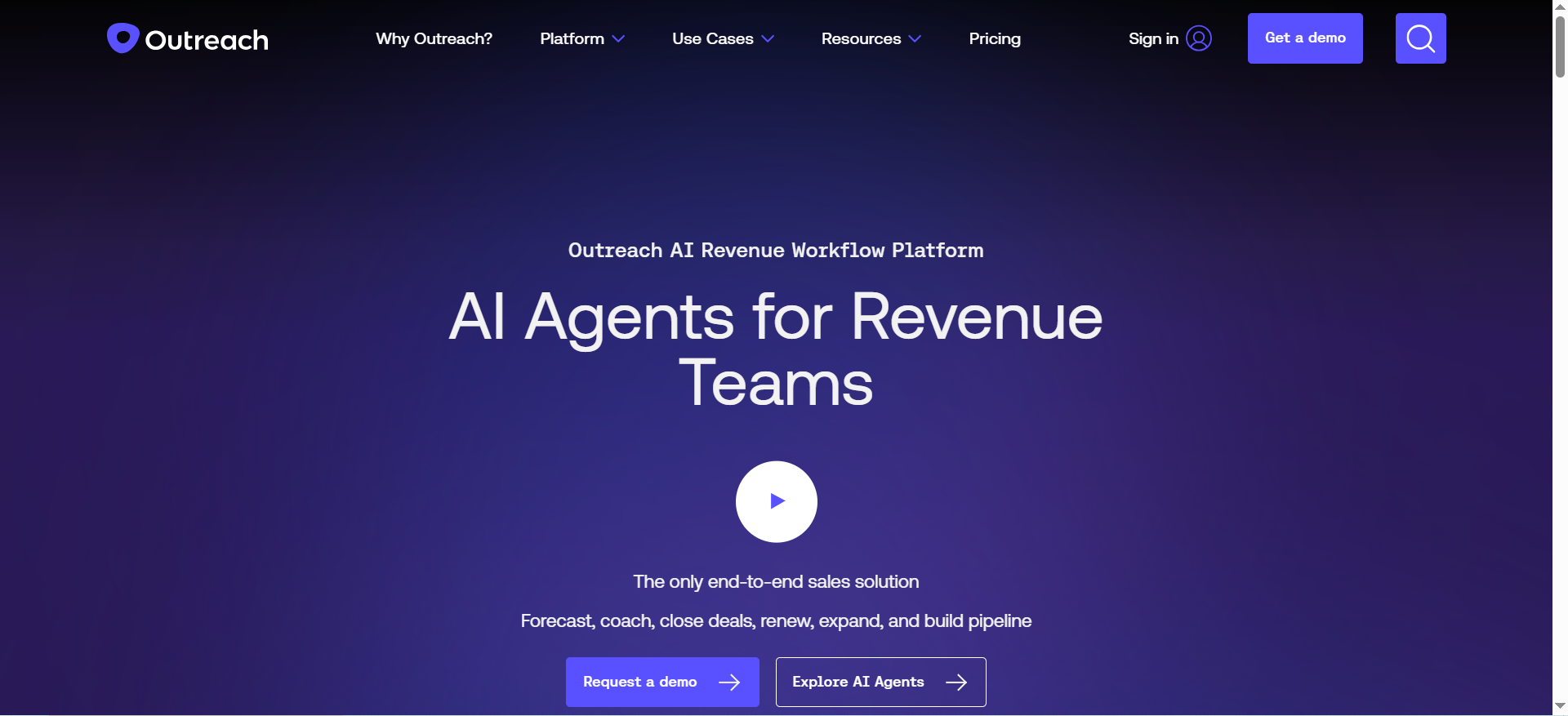
Outreach is a full-stack sales engagement platform built for revenue teams that need multi-channel sequencing, conversation intelligence, deal inspection, and forecasting in a single system. It covers email, phone, LinkedIn, and SMS touchpoints within automated sequences, and layers AI across the entire workflow to surface deal risks, suggest next steps, and score buyer engagement.
Why Teams Use It
Sales organizations choose Outreach because it collapses the gap between prospecting activity and pipeline visibility. Instead of switching between a sequencer, a dialer, a conversation intelligence tool, and a CRM, reps work inside one interface. Managers get real-time dashboards on rep activity, sequence performance, and deal health without waiting for weekly pipeline reviews.
What It Is Good For
Outreach excels when the sales motion involves high-touch, multi-step sequences across multiple channels. It is particularly strong for teams that need conversation intelligence to coach reps on live calls, deal inspection to catch pipeline risk early, and AI-generated action items after meetings. The platform also handles A/B testing at the sequence level, which matters for teams iterating on messaging at scale.
When It Is a Good Fit
Outreach fits best when you have a sales team of 20 or more reps, your deal cycles run longer than 30 days, and your org needs governance controls like approval workflows, sequence locking, and compliance features. Enterprise B2B companies selling into mid-market or enterprise accounts, especially in SaaS, manufacturing, and financial services, get the most value from Outreach.
When It Is Not a Good Fit
Outreach is not the right choice for solo founders, small teams under 10 reps, or companies that primarily run cold email without phone and LinkedIn touchpoints. The platform requires meaningful onboarding investment, and its pricing model with annual contracts and implementation fees makes it expensive for teams still validating product-market fit. If your outbound motion is email-only and high-volume, tools like Instantly or Smartlead deliver more value per dollar.
How to Use It
The standard workflow starts with importing leads from your CRM or a prospecting tool, enrolling them into multi-step sequences that include email, phone tasks, and LinkedIn steps, and then letting Outreach's AI prioritize which prospects to focus on based on engagement signals. Reps handle replies in a unified inbox, log calls through the built-in dialer, and move engaged prospects into opportunity stages. Managers review sequence analytics and deal boards to coach reps and forecast revenue.
Key Capabilities
Multi-channel sequencing across email, phone, LinkedIn, and SMS. Built-in conversation intelligence with call recording, transcription, and AI-generated summaries. Deal inspection dashboards that flag pipeline risk. AI-driven action items and next-step suggestions. A/B testing at the sequence and template level. CRM sync with Salesforce and Microsoft Dynamics. Governance controls including sequence approval workflows and compliance features. Forecasting and pipeline analytics.
Pricing
Outreach does not publish fixed pricing. Based on market data, the Engage tier starts around $100 per user per month on an annual contract. Professional tiers range from $120 to $170 per user per month. Enterprise pricing is custom. Implementation fees typically run $1,000 to $8,000 depending on team size and integrations. All plans require annual commitments paid upfront.
Free Tier?
No. Outreach does not offer a free plan or a self-serve trial. Access requires a sales conversation and annual contract.
Downsides and Limitations
High total cost of ownership once you factor in per-seat pricing, implementation fees, and add-ons like premium support and dialer packages. Steep learning curve for new reps. Annual contracts with limited flexibility to scale down. The platform can feel heavy for teams that only need email sequencing. Reporting customization requires technical setup.
Tool #2: Salesloft
What It Does
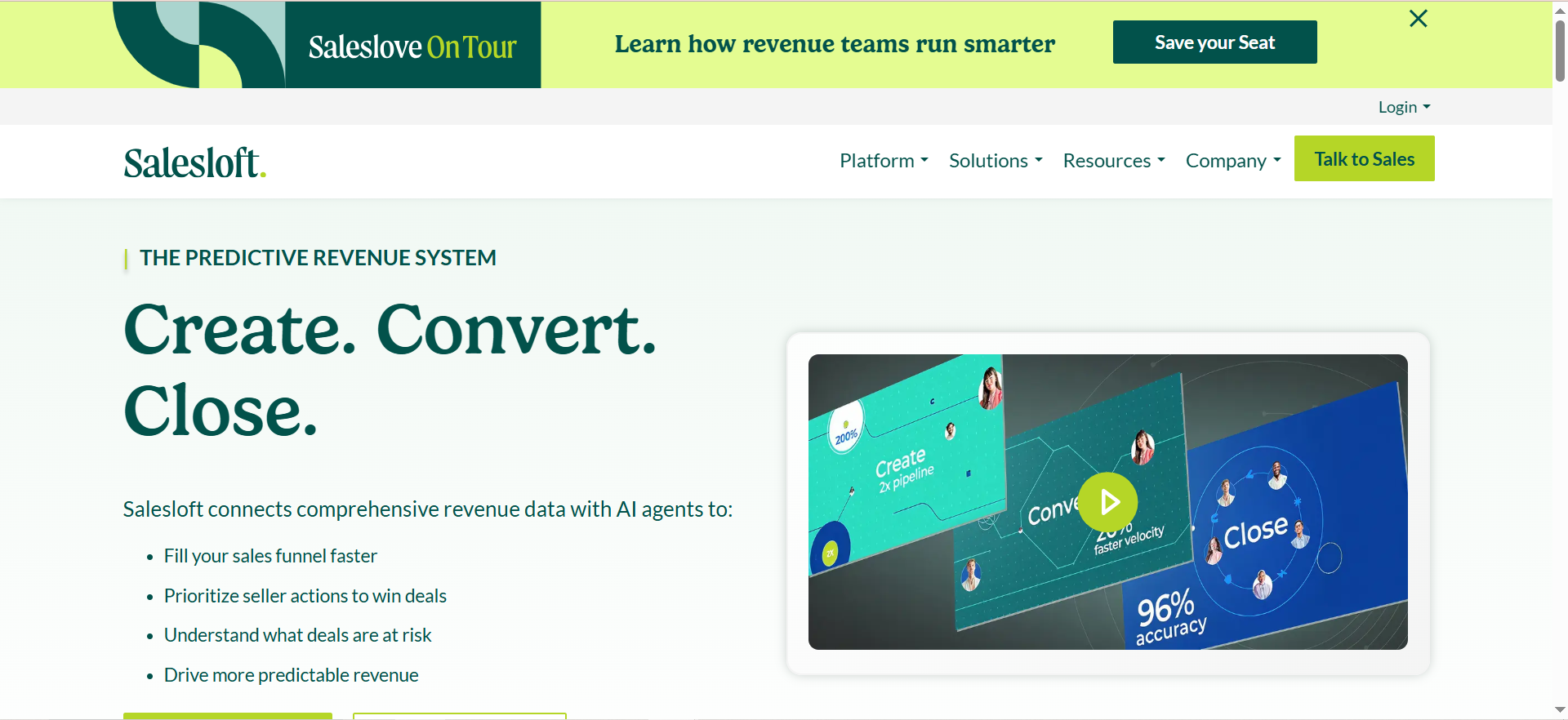
Salesloft is a sales engagement platform that combines multi-channel cadence execution, deal tracking, conversation intelligence, and forecasting. It competes directly with Outreach and targets the same mid-market to enterprise segment, with a reputation for a cleaner user interface and faster onboarding.
Why Teams Use It
Teams choose Salesloft over alternatives because the interface is more intuitive for reps who are not power users. The cadence builder is straightforward, the deal tracking view gives managers pipeline visibility without requiring complex configuration, and the conversation intelligence features help coach reps without buying a separate tool. Salesloft also integrates tightly with Salesforce and HubSpot.
What It Is Good For
Salesloft performs well for structured sales motions where reps follow defined cadences, managers need visibility into activity and deal progression, and the org values ease of adoption over raw configurability. It is strong on deal management, giving revenue leaders a board-style view of pipeline health that connects directly to rep activity data.
When It Is a Good Fit
Salesloft is a good fit for mid-market and enterprise B2B sales teams with 10 or more reps, especially when the organization values fast adoption and clean UX. It works well for teams selling into complex accounts with multiple stakeholders, and for orgs that want deal tracking and forecasting built into the same tool they use for outbound execution.
When It Is Not a Good Fit
Salesloft is not ideal for small teams or startups with tight budgets, since pricing requires annual commitments and minimum seat counts. It also falls short for agencies or high-volume cold email operations where unlimited mailbox connections and aggressive pricing matter more than deal tracking. The dialer is sold separately, which adds cost for teams that rely heavily on phone outreach.
How to Use It
Reps build or are assigned cadences that sequence emails, calls, and social touches over a defined timeline. Prospects are imported from CRM or CSV, enrolled into cadences, and the platform tracks engagement at each step. Conversation intelligence records and transcribes calls, flagging coaching moments. Deal boards give managers a visual pipeline, and forecasting rolls up rep-level data into team and org projections.
Key Capabilities
Multi-channel cadences covering email, phone, and social. Conversation intelligence with AI-powered call analysis. Deal tracking with board-style pipeline management. Forecasting and revenue analytics. CRM integration with Salesforce and HubSpot. Cadence analytics with A/B testing support. Team coaching tools with call scoring. Workflow automation and task management.
Pricing
Salesloft uses quote-based pricing. The Advanced plan typically lists at $125 to $150 per user per month and negotiates to $83 to $100 per user per month on annual contracts. The Premier plan lists at $150 to $180 per user per month and negotiates to $100 to $125 per user per month. Minimum seat counts of 10 to 15 users apply. Many contracts include automatic annual price increases of 5 to 8 percent.
Free Tier?
No. Salesloft does not offer a free plan or self-serve trial.
Downsides and Limitations
Dialer sold separately, which increases total cost for phone-heavy teams. Minimum seat requirements lock out smaller teams. Automatic annual price escalation clauses can compound costs over multi-year deals. Less configurability than Outreach for teams that need deep workflow customization. Limited value for email-only outbound operations.
Tool #3: Apollo
What It Does
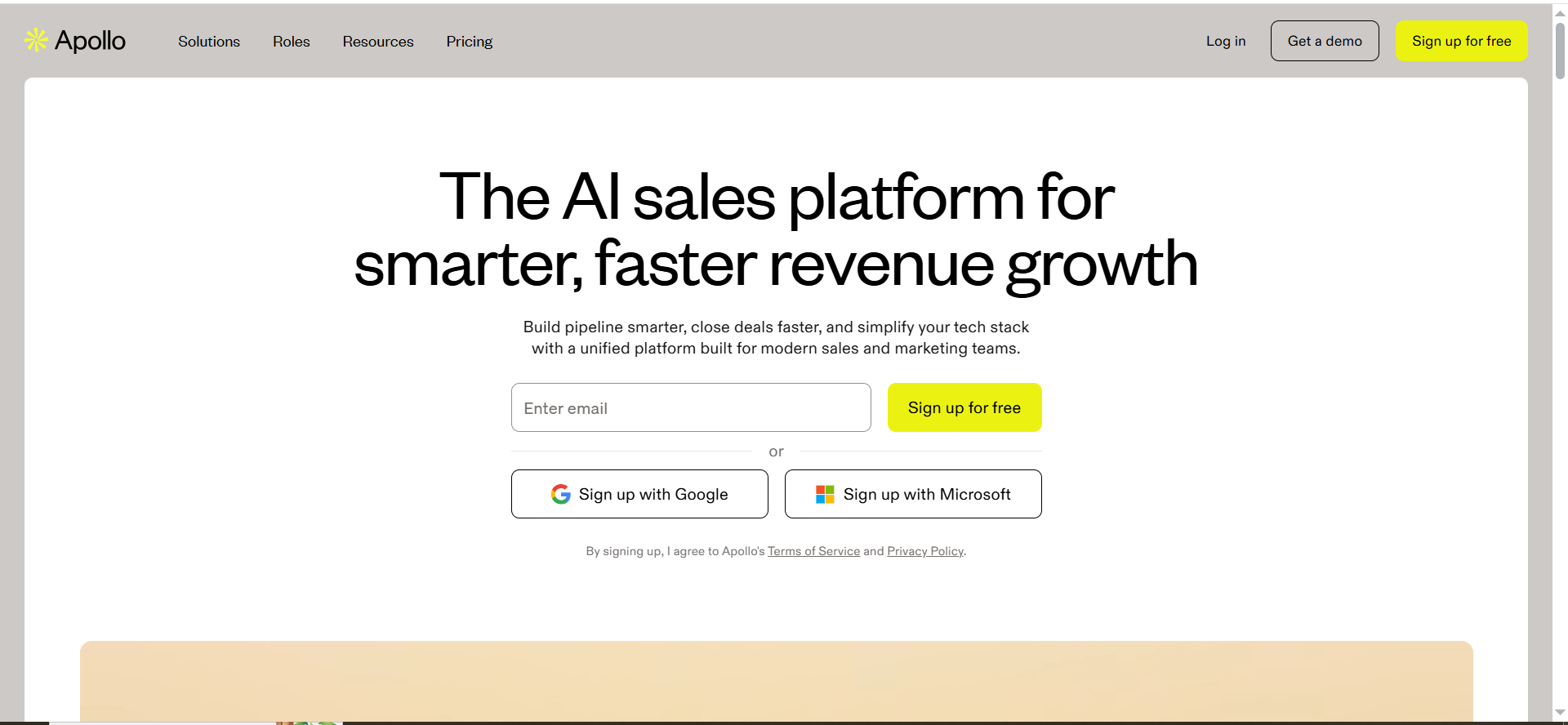
Apollo combines a B2B contact database with a sales engagement engine in one platform. It gives teams access to over 275 million contacts, email sequencing, a built-in dialer, LinkedIn integration, and AI-powered writing assistance, all without needing separate prospecting and outreach tools.
Why Teams Use It
Teams choose Apollo because it eliminates the gap between finding prospects and reaching them. Instead of buying a data provider, exporting contacts, importing them into a sequencer, and managing two subscriptions, Apollo lets reps search for prospects, build lists, and launch sequences from the same interface. The free plan makes it easy to test before committing.
What It Is Good For
Apollo excels for lean sales teams and startups that need a single tool for prospecting and outbound execution. It is particularly strong when the team does not have budget for separate data and engagement subscriptions, needs to iterate quickly on ICP targeting, and wants AI assistance for email drafting and personalization.
When It Is a Good Fit
Apollo fits best for startups, SMBs, and growing SaaS companies where the sales team is small, budgets are constrained, and speed matters more than enterprise governance. It is a strong choice for founders doing outbound themselves, SDR teams of 1 to 20, and growth marketers who blur the line between demand gen and outbound sales.
When It Is Not a Good Fit
Apollo is not ideal for large enterprise sales orgs that need advanced conversation intelligence, deal inspection, or forecasting baked into the engagement platform. Data accuracy can vary by region and industry, so teams targeting niche verticals may find gaps. The credit system means costs can escalate quickly for teams that burn through phone number lookups or verified emails at high volume.
How to Use It
Start by building prospect lists using Apollo's search filters, which cover company size, industry, job title, technology stack, and intent signals. Once you have a list, create a sequence with email steps, call tasks, and LinkedIn touches. Apollo's AI writing assistant can draft personalized first lines based on prospect data. The built-in dialer handles calls directly, and all activity syncs to your CRM.
Key Capabilities
B2B contact database with 275 million or more contacts. Multi-step sequences across email, phone, and LinkedIn. AI-powered email writing and personalization. Built-in dialer with call recording. Intent data and buyer signals. CRM sync with Salesforce, HubSpot, and others. Chrome extension for LinkedIn prospecting. Lead scoring and enrichment. Credit-based data access model.
Pricing
Free plan available with limited credits. Basic plan at $49 per user per month on annual billing. Professional plan at $79 per user per month with auto-dialer access. Organization plan at $119 per user per month with advanced features and higher credit limits. Monthly billing adds 15 to 25 percent. Credits expire each billing cycle. Phone number lookups cost 8 credits each, verified emails cost 1 credit.
Free Tier?
Yes. Apollo offers a free plan with limited monthly credits, basic sequencing, and access to the contact database. It is functional enough for solo founders or very small teams to test the platform before upgrading.
Downsides and Limitations
Credit system creates unpredictable costs for high-volume prospecting. Data accuracy varies by geography and vertical. Advanced features like the auto-dialer are gated behind higher tiers. No built-in conversation intelligence or deal tracking comparable to Outreach or Salesloft. The platform can feel cluttered as it tries to cover prospecting, engagement, and lightweight CRM in one interface.
Tool #4: Instantly
What It Does
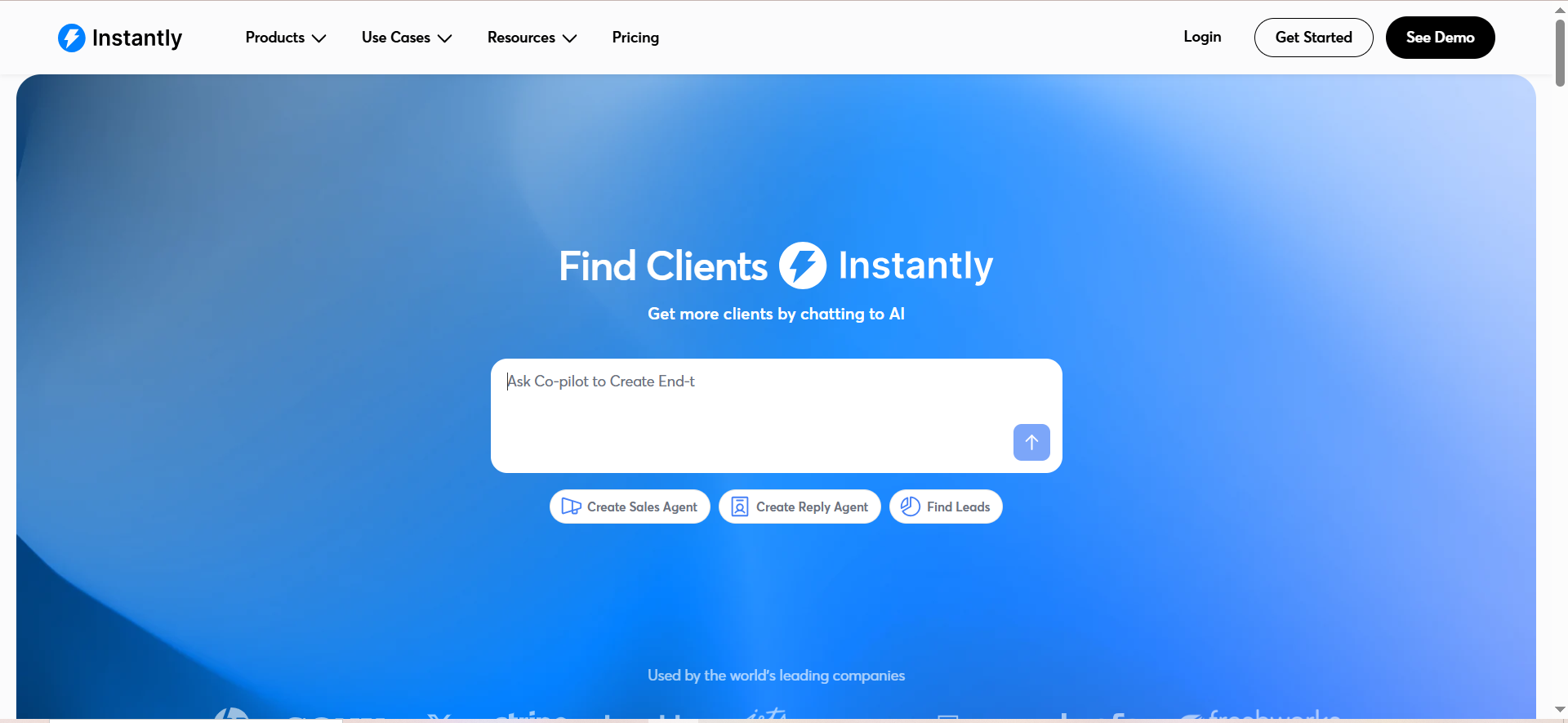
Instantly is a cold email platform built for high-volume outbound. It lets users connect unlimited email accounts, warm them automatically, and send personalized email sequences at scale. The platform focuses exclusively on email deliverability and sending volume, making it the tool of choice for agencies and teams that measure success in emails sent and replies received.
Why Teams Use It
Teams choose Instantly because the unlimited email account model eliminates per-mailbox costs that add up quickly with competitors. Built-in email warmup ensures deliverability stays high even when ramping new domains. The interface is simple, setup takes minutes, and the pricing makes it accessible for agencies managing outbound for multiple clients.
What It Is Good For
Instantly performs best for cold email campaigns that prioritize volume, deliverability, and cost efficiency. It is strongest when the team manages many sending domains, needs automated warmup to maintain inbox placement, and wants to scale email output without scaling costs proportionally.
When It Is a Good Fit
Instantly fits agencies running outbound for multiple clients, SDR teams focused exclusively on cold email, startups with limited budgets that need to maximize email volume, and solopreneurs testing outbound for the first time. It works well when phone and LinkedIn are not part of the primary outbound motion.
When It Is Not a Good Fit
Instantly is not the right choice for enterprise sales teams that need multi-channel sequencing across email, phone, and LinkedIn. It lacks conversation intelligence, deal tracking, and forecasting features. Teams that need CRM-grade pipeline management or call recording should look at Outreach or Salesloft instead. The modular pricing model means the real cost can be 3 to 4 times the base price once you add leads, CRM, and deliverability tools.
How to Use It
Connect your email accounts and let Instantly's warmup engine build sender reputation over 2 to 3 weeks. Import lead lists or use Instantly's built-in lead database to find prospects. Build email sequences with personalization variables, set sending limits per account, and launch campaigns. Monitor deliverability metrics, open rates, and reply rates from the dashboard. Use the inbox rotation feature to spread sends across multiple accounts automatically.
Key Capabilities
Unlimited email accounts and warmup on all paid plans. Automated inbox rotation across sending accounts. Email sequence builder with personalization variables. Built-in lead database with credit-based access. Deliverability monitoring and inbox placement testing. Campaign analytics with open, click, and reply tracking. API access for custom integrations. Agency-friendly multi-client workspace.
Pricing
Growth plan starts at $30 per month on annual billing with 5,000 emails and 1,000 active leads. Hypergrowth plan at $77.6 per month for 25,000 active leads and 125,000 emails. Light Speed plan at $286.3 per month for 500,000 or more emails. Lead database credits, CRM module, and inbox placement testing are sold separately. Enterprise pricing is custom.
Free Tier?
No. Instantly does not offer a permanent free plan, though limited-time trials are occasionally available.
Downsides and Limitations
Email-only platform with no phone dialer or LinkedIn integration in the core product. True cost is significantly higher than base price once leads, CRM, and deliverability modules are added. No conversation intelligence or deal tracking. Lead database quality is inconsistent compared to dedicated data providers like Apollo or ZoomInfo. Limited governance and compliance features for enterprise buyers.
Tool #5: Smartlead
What It Does
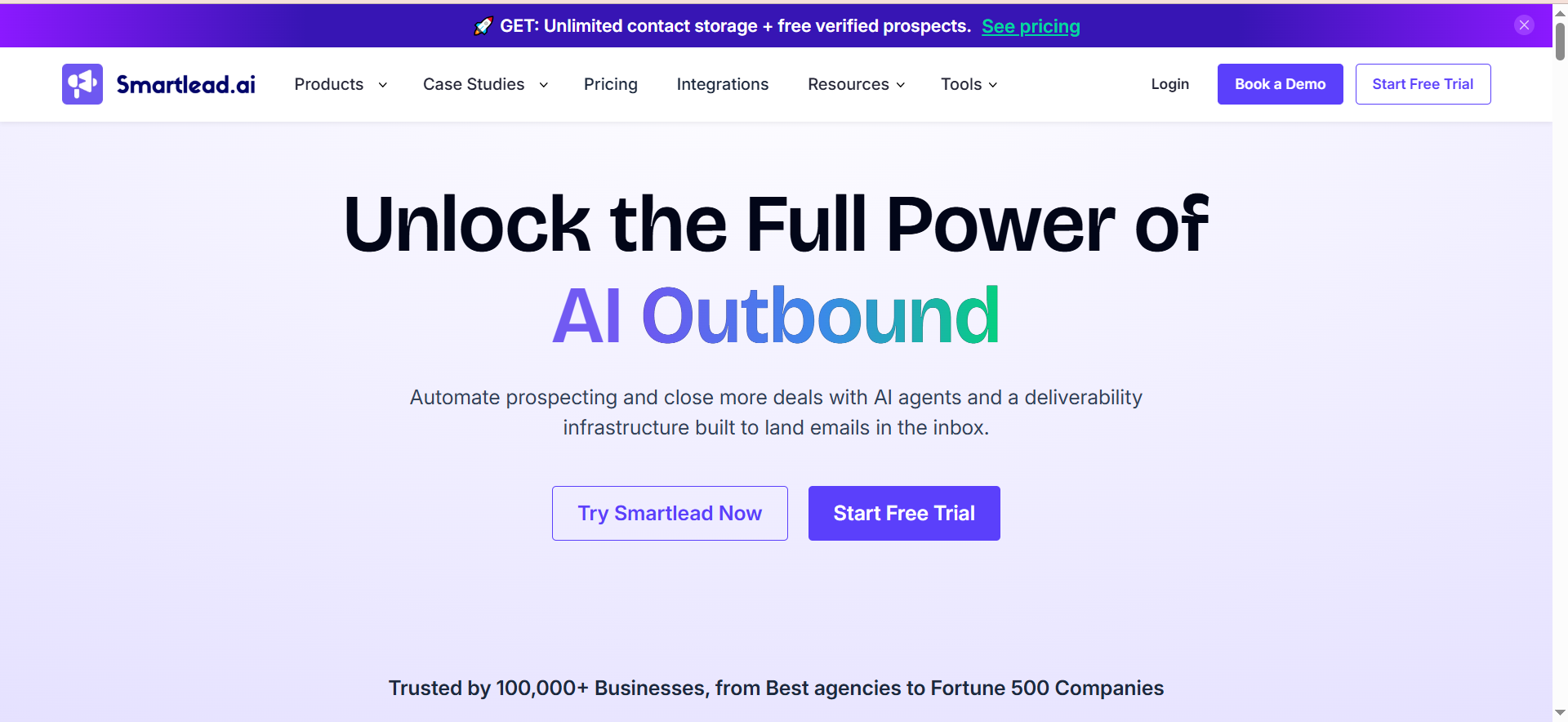
Smartlead is a cold email infrastructure platform designed for agencies and high-volume senders who need unlimited mailboxes, automated warmup, and white-label capabilities. It focuses on email deliverability, sending infrastructure, and agency workflows rather than multi-channel sales engagement.
Why Teams Use It
Agencies choose Smartlead because the white-label feature lets them brand the platform as their own and manage each client from a separate workspace. Unlimited email accounts and warmup on every plan mean agencies can scale client campaigns without per-mailbox fees eating into margins. The deliverability focus, including dynamic IP rotation, helps maintain inbox placement at high volume.
What It Is Good For
Smartlead excels for agencies managing cold email for multiple clients, teams that need granular control over sending infrastructure and deliverability, and operations where white-labeling the outreach platform is a business requirement. It is also strong for teams that need to manage dozens or hundreds of sending domains.
When It Is a Good Fit
Smartlead fits cold email agencies that need white-labeling and per-client workspaces, outbound teams managing large portfolios of sending domains, companies that prioritize deliverability engineering over multi-channel features, and budget-conscious teams that want unlimited seats and mailboxes.
When It Is Not a Good Fit
Smartlead is not suitable for sales teams that need phone, LinkedIn, or multi-channel cadences. It lacks conversation intelligence, deal management, and CRM-grade pipeline features. The interface is less polished than competitors like Instantly, and the learning curve for advanced deliverability features can be steep for teams without technical email operations experience.
How to Use It
Set up client workspaces if running an agency model, connect email accounts, and enable automated warmup. Import lead lists, build email sequences with smart rotation across sending accounts, and configure sending limits. Use the deliverability dashboard to monitor inbox placement, bounce rates, and domain reputation. White-label the interface for client-facing reporting.
Key Capabilities
Unlimited email accounts and warmup on all plans. White-label capability with per-client workspaces. Dynamic IP rotation for deliverability. Email sequence builder with smart sending distribution. Deliverability monitoring and reputation tracking. Unlimited team members on Pro plans and above. Email verification add-on. API access and webhook integrations. Agency-focused workflow management.
Pricing
Base plan at $39 per month for 2,000 contacts and 6,000 emails. Pro plan at $94 per month for 30,000 leads and 150,000 emails. Unlimited Smart at $174 per month. Unlimited Prime at $379 per month. Annual billing saves 17 percent. White-label add-on costs $29 per month per client workspace. Email verification credits purchased separately.
Free Tier?
No. Smartlead does not offer a free plan, though a 14-day free trial is available.
Downsides and Limitations
Email-only with no phone or LinkedIn support. Interface is less intuitive than Instantly. Advanced deliverability features have a learning curve. No conversation intelligence, deal tracking, or forecasting. White-label add-on costs can add up for agencies with many clients. Limited native CRM integrations compared to Outreach or Salesloft.
What Is a Sales Engagement Platform and Why Does It Matter in 2026?
A sales engagement platform is software that automates and organizes how sales teams interact with prospects across email, phone, LinkedIn, and other channels. It replaces the manual process of tracking who to contact, when to follow up, and what to say, with automated sequences that trigger based on time, prospect behavior, or rep actions.
In 2026, these platforms matter more than ever because buyer expectations have shifted. Prospects receive dozens of outbound messages daily, so the difference between a booked meeting and a deleted email often comes down to timing, personalization, and channel selection. AI-powered sales engagement platforms handle the mechanical work of sequencing and follow-up, freeing reps to focus on the conversations that actually move deals forward.
For B2B companies, SaaS startups, and agencies running outbound at scale, the right platform directly impacts meeting rates, pipeline velocity, and revenue per rep. Choosing the wrong one means wasted budget on features your team does not use, or worse, deliverability problems that tank your sender reputation.
How to Choose the Right Sales Engagement Platform for Your Team
The decision starts with your outbound motion. If your team runs multi-channel sequences across email, phone, and LinkedIn with deal cycles longer than 30 days, you need a platform like Outreach or Salesloft that combines engagement with deal tracking and conversation intelligence. If your motion is primarily cold email at high volume, Instantly or Smartlead delivers more value per dollar.
Next, consider team size and budget. Enterprise platforms charge $100 or more per user per month and require annual contracts, which makes sense when you have 20 or more reps and need governance controls. For teams under 10 reps, Apollo's all-in-one approach or Instantly's flat-rate model avoids the overhead of enterprise pricing.
Third, evaluate data needs. If your team already has a reliable data source, you need an engagement-only platform. If prospecting and engagement need to live in one tool, Apollo is the strongest option. Avoid paying twice for data by auditing what your current stack already covers.
Finally, test before you commit. Run the same sequence through your top two options using real leads and real messaging. Measure deliverability, reply rates, and the actual time reps spend managing the tool. Vendor demos always look good; production usage reveals the truth.
What Is the Difference Between a Sales Engagement Platform and a CRM?
A CRM like Salesforce or HubSpot is a system of record. It stores contact data, tracks deal stages, logs activity history, and generates reports on pipeline health. A sales engagement platform is a system of action. It automates the outreach itself, determining which prospects get which messages, when follow-ups fire, and how reps prioritize their daily workflow.
The two tools complement each other. Reps execute outbound sequences in the engagement platform, and the activity data syncs back to the CRM so managers have pipeline visibility. Trying to run outbound directly from a CRM is possible but painful, because CRMs were not built for sequencing, A/B testing, or deliverability management.
In practice, most B2B sales teams use both. The engagement platform handles the top of funnel, from first touch through meeting booked, and the CRM takes over once a prospect enters the pipeline as an opportunity. Outreach and Salesloft both integrate deeply with Salesforce and HubSpot to make this handoff seamless.
How Much Do AI Sales Engagement Platforms Actually Cost in 2026?
The real cost depends on your team size, outbound motion, and which features you actually need. Enterprise platforms like Outreach and Salesloft typically land between $80 and $170 per user per month after negotiation, with implementation fees ranging from $1,000 to $8,000. A 20-rep team on Outreach's Engage tier will spend roughly $65,000 to $85,000 per year.
Mid-market options like Apollo range from free to $119 per user per month, but the credit system means actual costs depend on how aggressively you prospect. A team burning through phone number lookups at 8 credits each can exhaust their allocation quickly and pay $0.20 per overage credit.
High-volume email platforms like Instantly and Smartlead start between $30 and $39 per month, but the modular pricing model means leads, CRM, and deliverability tools are sold separately. Real monthly spend for an active agency often runs 3 to 4 times the base subscription.
The most common mistake is comparing sticker prices without accounting for implementation, add-ons, credit overages, and annual price escalation clauses. Budget for total cost of ownership, not list price.
Can AI Sales Engagement Platforms Replace Cold Calling?
No, and that is not the goal. AI sales engagement platforms make cold calling more effective by telling reps who to call, when to call, and what context to reference, but they do not eliminate the need for phone outreach entirely.
Platforms like Outreach and Salesloft include built-in dialers and conversation intelligence that record calls, transcribe them, and surface coaching insights. Apollo offers a dialer on its Professional plan and above. These features reduce the friction of phone outreach and help reps prepare for calls using engagement data from prior email and LinkedIn touches.
The platforms that focus exclusively on email, like Instantly and Smartlead, do not include phone capabilities. If phone outreach is a meaningful part of your motion, you need a multi-channel platform or a separate dialer integration.
The real value of AI in this context is prioritization. Instead of cold calling a random list, reps call prospects who opened emails three times, clicked a link, or visited the pricing page. That signal-driven approach converts at significantly higher rates than blind dialing.
What Integrations Should a Sales Engagement Platform Have?
At minimum, the platform must integrate with your CRM. Salesforce and HubSpot are table stakes. Beyond that, the integrations that matter most depend on your stack.
If you use a separate data provider like ZoomInfo or Cognism, the platform needs a clean import path so reps do not waste time on manual CSV uploads. If your team uses Slack for internal communication, a Slack integration that alerts reps to hot leads or manager approvals saves time. If marketing runs campaigns through Marketo or HubSpot Marketing Hub, a two-way sync prevents reps from emailing prospects who are already in a nurture sequence.
Outreach and Salesloft have the broadest integration ecosystems, covering CRMs, data providers, conversation intelligence tools, and marketing automation platforms. Apollo integrates with most major CRMs and email providers. Instantly and Smartlead are more limited, focusing on email infrastructure with API access for custom integrations.
The integration that gets overlooked most often is the one between your engagement platform and your email infrastructure. Deliverability depends on proper SPF, DKIM, and DMARC configuration, and the platform needs to support custom tracking domains to avoid shared IP reputation risks.
How Do AI Features Actually Improve Sales Engagement?
AI in sales engagement platforms works across three layers: writing, prioritization, and analysis.
On the writing side, tools like Apollo and Outreach use AI to draft personalized emails based on prospect data, company news, and engagement history. This saves reps 10 to 15 minutes per prospect on research and writing, which compounds across hundreds of touches per week.
On the prioritization side, AI scores prospects based on engagement signals like email opens, link clicks, website visits, and reply sentiment, and surfaces the highest-intent leads for immediate follow-up. This means reps spend their limited phone time on prospects who are already warm.
On the analysis side, conversation intelligence powered by AI transcribes calls, identifies talk-to-listen ratios, flags competitor mentions, and generates coaching insights. Managers can review AI-generated summaries instead of listening to full recordings, which makes coaching scalable for the first time.
The catch is that AI features vary dramatically by platform. Outreach and Salesloft offer the deepest AI across all three layers. Apollo provides strong writing assistance and basic prioritization. Instantly and Smartlead use AI primarily for deliverability optimization and send-time selection.
Should You Use One Platform or Build a Multi-Tool Outbound Stack?
The answer depends on your team's maturity and budget. A single platform like Apollo or Outreach simplifies operations, reduces integration risk, and gives managers one place to see all activity data. This approach works well for teams that want speed and simplicity.
A multi-tool stack, for example pairing ZoomInfo for data with Instantly for email and Orum for phone, can outperform a single platform on specific capabilities. Dedicated tools are often better at their core function than any one platform that tries to do everything. The tradeoff is complexity: more integrations to maintain, more subscriptions to manage, and more places for data to break.
For teams under 20 reps, start with a single platform and expand only when you hit a clear capability gap. For teams over 50 reps, a multi-tool stack with purpose-built components often delivers better results, if you have the ops support to manage it.
The worst outcome is a stack where tools overlap and no one knows which is the source of truth. Before adding a new tool, map which jobs each existing tool covers and confirm the new addition fills a gap rather than creating a duplicate.
FAQs
Apollo is the strongest option for startups because it combines a B2B contact database with email sequencing, a dialer, and LinkedIn prospecting in one tool starting at $49 per user per month. The free plan lets founders test outbound before committing budget. Instantly is a strong alternative if the outbound motion is email-only and budget is the primary constraint.
Technically yes, but it creates problems as you grow. Sales engagement platforms track activity like emails sent and calls made, but they are not designed to manage deal stages, track revenue, or generate pipeline reports. Most teams start with a lightweight CRM like HubSpot's free tier alongside their engagement platform and upgrade as deal volume increases.
Expect 4 to 8 weeks to see meaningful data. The first 2 to 3 weeks go to setup, including CRM integration, sequence building, email warmup, and rep training. The next 4 to 6 weeks generate enough campaign data to evaluate open rates, reply rates, and meeting conversion. Teams that skip the warmup phase or launch with untested messaging see artificially poor results in the first month.
Yes, but only when done well. Generic blast emails to purchased lists are filtered aggressively by modern spam systems. Effective cold email in 2026 requires proper domain configuration, gradual warmup, personalized messaging, and tight targeting. Platforms like Instantly and Smartlead make the technical infrastructure easier, but the messaging strategy still determines results.
There is no hard minimum. Solo founders use Apollo's free plan or Instantly's Growth plan effectively. However, the ROI increases significantly with team size because managers gain visibility into rep activity, coaching becomes data-driven, and sequence optimization benefits from higher sample sizes. Most enterprise platforms like Outreach and Salesloft make commercial sense starting at 10 to 20 reps.
Platforms approach deliverability differently. Instantly and Smartlead include unlimited email warmup and inbox rotation as core features, giving users direct control over sender reputation. Outreach and Salesloft rely more on your existing email infrastructure and offer deliverability monitoring rather than active warmup. Apollo provides basic warmup but does not match the deliverability tooling of dedicated email platforms.
Outreach, Salesloft, and Apollo include LinkedIn steps in their sequences, but these are typically task-based reminders rather than full automation. Reps still need to manually send connection requests and messages through LinkedIn to comply with LinkedIn's terms of service. Full LinkedIn automation requires a separate tool, and most sales engagement platforms deliberately avoid it to protect users from LinkedIn account restrictions.