Best AI Tools For Ecommerce ROAS Reporting (2026)
Which ai tools options actually fit ecommerce roas reporting and which ones create extra cost, handoff friction, or weak output.


This playbook helps product managers and growth marketers compare the best ai tools options for ecommerce roas reporting. It breaks down where intercom-fin, zendesk-ai stand out, when alternatives such as intercom, zendesk make more sense, and which setup fits B2B companies and B2C brands and small businesses and mid-market companies.
If you run an ecommerce store and want to know exactly how much revenue your AI-powered customer engagement stack is generating per dollar spent, you need tools that go beyond basic ticket tracking. The right AI platform ties support automation directly to revenue outcomes — tracking resolution costs, measuring deflection savings, and attributing conversions from pre-sale interactions back to ad spend.
We compared five platforms that ecommerce teams actually use to measure and improve ROAS on their customer operations: Intercom Fin, Zendesk AI, Ada, Forethought, and Gorgias. Each handles automation differently, prices differently, and reports on ROI differently. Below, you will find which one fits your store size, tech stack, and reporting needs — and which ones look good in demos but fall apart when you need real attribution data.
The short answer: Gorgias is the strongest pick for Shopify-native ecommerce brands that want revenue attribution built into support. Intercom Fin wins on resolution intelligence and pay-per-resolution transparency. Zendesk AI suits enterprise teams already embedded in the Zendesk ecosystem. Ada fits high-volume, multi-channel operations willing to invest in a premium platform. Forethought is a strong intent-routing layer, though its recent acquisition by Zendesk introduces uncertainty.
Table of Contents
Best AI Tools For Ecommerce ROAS Reporting (Quick Comparison)
| Feature | Intercom Fin | Zendesk AI | Ada | Forethought | Gorgias |
|---|---|---|---|---|---|
| Best For | SaaS + ecommerce with in-app messaging | Enterprise multi-channel support | High-volume enterprise automation | Intent routing + agent assist | Shopify-native ecommerce |
| Pricing Model | $0.99/resolution | ~$50/agent/mo add-on | Custom (starts ~$30K/yr) | Custom (~$56K/yr median) | $10–$900/mo + $0.90–1.00/AI resolution |
| Revenue Attribution | Limited | Limited | ROI reporting available | Ticket deflection metrics | Native revenue tracking |
| Ecommerce Integrations | Shopify, WooCommerce (via API) | Shopify sidebar widget | Multi-platform via API | 70+ integrations | Deep Shopify, BigCommerce, Magento |
| AI Resolution Rate | ~67% average | Varies by setup | Up to 80% | 40–60% | Up to 60% |
| Free Tier | 14-day trial | Trial available | No | No | Starter at $10/mo |
Best AI Tools For Ecommerce ROAS Reporting - Quick Comparison
Tool #1: Intercom Fin
What It Does
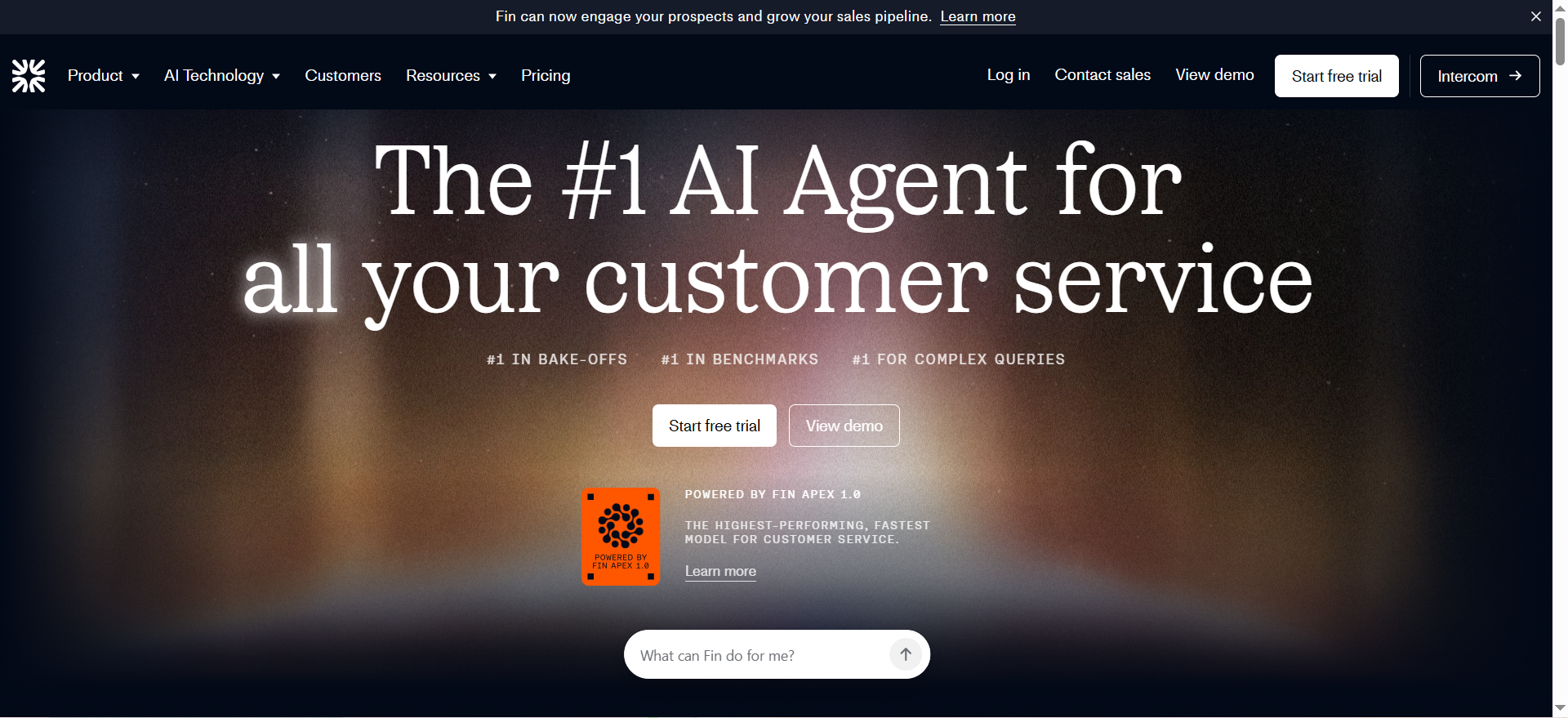
Intercom Fin is an AI-powered customer service agent that sits inside the Intercom platform and resolves support conversations end-to-end. It pulls answers from your knowledge base, help center articles, and custom training data to handle inquiries across chat, email, and social channels without human intervention.
Why Ecommerce Teams Use It
Ecommerce brands choose Intercom Fin because its pay-per-resolution pricing model makes ROAS calculation straightforward. You pay $0.99 only when Fin fully resolves a customer issue — no charge for conversations that get handed off to a human agent. This means every dollar spent on Fin has a direct, trackable outcome, which simplifies ROI reporting for performance marketing teams that need to justify support automation costs alongside ad spend.
What It Is Good For
Intercom Fin excels at handling repetitive pre-sale and post-sale queries — order status checks, return policy questions, sizing guides, and shipping FAQs. Its ability to learn from your existing content means setup time is minimal compared to platforms that require extensive intent mapping. The platform also offers AI-powered analytics that help you understand which topics Fin handles well and where human agents still need to step in.
When It Is a Good Fit
Intercom Fin is a strong fit for mid-market ecommerce brands doing 500 to 5,000 support conversations per month that want predictable, transparent AI costs. It works especially well for teams already using Intercom for in-app messaging and onboarding, since Fin plugs directly into the existing workflow without requiring a separate tool.
When It Is Not a Good Fit
Intercom Fin is not ideal for Shopify-heavy stores that need deep order management inside the support dashboard. Unlike Gorgias, Fin cannot natively edit orders, process refunds, or pull real-time inventory data without custom API work. It also lacks native revenue attribution — you will not see "Fin generated $X in recovered carts" without building that reporting layer yourself.
How to Use It
Sign up for an Intercom plan (starting at $29/seat/month with annual billing, or $39/seat/month billed monthly), enable Fin in your workspace settings, connect your knowledge base and help center content, and set resolution rules for when Fin should hand off to a human agent. Test with a small segment of traffic before rolling out across all channels.
Key Capabilities
Intercom Fin trains on your knowledge base, policies, and past conversations to generate accurate responses. It supports multi-channel deployment across chat, email, and social. The platform includes AI-driven simulation testing so you can evaluate Fin's performance before going live. Conversation analytics provide resolution rates, topic breakdowns, and handoff reasons.
Pricing
Intercom Fin costs $0.99 per resolution. A resolution counts when the customer confirms their question was answered or when the conversation ends without further requests. At least one paid Intercom seat is required (plans range from $29 to $139/seat/month with annual billing; monthly billing starts at $39/seat/month). There is no minimum resolution commitment when using Fin inside Intercom, but standalone deployments with other helpdesks have a $49.50/month minimum.
Free Tier?
Yes — Intercom offers a 14-day free trial that includes Fin. No free tier after the trial period.
Downsides and Limitations
No native ecommerce revenue attribution. Limited Shopify integration depth compared to Gorgias. Resolution-based pricing can become expensive at high volumes (10,000+ conversations/month). Requires an Intercom seat even if you only want Fin, which adds to the base cost. Custom API work needed for order management actions like refunds and cancellations.
Tool #2: Zendesk AI
What It Does
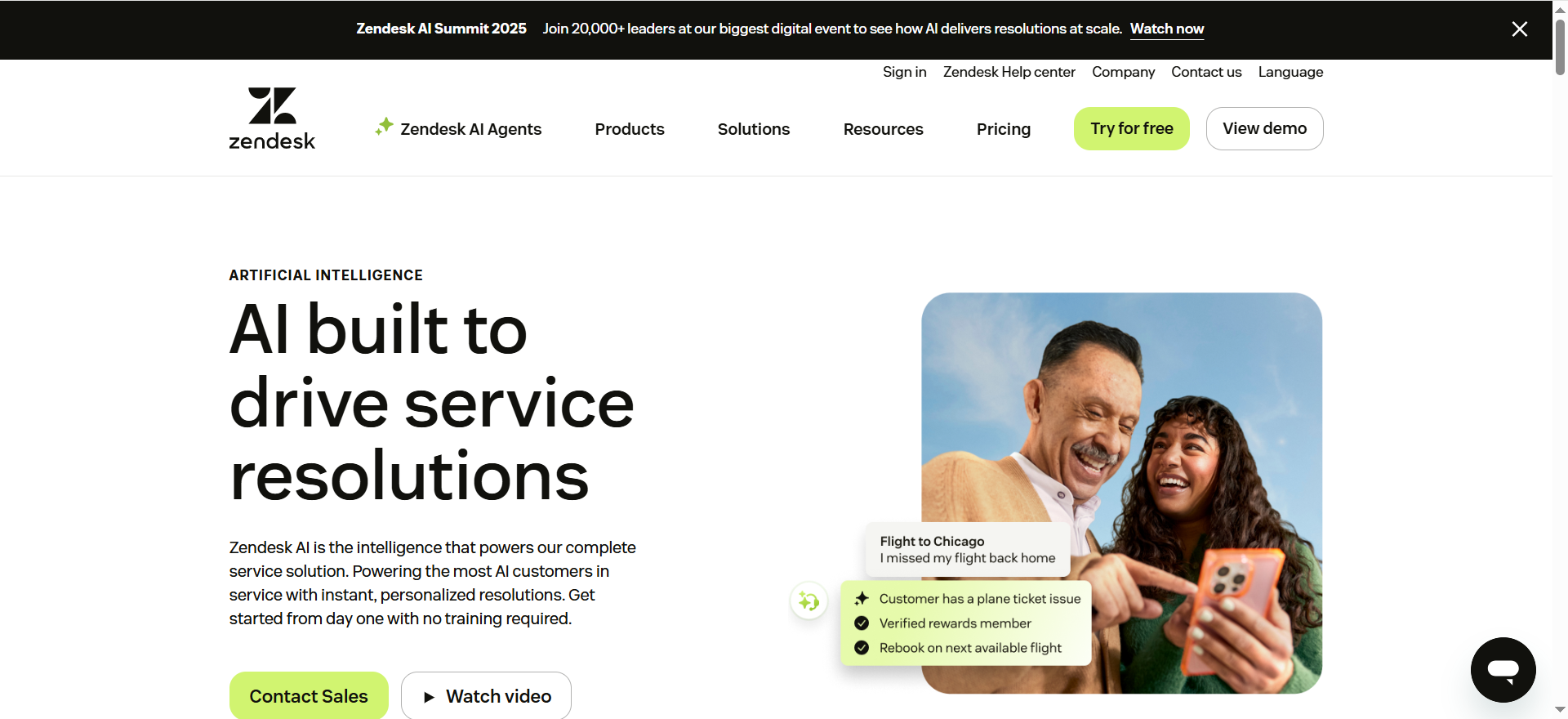
Zendesk AI is an artificial intelligence layer built into the Zendesk Suite that automates ticket routing, generates responses from your knowledge base, and provides agent assist capabilities. It comes in two tiers — Essential (included with all Suite plans) and Advanced (a paid add-on) — each offering different levels of automation and customization.
Why Ecommerce Teams Use It
Ecommerce teams already embedded in the Zendesk ecosystem use Zendesk AI because it adds automation without requiring a platform migration. The Advanced tier includes an AI agent builder for creating custom conversation flows, API integrations for connecting to external systems like Shopify, Salesforce, and Jira, and advanced analytics that track deflection rates and cost savings per automated resolution.
What It Is Good For
Zendesk AI is strong at enterprise-scale ticket management where you need granular routing rules, SLA enforcement, and cross-department workflows. Its reporting suite is one of the most detailed in the category, giving you breakdowns of AI vs. human resolution rates, average handling time savings, and cost-per-ticket trends over time.
When It Is a Good Fit
Zendesk AI fits enterprise ecommerce operations running 10,000+ tickets per month across multiple channels and languages. It is the right pick when your team needs complex workflow automation, robust compliance controls, and detailed reporting for internal stakeholders who evaluate support costs as part of overall ROAS.
When It Is Not a Good Fit
Zendesk AI is not built for ecommerce-first workflows. It has no native product recommendations, no cart recovery, no proactive sales messaging, and no revenue attribution. Its Shopify integration is a sidebar widget that pulls order data into the ticket view — functional but not deep. Small ecommerce teams will find the setup complexity and cost disproportionate to the value delivered.
How to Use It
If you are already on a Zendesk Suite plan, enable the Essential AI features in your admin settings. For Advanced capabilities, purchase the add-on (approximately $50/agent/month), then configure AI agent flows, connect APIs, and set up routing rules. Test automated responses on a subset of ticket types before expanding.
Key Capabilities
Essential tier includes generative responses from knowledge base content, basic ticket classification, and suggested replies for agents. Advanced tier adds custom conversation flows (including hybrid generative + scripted), API access for actions like order lookups and refund processing, and advanced analytics dashboards.
Pricing
Zendesk Suite plans start at $55/agent/month (Suite Team) and go up to $115/agent/month (Suite Professional) and $169/agent/month (Suite Enterprise). Zendesk also offers standalone Support plans starting at $19/agent/month for email-only ticketing. The Advanced AI add-on costs approximately $50/agent/month. AI resolution overages beyond included limits cost $1.50 to $2.00 each.
Free Tier?
No permanent free tier. Zendesk offers a free trial to test the platform before committing.
Downsides and Limitations
No native ecommerce revenue attribution or ROAS tracking. Shopify integration is surface-level compared to Gorgias. Advanced AI add-on pricing adds significantly to per-agent costs. Setup complexity is high for teams without dedicated Zendesk administrators. The recent acquisition of Forethought may change the AI roadmap, creating uncertainty for long-term planning.
Tool #3: Ada
What It Does
Ada is an AI-native customer service automation platform that deploys AI agents across chat, email, voice, and social channels. It uses a proprietary Reasoning Engine to resolve support inquiries end-to-end, with multi-step workflow execution through Playbooks and integrations with 13+ helpdesk and contact center systems.
Why Ecommerce Teams Use It
Large ecommerce brands choose Ada because it can handle high conversation volumes with resolution rates up to 80%, significantly reducing the cost per interaction. Ada's AI agents understand customer intent, plan multi-step workflows, call APIs, and take actions like processing returns or updating orders — all without human intervention. Brands like Loop Earplugs have reported a 357% ROI after deploying Ada's AI agent.
What It Is Good For
Ada excels at multi-channel, high-volume support automation where consistency across chat, email, voice, and social is critical. Its Playbooks feature lets teams define multi-step standard operating procedures that the AI follows, making it possible to automate complex workflows like return processing, warranty claims, and subscription management without rigid scripted frameworks.
When It Is a Good Fit
Ada fits enterprise ecommerce operations processing thousands of conversations daily across multiple channels and languages. It is ideal for brands that need voice support alongside text-based channels, compliance-grade security (SOC 2 Type II, HIPAA, GDPR, CCPA, PCI), and the ability to measure AI cost savings against human agent benchmarks.
When It Is Not a Good Fit
Ada is not a fit for small to mid-market ecommerce brands. Starting at approximately $30,000 per year with no published pricing, it requires a significant budget commitment. Ada uses conversation-based pricing — you pay for every interaction, including ones that fail and escalate to humans. This makes cost predictability harder than resolution-based models like Intercom Fin's.
How to Use It
Contact Ada's sales team for a custom quote based on your conversation volume and channels. Once onboarded, connect Ada to your helpdesk (Zendesk, Salesforce, Gorgias, etc.), train the AI on your knowledge base and SOPs, configure Playbooks for common workflows, and deploy across your chosen channels.
Key Capabilities
Ada's Reasoning Engine powers intent understanding and multi-step problem solving. Playbooks let teams define SOPs the AI follows for complex tasks. The Conversation Hub supports deployment across chat, email, voice, SMS, and social. AI Email resolves up to 70% of email inquiries automatically. Integrations with 13+ helpdesk and contact center platforms enable seamless handoffs.
Pricing
Ada does not publish pricing. Industry reports indicate starting points around $30,000/year, with enterprise contracts often reaching mid-to-high five figures. Pricing is based on conversation volume and feature tier, with additional costs for implementation, integrations, and premium support. Ada uses conversation-based pricing, meaning you pay for every interaction regardless of outcome.
Free Tier?
No. Ada does not offer a free tier or a self-serve trial. All plans require a sales conversation and custom contract.
Downsides and Limitations
High price floor excludes small and mid-market ecommerce teams. Conversation-based pricing means you pay for failed interactions, not just resolutions. No self-serve onboarding — requires sales engagement and implementation support. Revenue attribution is available but requires configuration. The platform's enterprise focus means simpler ecommerce use cases may not justify the investment.
Tool #4: Forethought
What It Does
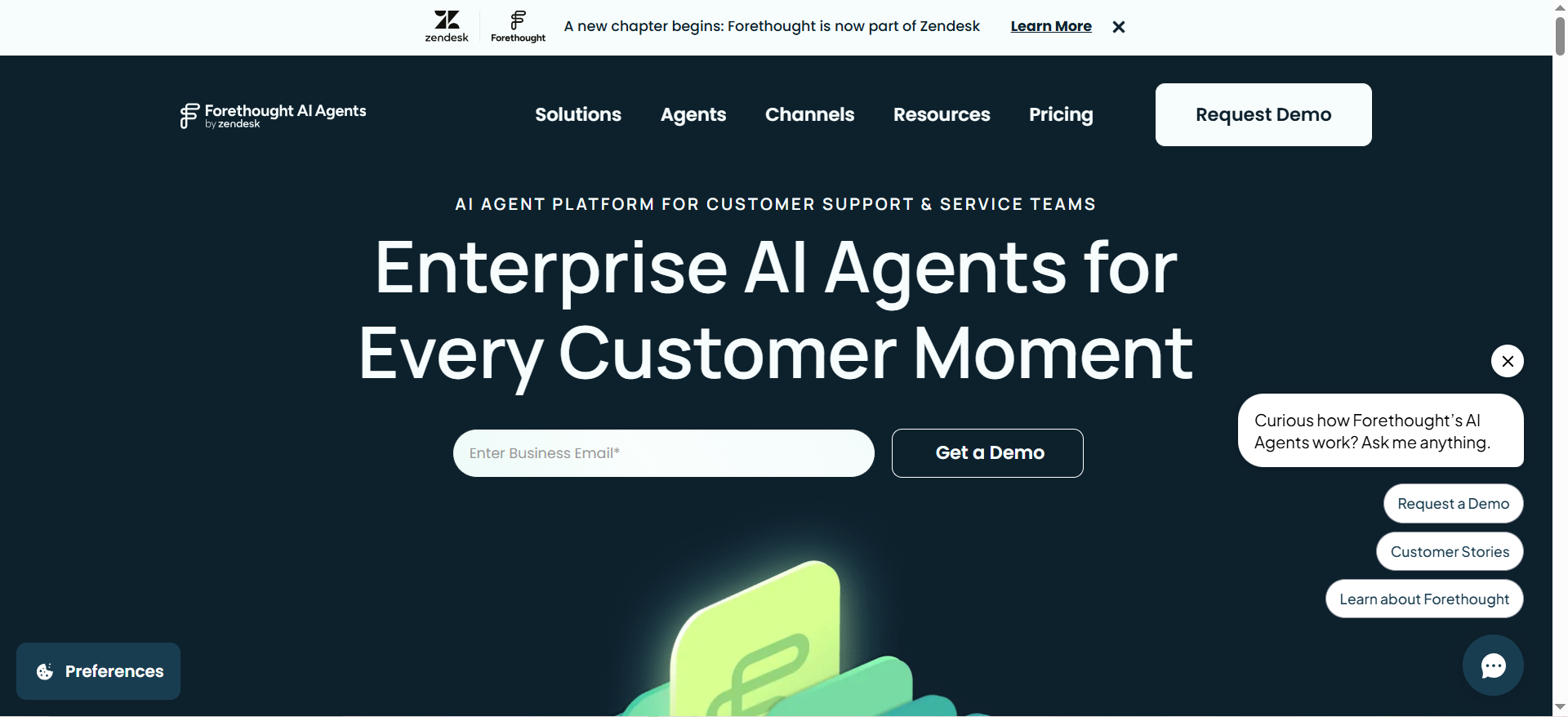
Forethought is an AI-native platform for enterprise customer support that uses a multi-agent architecture to resolve issues across chat, email, voice, SMS, and web channels. Its four AI agents — Discover (insights), Solve (omnichannel resolution), Triage (smart routing), and Assist (agent copilot) — work together to automate support workflows from initial contact to resolution.
Why Ecommerce Teams Use It
Ecommerce teams use Forethought because its Triage agent is one of the best intent classifiers in the market, automatically categorizing and routing tickets to the right team or workflow based on customer intent, sentiment, and priority. This reduces misroutes that waste agent time and slow down resolution — both of which directly impact support cost-per-ticket and overall ROAS.
What It Is Good For
Forethought's strongest advantage is its ability to layer on top of your existing helpdesk without replacing it. It works with Zendesk, Salesforce, Freshworks, Kustomer, and others, adding intelligent routing, automated responses, and agent assist capabilities. The Discover agent surfaces insights about ticket trends, helping teams identify which product issues or policy gaps are driving the most support volume.
When It Is a Good Fit
Forethought fits mid-to-enterprise ecommerce brands that need to add AI capabilities to an existing helpdesk without a full platform migration. It is especially strong for teams that process high email volumes and need smart triage to reduce manual classification work.
When It Is Not a Good Fit
Forethought's acquisition by Zendesk (completed March 26, 2026) introduces significant platform risk. While Zendesk has stated that Forethought will remain available to non-Zendesk customers, the long-term roadmap is unclear. Teams evaluating a multi-year commitment should weigh this uncertainty. Additionally, Forethought does not offer native ecommerce integrations like Shopify order management.
How to Use It
Contact Forethought's sales team for a custom quote. Once contracted, integrate with your existing helpdesk, train the AI on your knowledge base and ticket history, configure Triage rules, and deploy Solve across your channels. The onboarding process typically requires implementation support from Forethought's team.
Key Capabilities
Solve handles omnichannel AI resolution across chat, email, voice, SMS, and web. Triage classifies tickets by intent, sentiment, and priority for smart routing. Assist provides real-time suggestions and context to human agents. Discover surfaces ticket trend insights and identifies the root causes driving support volume. More than 70 integrations across helpdesks, CRMs, knowledge bases, and data warehouses.
Pricing
Forethought does not publish pricing. Third-party benchmarks report median annual contract values around $56,000 to $60,000 per year, with significant variation based on company size, channels, and add-ons. Pricing uses a blend of platform access fees and committed usage tied to deflection and ticket volumes.
Free Tier?
No. Forethought requires a sales conversation and custom contract. No self-serve trial available.
Downsides and Limitations
Zendesk acquisition creates long-term platform uncertainty. No published pricing makes budgeting difficult. No native ecommerce integrations for order management. Enterprise-only pricing excludes small and mid-market teams. Onboarding requires implementation support, adding to total cost of ownership.
Tool #5: Gorgias
What It Does
Gorgias is a conversational AI platform built specifically for ecommerce. It combines a helpdesk, AI support agent, and shopping assistant in one platform, with deep native integrations for Shopify, Shopify Plus, BigCommerce, and Magento. The AI agent handles both post-purchase support (order tracking, returns, refunds) and pre-purchase assistance (product recommendations, sizing help).
Why Ecommerce Teams Use It
Ecommerce teams choose Gorgias because it is the only platform in this comparison that offers native revenue attribution. Gorgias tracks which support interactions lead to conversions, showing exactly how much revenue your support team — human and AI — generates. This makes ROAS calculation on customer operations straightforward: you can see the cost per ticket, cost per AI resolution, and revenue generated from assisted conversations in a single dashboard.
What It Is Good For
Gorgias excels at Shopify-native workflows where agents need to view order history, edit orders, process refunds, and cancel shipments without leaving the support dashboard. The AI agent resolves up to 60% of support chats autonomously, handling returns, order status, and product questions. The Shopping Assistant role proactively engages pre-purchase visitors with product recommendations, increasing conversion rates by up to 2.5x according to Gorgias's published data.
When It Is a Good Fit
Gorgias is the right fit for Shopify and Shopify Plus stores of any size — from small brands on the $10/month Starter plan to enterprise operations on custom pricing. It is especially strong for teams that need revenue attribution, deep ecommerce integrations, and AI automation without enterprise-level pricing.
When It Is Not a Good Fit
Gorgias is not ideal for non-ecommerce use cases. If your business is SaaS, B2B services, or any model where support is not tied to product orders, Gorgias's ecommerce-specific features will not deliver value. It also lacks the enterprise workflow complexity of Zendesk or the multi-channel voice capabilities of Ada.
How to Use It
Sign up for a Gorgias plan, connect your Shopify (or BigCommerce/Magento) store, import your knowledge base and macros, enable the AI agent add-on, and configure automation rules for common ticket types. The setup process is straightforward and does not require implementation support for most ecommerce use cases.
Key Capabilities
Native Shopify, BigCommerce, and Magento integrations with full order management inside the support dashboard. AI agent resolves up to 60% of chats with brand-aligned responses. Shopping Assistant drives pre-sale conversions with personalized product recommendations. Revenue attribution tracks support-driven sales and ROAS. AI tagging, summaries, and translations for agent productivity. Automation rules for ticket routing, prioritization, and auto-responses.
Pricing
Starter: $10/month for 50 tickets. Basic: $50/month for 300 tickets. Pro: $360/month for 2,000 tickets. Advanced: $900/month for 5,000 tickets. Enterprise: custom pricing. The AI Agent add-on costs approximately $0.90 to $1.00 per automated resolution. Overage tickets cost $0.32 to $0.40 each depending on your plan tier.
Free Tier?
No permanent free tier, but the Starter plan at $10/month is the most accessible entry point in this comparison. Trial available.
Downsides and Limitations
AI resolution rate (up to 60%) is lower than Ada's claimed 80%. Limited to ecommerce use cases — not suitable for SaaS or B2B service businesses. No voice channel support. Enterprise features like advanced reporting and custom integrations require higher-tier plans. The AI agent is an add-on cost on top of base plan pricing.
How to Choose the Right AI Tool for Ecommerce ROAS Reporting
Choosing the right AI tool for ecommerce ROAS reporting depends on three factors: your ecommerce platform, your conversation volume, and how important native revenue attribution is to your reporting stack.
If you run a Shopify store and need to see exactly how much revenue your support team generates, Gorgias is the clear winner. It is the only platform here with native revenue attribution, deep order management, and pricing that scales from small stores to enterprise operations. For a broader comparison of AI-powered support platforms for online stores, see our guide to the best AI customer service agents for ecommerce.
If you already use Intercom for product messaging and want to add AI resolution with transparent per-resolution pricing, Intercom Fin delivers the most predictable cost model. You know exactly what you pay for every resolved conversation, which makes ROAS math simple.
If you are an enterprise operation on Zendesk with complex workflows and compliance requirements, Zendesk AI's Advanced tier adds intelligent automation without requiring a platform switch. The Forethought acquisition may strengthen this further, but the transition period introduces risk.
If you process high volumes across chat, email, and voice and need enterprise-grade security, Ada is the most capable multi-channel option — but the price tag and conversation-based billing model require careful cost modeling.
If you need the best intent routing and ticket classification layered on top of your existing helpdesk, Forethought's Triage agent is best-in-class — but evaluate the Zendesk acquisition risk before signing a multi-year contract.
What Is Ecommerce ROAS Reporting and Why Does It Matter
Ecommerce ROAS reporting measures the return on ad spend across your customer acquisition and retention channels. Traditional ROAS focuses on ad platforms — how much revenue each dollar of ad spend generates on Meta, Google, or TikTok. But modern ecommerce ROAS reporting extends to your entire customer operations stack, including customer support, where AI-powered tools can reduce cost per interaction, increase conversion rates from pre-sale support, and improve retention through faster resolution times.
The tools in this guide sit at the intersection of customer support and revenue operations. They automate support workflows, reduce headcount costs, and — in the case of Gorgias — directly attribute revenue to support interactions. For ecommerce brands spending five or six figures per month on customer acquisition, understanding the true cost and revenue impact of every customer touchpoint is not optional. It is the difference between a profitable operation and one that leaks margin through inefficient support. If you are also evaluating how AI can improve your store's search visibility, our guide to the best AI tools for ecommerce SEO and AI visibility covers that side of the investment.
How AI Customer Support Tools Impact Ecommerce ROAS
AI customer support tools impact ecommerce ROAS in three measurable ways. First, they reduce cost per ticket by automating repetitive inquiries — order tracking, return status, shipping questions — that would otherwise require a paid human agent. Second, they increase conversion rates by engaging pre-purchase visitors with instant answers to product questions, sizing guidance, and availability checks. Third, they improve customer lifetime value by resolving issues faster, reducing churn, and creating positive post-purchase experiences that drive repeat orders.
The ROAS impact is most visible when you calculate support cost savings as a percentage of customer acquisition cost. If you spend $30 to acquire a customer through paid ads and $3.10 per human support ticket (Gorgias's published industry benchmark), automating 60% of those tickets at $0.90 to $1.00 per AI resolution saves $1.24 to $1.32 per automated interaction. Across thousands of monthly tickets, these savings directly improve your blended ROAS.
How to Calculate ROAS on AI Customer Support Tools
Calculating ROAS on your AI customer support stack requires four data points: total AI tool cost per month, number of tickets resolved by AI, average cost of a human-handled ticket, and revenue attributed to support-assisted conversions (if your platform tracks this). The formula is straightforward: ROAS = (Human ticket cost savings + Support-attributed revenue) / Total AI tool cost. A ROAS above 1.0 means your AI investment is paying for itself; most well-configured ecommerce support stacks deliver 2x to 4x ROAS within six months of deployment.
What Features to Look for in AI ROAS Reporting Tools
The features that matter most for ecommerce ROAS reporting are revenue attribution, cost-per-resolution tracking, ecommerce platform integrations, and deflection rate analytics. Revenue attribution shows you how much revenue your support interactions generate — Gorgias is the only tool in this guide that tracks this natively. Cost-per-resolution tracking tells you exactly what each automated interaction costs, making it easy to compare AI costs against human agent costs. Deep ecommerce integrations let agents and AI handle orders, refunds, and inventory without switching tools. Deflection rate analytics show what percentage of conversations AI resolves without human help, which is the core metric for calculating support cost savings.
Intercom Fin vs Gorgias for Ecommerce ROAS Reporting
Intercom Fin and Gorgias approach ecommerce support from different angles. Intercom Fin is a general-purpose AI agent that works well for ecommerce but is not built exclusively for it. Its strength is transparent per-resolution pricing ($0.99) and strong conversational AI capabilities. Gorgias is ecommerce-native, with deep Shopify integration, in-dashboard order management, and revenue attribution. For pure ROAS reporting, Gorgias wins because it tracks revenue from support interactions. For cost predictability and AI resolution quality, Intercom Fin has an edge. Most Shopify stores will get more value from Gorgias; teams that use Intercom for product-led growth messaging will prefer keeping everything in one platform with Fin.
Zendesk AI vs Ada for Enterprise Ecommerce Support
Zendesk AI and Ada both target enterprise ecommerce teams, but they solve different problems. Zendesk AI adds intelligence to your existing Zendesk tickets — better routing, faster responses, and automated resolutions. Ada replaces or supplements your entire front-line support with AI agents that handle up to 80% of conversations across chat, email, and voice. Zendesk AI is cheaper to add if you are already paying for Zendesk seats, but it lacks deep ecommerce features. Ada is more capable for high-volume, multi-channel automation but costs significantly more (starting around $30K/year) and charges for every conversation, not just resolutions. Choose Zendesk AI if you want incremental improvement on an existing stack; choose Ada if you need a step-change in automation rates across multiple channels. For a wider comparison of enterprise-grade support platforms, see our roundup of the best AI chatbots for enterprise customer support.
How Forethought's Zendesk Acquisition Affects Ecommerce Teams
In March 2026, Zendesk acquired Forethought in an all-cash deal — Zendesk's largest acquisition in nearly 20 years. The deal was completed on March 26, 2026. For ecommerce teams currently using Forethought or evaluating it, this creates both opportunity and risk. The opportunity is that Forethought's best-in-class Triage agent may become natively integrated with Zendesk, improving ticket routing for Zendesk customers. The risk is platform lock-in — Zendesk says Forethought will remain available to non-Zendesk customers, but long-term, features and development resources will likely prioritize the Zendesk integration. If you are evaluating Forethought as a standalone product, factor this acquisition into your multi-year planning.
Can AI Tools Replace Human Agents for Ecommerce Support
AI tools cannot fully replace human agents for ecommerce support in 2026, but they can handle 40% to 80% of conversations depending on the platform and use case. The most successful ecommerce operations use AI to handle repetitive, low-complexity tickets — order tracking, return status, shipping ETA, basic product questions — while routing complex issues like billing disputes, damaged goods, and VIP customer concerns to human agents. The goal is not replacement but cost optimization: reducing the number of human agent hours needed to maintain the same (or better) customer satisfaction scores. Every ticket the AI resolves is a ticket a human agent does not need to touch, which directly reduces your cost per interaction and improves support ROAS. For teams looking to augment rather than replace agents, our guide to the best AI tools for agent assist and knowledge surfacing covers platforms that help human agents work faster.
FAQs
Gorgias is the best AI tool for ecommerce ROAS reporting because it is the only platform in this comparison with native revenue attribution. It tracks how much revenue your support team generates from customer interactions, making ROAS calculation straightforward. For non-ecommerce businesses, Intercom Fin offers the most transparent cost tracking with its per-resolution pricing model. For a broader look at which AI agents fit ecommerce support workflows, see our guide on which AI agents are best for ecommerce support.
Costs range widely depending on the platform and your conversation volume. Gorgias starts at $10/month for 50 tickets with AI resolutions at $0.90 to $1.00 each. Intercom Fin charges $0.99 per resolution plus at least one seat ($29 to $139/month). Zendesk AI's Advanced add-on costs approximately $50/agent/month on top of Suite pricing. Ada and Forethought require custom quotes, typically starting at $30,000 and $56,000 per year respectively.
Gorgias is the only tool in this comparison that natively tracks revenue from customer support interactions. It attributes sales to support conversations, showing how much revenue your support team — both human and AI — generates. Other platforms like Intercom, Zendesk, and Ada can track cost savings from automation but require custom reporting or third-party integrations to attribute revenue to support interactions.
AI resolution rates for ecommerce support typically range from 40% to 80% depending on the platform, your knowledge base quality, and the complexity of your support tickets. Ada claims resolution rates up to 80%, Gorgias up to 60%, and Intercom Fin averages around 67%. The actual rate depends heavily on how well you train the AI and how many of your tickets are automatable.
For ecommerce-specific use cases, Gorgias is better than Zendesk. Gorgias offers deep Shopify, BigCommerce, and Magento integrations with in-dashboard order management, revenue attribution, and ecommerce-specific AI automation. Zendesk is a stronger choice for enterprise teams that need complex workflows, compliance controls, and multi-department ticket management. The tradeoff is ecommerce depth (Gorgias) versus enterprise breadth (Zendesk).
Calculate ROAS on your AI support stack with this formula: ROAS = (Human ticket cost savings + Support-attributed revenue) / Total AI tool cost. To find human ticket cost savings, multiply the number of AI-resolved tickets by your average human ticket cost (industry benchmark is $3.10), then subtract the total AI resolution cost. Add any revenue attributed to support-assisted conversions if your platform tracks this. A well-configured ecommerce support stack typically delivers 2x to 4x ROAS within six months.
If you are currently using Forethought or considering it, the Zendesk acquisition completed in March 2026 is worth factoring into your decision. While Zendesk says Forethought will remain available to non-Zendesk customers, the long-term product direction will likely favor Zendesk integration. If you are not a Zendesk customer, consider whether you are comfortable with this platform risk before signing a multi-year contract.